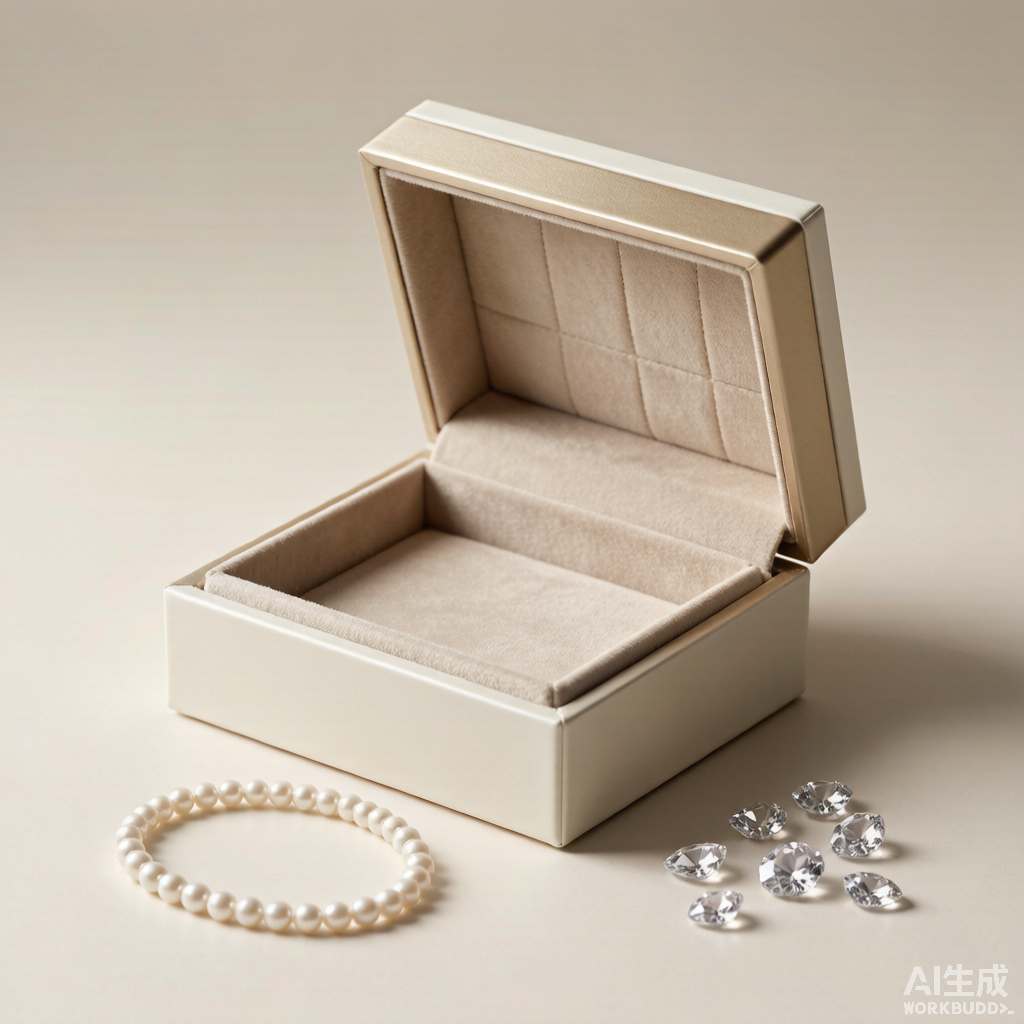
精致串珠重返高珠 Adult Beads Quietly Become 2026's New Luxury Jewelry
今年夏天,时尚街拍里出现了一个耐人寻味的细节:那些曾被视作「夏令营手作」的串珠项链,正被 Chanel 与 Celine 的造型师挂在超模颈间,与高珠项链同框出镜。串珠,这个几乎人人童年都串过几条的材质,悄悄完成了从「手作感」到「工艺感」的越级。
这波回潮并非空穴来风。Marie Claire 在《Summer 2026 Jewelry Trends》中直接用「Adult beads are back」(成年串珠回来了)为它定调——它不再是胡乱堆砌的童趣手链,而是以宝石、复古树脂、大理石与金色吊坠重新编排的精致语言。推动这场「串珠再品牌化」的,是 Chanel 新任创意总监 Matthieu Blazy 与 Celine 的 Michael Rider 等奢侈屋掌门人,以及 Don't Let Disco 主理人 Ashley Moubayed 这类独立设计力量。与此同时,JCK Las Vegas 2026(5 月 29 日—6 月 1 日)把「大胆串珠」列为下半年最清晰的方向之一,National Jeweler 进一步指出,串珠回潮可追溯至 1960 年代的 love beads 与 1970 年代的时尚影响,并顺带带火了绿松石与西部符号吊坠。社媒端同样印证:TikTok 上 #bracelets 与 beaded 相关标签持续走红,Etsy 2026 年的珠宝石 bead 榜单里拉长石、月光石与埃塞俄比亚 Welo 欧泊名列前茅,「raw and uncut」(原石真实感)成为新的审美关键词。
关键在于,这股风潮正被两端同时「正名」:TikTok 上的 Z 世代提供了声量与语汇,而传统高珠屋提供了把童年手艺变成可收藏品类的信誉。从风格谱系看,串珠回归并非孤立事件,而是「策展式极繁(curated maximalism)」的一部分——不是堆砌,而是一件有分量的串珠项链搭配一只单钻耳钉的克制对比。在高端语境里,串珠甚至承接了「轻量高级感」的叙事:当黄金价格高企,设计师用木材、皮革与绳线替代部分金工,既保留视觉分量,又卸下克拉与克重的包袱。Harwell Godfrey 的 Gold Rush 系列把西部衬衫口袋做成吊坠,JCK 现场那些可被一枚枚累加的 charm 串,都在证明——串珠卖的是可被时间慢慢收集的私人博物馆,而非一次性宣言。
串珠的翻红,本质上是一场价值坐标的迁移。过去高级珠宝的叙事绕不开克拉重量、净度与稀有产地;而串珠把话语权交还给了「叙事与工艺」——每一颗珠子可以是一段记忆、一个地点、一种情绪的容器。它用更轻的贵金属负担(木材、皮革、绳线与混搭材质替代厚重金工)换来了更自由的表达,恰好呼应了高金价时代设计师「用更少金属做更多事」的集体转向。当一条串珠项链能在 T 恤、丹宁与晚礼服之间自由切换,它卖的就不是克拉,而是一种可被日常穿戴的态度。
但这里存在一个微妙的悖论:越是「随意感」的串珠,越考验工艺。混材结构里,树脂与金属、木质与宝石的衔接公差、绳结的耐久性、珠子之间的碰撞与磨损,都会在日常佩戴中暴露无遗。这正是包装与呈现端需要接住的地方。
对品牌而言,串珠给珠宝包装设计提出了新课题。珠串体积感强、彼此易缠绕、每串长相各异,普通的平放内衬很容易让它们在运输与开盒瞬间打结或互相刮擦。盛艺祥在珠宝盒定制实践中更倾向为串珠配置独立的软卡位与低摩擦内衬,让每一串在盒中各居其位;首饰盒的开口结构也要为「拎起即不散」的取出动线专门设计。在终端,珠宝陈列道具需要为串珠制造高度差与暖色底光——冷白光会把这些半透树脂与彩宝照得发灰,而 2700—3000K 的暖光配合沙色、燕麦色托盘,才能把串珠的「玩具感」沉淀成「高级感」。当串珠成为品牌叙事的一部分,盒子与陈列台不再只是容器,而是这场「成年串珠」叙事的物理注脚。
串珠的回归提醒我们,奢侈的语言从来不是静态的。当童年的一根绳被重新编进高级珠宝的语法,真正的工艺,藏在那些不被注意的连接处——也包括那一只让它体面抵达、优雅呈现的首饰盒。
本文为原创内容,版权归盛艺祥所有。如需转载请注明出处。
盛艺祥(Shengyixiang)——高端珠宝包装设计与定制专家,为品牌护航。
This summer, a quiet detail kept appearing in street-style photography from Paris, Milan and New York: the beaded necklace — long dismissed as a summer-camp craft — was suddenly sitting at the throat of fashion editors alongside high-jewelry pendants. Beads, the material almost everyone strung as a child, have quietly completed an upgrade from "handmade" to "crafted."
The shift is not happening in a vacuum. In its Summer 2026 Jewelry Trends, Marie Claire named it directly: "Adult beads are back." These are no longer the haphazard strands of childhood, but refined compositions built from gemstones, vintage resin, marble and gold-toned charms. The repositioning is being driven from the top: Matthieu Blazy at Chanel and Michael Rider at Celine, alongside independent workhorses like Don't Let Disco's Ashley Moubayed, have reframed beads as a sign of craftsmanship rather than craftiness. At the same time, JCK Las Vegas 2026 (May 29–June 1) listed "bold beads" among the clearest directions for the second half of the year, with National Jeweler tracing the revival to 1960s love beads and 1970s fashion influence, and turbocharging turquoise and Western charms in the process. Social platforms confirm it: on TikTok, #bracelets and beaded styles keep trending, while Etsy's 2026 bead charts put labradorite, moonstone and Ethiopian Welo opal near the top, with "raw and uncut" emerging as a new aesthetic keyword.
Crucially, the trend is being legitimized from both ends at once: Gen Z discovery on TikTok supplies the volume and the vocabulary, while heritage maisons supply the credibility that turns a childhood craft into a collectible category. Stylistically, the bead comeback is part of what Marie Claire calls "curated maximalism" — controlled, intentional layering rather than clutter: one weighty beaded necklace set against a single diamond stud, an elegant contrast rather than a pile-on. In the luxury context, beads also carry the "lightweight luxury" narrative: with gold prices elevated, designers substitute wood, leather and cord for part of the goldwork, preserving visual heft while shedding the burden of carats and grams. Harwell Godfrey's Gold Rush collection translates a Western shirt pocket into a locket-style pendant, and the modular charms on the JCK floor — built to be added one at a time — prove that beads sell a private museum collected slowly over time, not a one-off statement.
Underneath the aesthetics sits a demographic story. The same audience that turned quiet luxury into a meme is now rejecting its restraint in favor of pieces that read as self-authorship — jewelry that looks collected rather than bought. Beads fit that brief almost perfectly: extensible, personal, and quietly confident. Industry trackers frame the moment within the wider "affordable fine jewelry" and demi-fine boom, where the purchase is less about resale value and more about daily wear and identity. For heritage houses, embracing beads is also pragmatic: it keeps younger clients inside the brand universe at a lower price of entry, then graduates them toward fine pieces. In other words, the bead strand is not a downgrade from fine jewelry — it is the on-ramp.
The bead revival is, at heart, a migration of the value coordinate. Traditional fine jewelry told its story through carat weight, clarity and rare provenance. Beads hand the narrative back to storytelling and craft: each bead can be a memory, a place, a mood. By leaning on wood, leather, cord and mixed materials instead of heavy goldwork, they deliver freer expression at a lighter precious-metal burden — neatly echoing the industry-wide pivot, under record gold prices, toward "doing more with less metal." With gold near all-time highs, beads also solve a pricing problem: they bring color and volume without the cost pressure of heavier metal work, which is exactly why designers are pairing them with wood, leather and cords. When a beaded necklace slips as easily under a T-shirt as it does with eveningwear, what it sells is not carats but a wearable attitude.
But there is a paradox: the more "effortless" the beads look, the more the craft must deliver. In mixed-material constructions, the tolerances where resin meets metal, wood meets stone, the durability of the knotting, and the way beads knock and abrade against one another in daily wear all surface quickly. That is precisely where packaging and presentation have to step in.
For brands, beads pose a fresh brief for jewelry packaging design. Strands are voluminous, tangle-prone, and no two look alike; a flat cushion will let them knot or scratch each other the moment the box is opened or jostled in transit. In bespoke work, Shengyixiang favors individual soft cradles and low-friction linings so each strand keeps its place, and designs the box opening around a "lift-and-don't-snarl" retrieval path. At the point of sale, jewelry display props need to give beads height variation and warm underlighting — cool white light turns semi-translucent resin and colored stones grey, while 2700–3000K warmth over sand or oat-toned trays settles the "toy" feeling into something genuinely luxe. As beads become part of a brand's story, the box and the display plinth stop being mere containers and become the physical footnote to the "adult bead" narrative.
The return of beads is a reminder that the language of luxury is never static. When a child's piece of string is rewoven into the grammar of fine jewelry, the real craft lives in the connections no one notices — including the box that lets it arrive with dignity and present with grace.
This is original content. Copyright belongs to Shengyixiang.
Shengyixiang — your expert in high-end jewelry packaging design & customization.