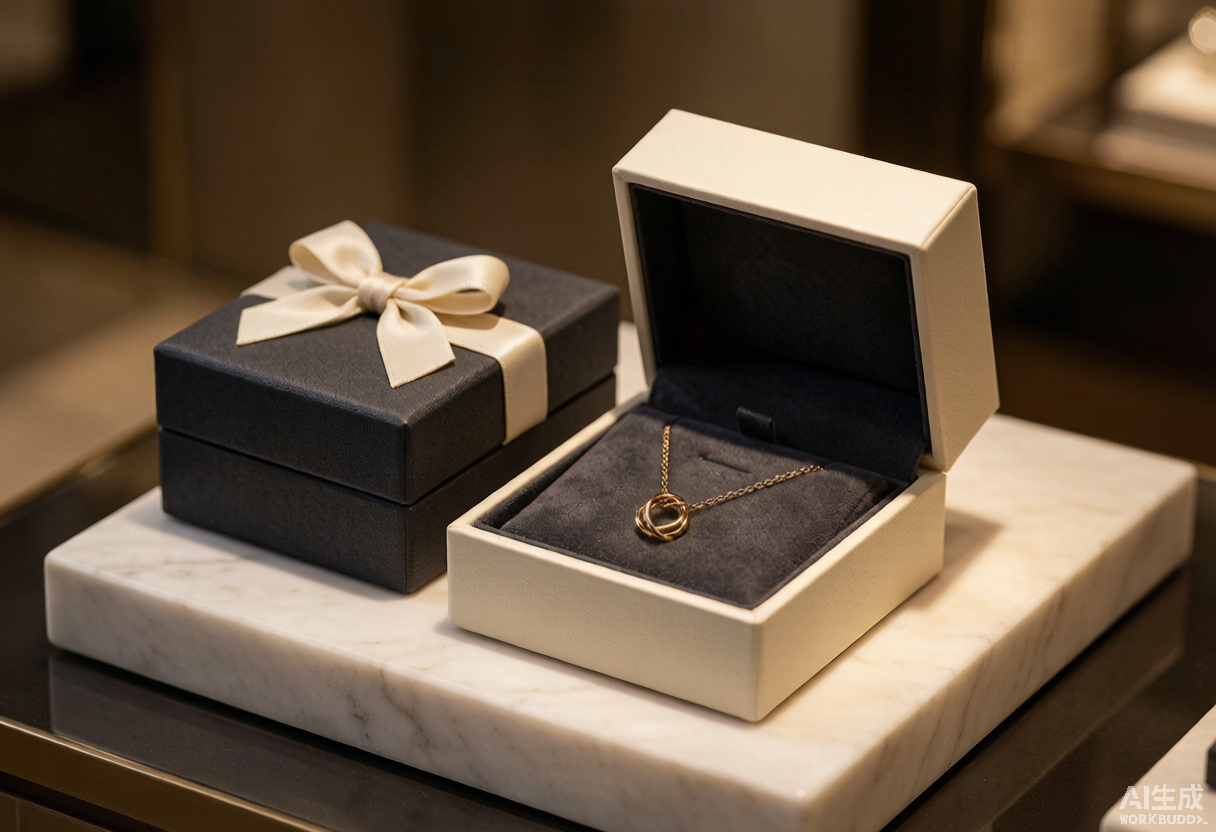
珠宝盒里的声音设计 Why a Jewelry Box's Sound Builds Brand Memory
问:为什么声音比一个 logo 更容易被记住?
因为我们的大脑处理声音比处理画面快得多。神经科学测得,听觉刺激抵达大脑只需 8–10 毫秒,而视觉要 20–40 毫秒;更关键的是,声音在感官记忆里能停留 2–5 秒,视觉图像却只有 100–200 毫秒。这意味着"一声轻响"比"一帧画面"更容易钻进长期记忆。SoundOut 在 2025 年发布的声音品牌追踪研究覆盖 174 个品牌、逾 7 万名消费者,结论很硬:带声音标识的内容在前两秒就能把品牌认知度拉高 191%,效果是纯视觉 logo 的 5 倍以上;IPSOS 2020 的研究更指出,带声音线索的广告比纯视觉广告有效 8.53 倍。Kantar BrandZ 2024 的数据也显示,强声音识别能让品牌力提升 76%、广告说服力提升 138%。对珠宝包装而言,这给了我们一个常被忽略的触点:顾客还没看见珠宝,往往先听见盒子开合的那一声。
问:开盒那一声,到底算不算品牌资产?
算,而且是被验证过的资产。SoundOut Index 2025 里有一个扎心发现:含品牌名的声音标识,其"归属性"是纯音乐提示的 9 倍;但另一边,36% 的消费者声称自己认得某个声音 logo,真正答对品牌的却只有 43%——这就是"认知—回忆鸿沟",声音若没和品牌绑定就白做。反过来,做对了回报惊人:万事达卡启用声音标识后 12 个月内消费者信任度提升 77%,Netflix 那声"嗒噔"在流媒体观众中识别率达 94%。落到珠宝上,一只盒子的磁吸"咔哒"完全可以设计成一个微型"声音商标"——清脆、稳定、可复现。当顾客在别处听到类似的轻响,会条件反射地想起那个品牌。盛艺祥在定制高端盒时,已经把"开合声"列为可验收的体验指标,而不只是封面的烫金。
问:高端简约为何更受青睐?
一个被反复验证的事实是:高端简约的珠宝首饰品包装设计,更容易被顾客青睐。在声音这件事上,这条规律同样成立,而且更锋利。声音上的"简约",不是没有声音,而是克制——一声干净利落的磁吸轻响,远比哗啦作响的多层纸衬、松垮的插扣噪音更高级。心理学上,少即是多:当包装不靠花哨的声响博关注,那一声"咔"反而被听成"这是真材实料"。市场数据也站在这一边:简约礼盒品类年复合增长率连续三年超过 25%,单价 500 元以上的礼盒偏好度从 38% 升到 67%,78% 的受访者把"极简"与"高品质"划等号,并愿意为此多付约 40%。对珠宝包装来说,做减法不是省成本,而是把预算精准投到指尖与耳畔都能感知的地方。
问:那声音是怎么"做"进包装里的?
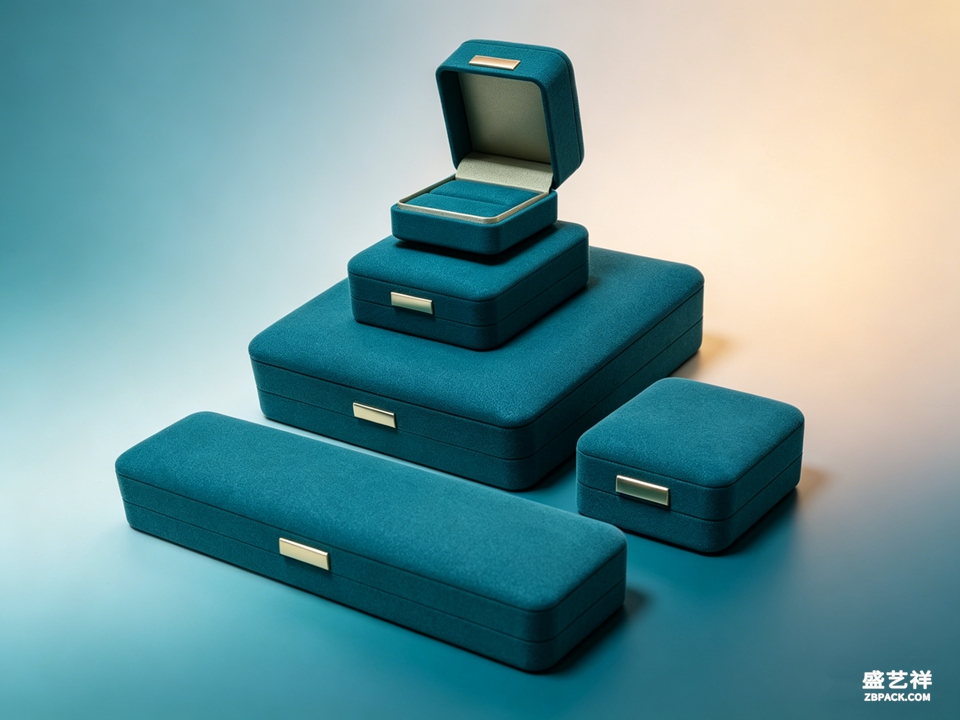
声音不是碰运气,而是一组可设计的变量。第一是开合机构:钕铁硼磁吸(常见 6–15 毫米)的力度、隐蔽性与回弹,直接决定那声"咔哒"是否干净;合页的阻尼、抽屉滑轨的顺滑度,则决定是"轻响"还是"吱呀"。第二是材料声学:厚灰板的闷实、植绒内衬的吸音、雪梨纸的沙沙、泡沫密度的不同,共同构成盒子的"音色"。第三是结构:天地盖的落位、内托卡位的贴合,能消除多余的空腔回响。这恰恰是珠宝盒定制的价值——把"想听到的声音"写进规格,而不是等工厂随便做。对珠宝盒工厂来说,同一批次磁吸力度、合页手感的一致性,本身就是一道验收关。
问:陈列道具和门店,也要讲"同一套声音"吗?
要,而且逻辑和包装完全一致。一只一拉就响的展示抽屉、一碰就晃的劣质托架,会在无声中拉低珠宝的身价;而带阻尼的丝滑抽屉、与盒子同源的磁吸手感,则让"品牌"在听觉上也站得住。这就是珠宝陈列道具和包装要讲同一套语言的原因。门店层面,声学氛围同样有数据支撑:Morrison 等学者 2011 年发表在《Journal of Business Research》的实地实验(被引逾 700 次)证明,店内音乐音量与香草气息会显著提升顾客情绪与满意度,进而增加停留时长与花费;Roschk 等人 2017 年发表于《Journal of Retailing》的元分析汇总了 66 项研究、135 个效应、15,621 名被试,结论一致——有音乐与气味的环境,比没有的环境带来更高的愉悦、满意度与购买意向。当盒子的开合声、道具的抽屉声、门店的底噪共同构成一条珠宝摆台式的声音动线,品牌记忆就被多钉了一道。
问:这笔投入怎么验收,值不值?
把"声音"写进验收单,而不是凭耳朵拍脑袋。可量化指标包括:磁吸开合的声压是否稳定、同一批次响度差是否小于某阈值、合页与滑轨是否有异音、内衬是否吞掉多余空腔回响。更聪明的做法是录制样本做 A/B,让真实顾客盲听打分,挑出"最像这个品牌"的那一声。回报也很清楚:开箱视频早已是免费流量池——2023 年 YouTube 上标题含"unboxing"的视频播放量超过 250 亿次,Pew 研究显示"ASMR"相关搜索过去一年增长 45%,而 Nielsen 的数据称 62% 的网购者更信任"无解说"的被动测评视频。一个被设计过的开盒声,会天然适配这类静音开箱内容,带来自发传播与品牌回想。对做珠宝盒定制的品牌,把"声音标识"纳入交付标准,往往是比多烫一道金更长效的资产。
本文为原创内容,版权归盛艺祥所有。如需转载请注明出处。
盛艺祥(Shengyixiang)——高端珠宝包装设计与定制专家,为品牌护航。
Q: Why does sound stick in memory better than a logo?
The human brain processes sound far faster than pictures. Neuroscience measures auditory stimuli reaching the brain in 8–10 milliseconds, against 20–40 for visual input; more importantly, a sound lingers in sensory memory for 2–5 seconds while a visual icon lasts only 100–200 milliseconds. That makes "a small click" far stickier than "a single frame." SoundOut's 2025 sonic-branding tracking study—174 brands, over 70,000 consumers—found that sonic assets lift brand awareness by 191% within the first two seconds, more than five times the impact of a visual logo. IPSOS (2020) went further: ads carrying sonic cues are 8.53 times more effective than visual-only assets. Kantar BrandZ (2024) adds that strong sonic identity raises brand power by 76% and perceived advertising strength by 138%. For jewelry packaging, this opens a touchpoint most brands ignore: a customer often hears the box open before they ever see the jewel.
Q: Is the sound of opening a box actually a brand asset?
Yes—and it is a measured one. A striking finding in the SoundOut Index 2025: sonic logos that include the brand name drive "attribution" nine times more effectively than pure musical cues. Yet the same study exposed a "recognition-recall gap": 36% of consumers claimed to recognize a sonic logo, but only 43% could name the right brand—proof that sound unbound from the brand is wasted effort. Done right, the payoff is large: Mastercard's sonic identity lifted consumer trust by 77% within twelve months, and Netflix's "ta-dum" reaches 94% recognition among streaming viewers. Translated to jewelry, the magnetic "click" of a box can be engineered into a micro "audio logo"—crisp, consistent, reproducible. When a customer hears a similar click elsewhere, they reflexively think of that brand. Shengyixiang already lists the "opening sound" as an inspectable experience metric in its custom high-end boxes, not just the foil on the lid.
Q: Why is understated, minimalist design more favored by customers?
A fact proven again and again: high-end, minimalist jewelry packaging design is more readily favored by customers. On sound, this rule holds—and cuts deeper. Sonic "minimalism" is not silence but restraint: one clean magnetic snap beats the rattle of over-layered paper wraps and a loose clasp. Psychologically, less is more—when packaging stops shouting for attention with gimmicky noise, that single "click" is heard as "this is the real thing." The data sides with restraint: minimalist gift boxes have posted CAGR above 25% for three straight years; preference for boxes above ¥500 rose from 38% to 67%; 78% of respondents equate "minimalist" with "high quality" and will pay about 40% more for it. For jewelry packaging, subtraction is not cost-cutting—it is spending the budget precisely where fingertips and ears can feel it.
Q: So how is sound actually engineered into packaging?
Sound is not luck; it is a set of designable variables. First, the closure: neodymium magnets (commonly 6–15 mm) set the force, concealment and rebound that decide whether the "click" is clean; hinge damping and drawer-slide smoothness decide "soft click" versus "creak." Second, material acoustics: the thud of dense greyboard, the absorption of velvet lining, the rustle of tissue, the density of foam—together they form the box's "timbre." Third, structure: the seating of a lid-and-base, the fit of the insert, kill stray cavity resonance. This is exactly where custom jewelry boxes add value—specifying the sound you want to hear rather than letting the factory guess. For the jewelry box factory, batch-to-batch consistency of magnet force and hinge feel is itself an inspection gate.
Q: Should display props and the store also speak one sonic language?
They do, and the logic mirrors packaging. A display drawer that screeches when pulled, a cheap bust that wobbles on touch, silently lowers the jewel's worth; a damped, silky drawer with the same magnetic feel as the box makes the brand stand in sound too. That is why jewelry display props must speak the same language as the box. At store level, the acoustics are data-backed: Morrison et al. (2011, Journal of Business Research, cited 700+ times) showed in a field experiment that in-store music volume and a vanilla aroma significantly lifted shopper emotion and satisfaction, which in turn increased time spent and money spent. Roschk et al. (2017, Journal of Retailing) meta-analyzed 66 studies, 135 effects, 15,621 participants, with the same verdict—environments with music and scent yield higher pleasure, satisfaction and purchase intention than those without. When the box's click, the prop's drawer, and the store's ambient bed form one sonic flow across the display plinth, brand memory gets one more nail.
Q: How do you inspect this spend, and is it worth it?
Put "sound" on the inspection sheet instead of judging by ear. Quantifiable checks: stable sound pressure on magnetic open, batch-to-batch loudness variance below a threshold, no abnormal noise from hinges or slides, lining that absorbs stray cavity resonance. Smarter still, record samples and A/B test them—let real customers blind-listen and pick the "most on-brand" click. The return is clear: unboxing is already a free traffic pool—YouTube videos titled "unboxing" passed 25 billion views in 2023, Pew research shows "ASMR" searches up 45% in the past year, and Nielsen reports 62% of online shoppers trust "silent" passive-review videos more. A designed opening sound slots naturally into such mute-unboxing content, driving spontaneous sharing and brand recall. For brands commissioning custom jewelry boxes, writing "sonic identity" into the delivery standard is often a longer-lived asset than one extra foil line.
This is original content. Copyright belongs to Shengyixiang.
Shengyixiang — your expert in high-end jewelry packaging design & customization.