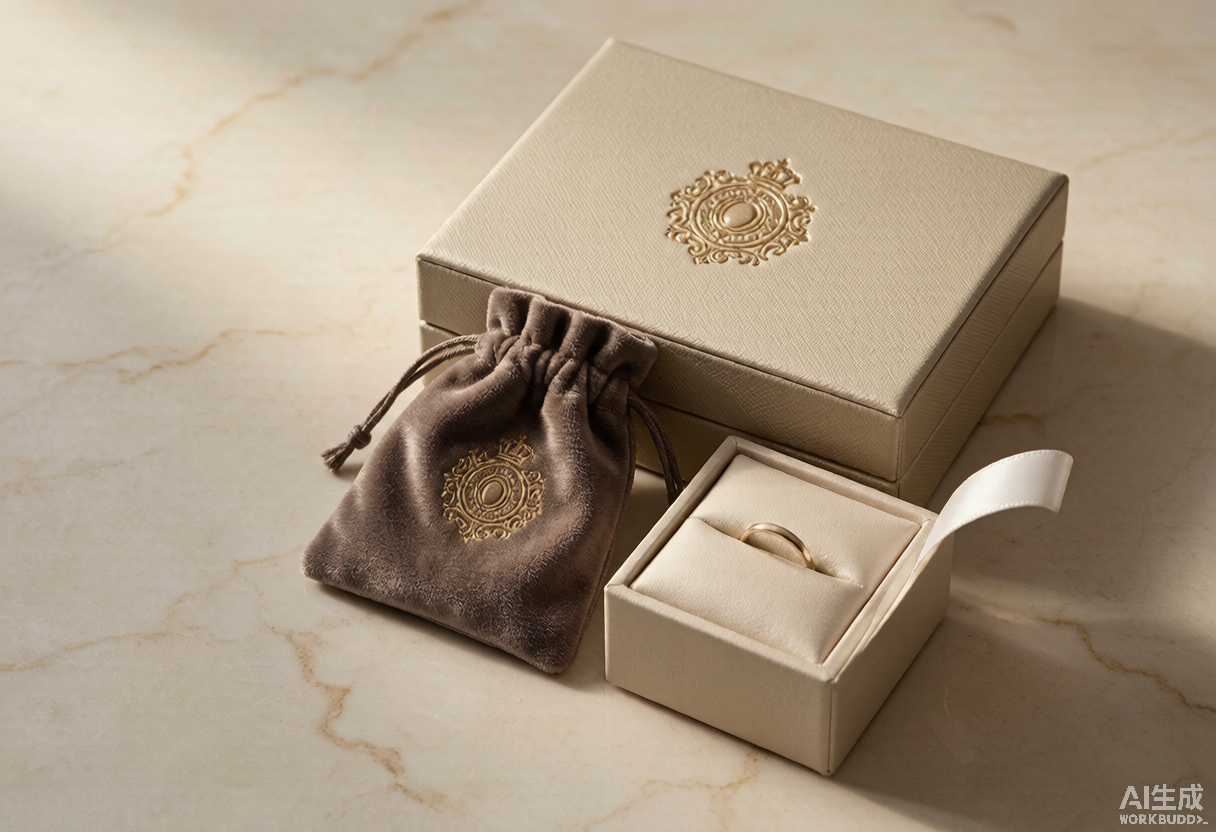
首饰袋里的门道 Why a Jewelry Pouch Is More Than a Bag
很多人以为珠宝袋只是"装东西的布袋子",但在珠宝店里,它往往是顾客带走的最后一件"品牌资产"——一只好袋,能陪着首饰走很远的路,也替品牌在多场景下反复露脸。
问:珠宝袋不就是个布袋子吗,值得专门做?
答:值得。包装是顾客对品牌的第一判断窗口——行业调研显示,约 78% 的消费者会凭包装外观判断首饰的档次与真伪;而主流袋厂的客户复购率长期维持在 21%–40%,说明一只好袋确实能留客。对品牌而言,珠宝袋是"沉默的销售员":顾客离店后,它仍跟着人走、被朋友看见、被拍照分享。举个具体的例子,一只带品牌色的绒袋被顾客随手塞进通勤包,等于每天替门店在地铁、咖啡馆、闺蜜聚会里"露脸";社媒时代,开箱照里那只袋子常常和首饰同框出镜。盛艺祥在做珠宝包装设计时,从不在袋子上省功夫,因为它承接的是开箱之后最长的一段品牌曝光。尤其在复购率敏感的饰品赛道,袋子是成本最低、触达最久的品牌触点。
问:材料到底怎么选才不伤首饰?
答:不同面料对手饰的影响差别很大。超细纤维柔软不掉毛、防尘吸潮,是黄金、K金、铂金、银饰的通用首选;麂皮绒手感温润、轻微隔氧,最适合珍珠、珐琅和镜面金;植绒厚实、防静电、定型好,适合戒指、耳钉、吊坠等小件日常收纳;缎面/色丁光泽高级但偏滑,珠宝易在袋内滑动磕碰,更适合婚庆礼品;棉麻天然透气,护银饰与玉石文玩;雪纱和无纺布只适合一次性临时包装,长期存放反而会刮花表面或加速氧化;面料选错,轻则留纤维,重则让珍珠失光、银饰发黑。尺寸上,5×7、7×9、9×12、11×14 厘米分别是戒指、耳钉、吊坠、手镯的常用档;珍珠最怕摩擦失光,麂皮绒的低摩擦表层能把这种损耗降到最低。盛艺祥的珠宝袋加工环节会要求 OEKO-TEX 级别的无异味、不掉色、不染色,确保贴身安全。这里也呼应一个常被验证的判断——高端简约的珠宝包装设计更容易被顾客青睐:一只克制的单色绒袋,往往比花哨拼色、满身 logo 的袋子更显贵。
问:袋子怎么帮品牌被人记住?
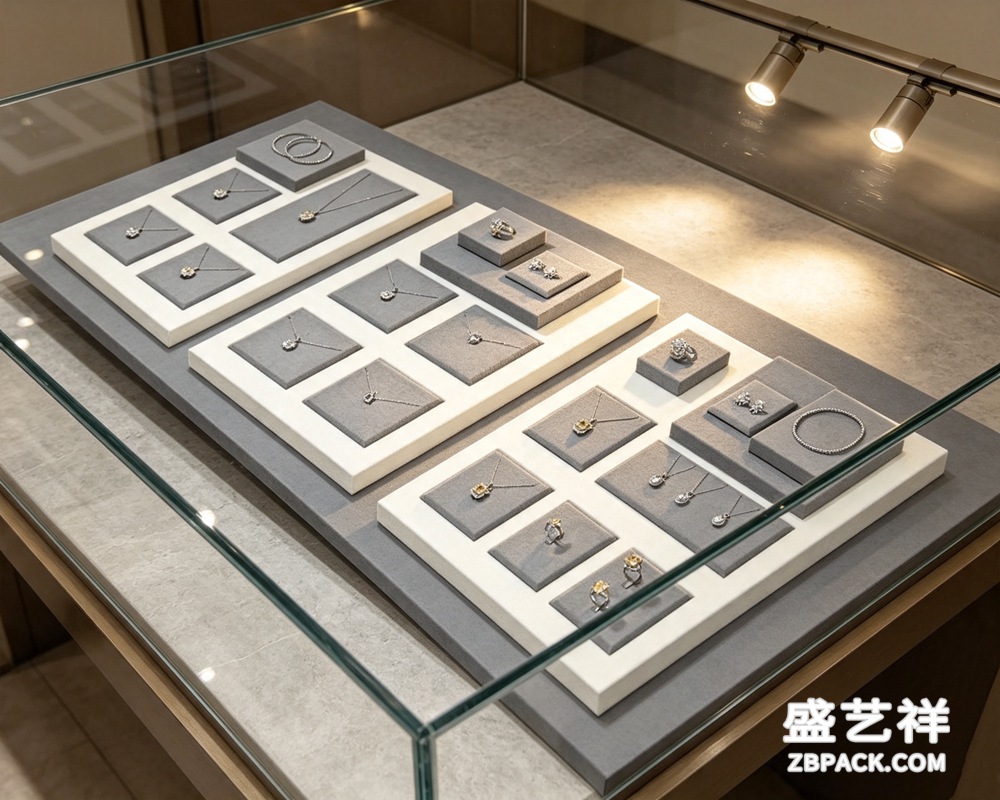
答:靠"可识别"三个字。主流做法是在袋身做烫金、刺绣或丝印 logo,并用潘通(Pantone)专色保证跨批次一致;更进阶的是建立品牌色系统,让束口袋、拉链袋、信封袋虽结构不同,却共用同一套色彩与工艺语言。数据显示,约 68% 的收礼人会复用珠宝礼袋,等于品牌被免费携带、获得二次曝光。反例同样说明问题——一只 logo 烫歪、色差明显的廉价袋,反而会拉低整件首饰的观感;专业厂会把烫金位置误差控制在 0.5 毫米内,保证每只都"站得住"。一个辨识度高的首饰袋,就是盛艺祥帮客户沉淀的"随身品牌资产"。
问:一只袋要花多少钱,起订量高不高?
答:比想象中亲民。以植绒首饰袋为例,主流批发单价约 0.06–0.49 美元/只,起订量从 50 只到 1000 只不等;国内不少袋厂支持几十只起订,方便新品牌试水。工艺上可选择烫金、丝印、刺绣或热转印,打样周期通常 3–7 天,小批量也能先验证再放量。对想控成本又不想掉档次的店主,盛艺祥建议先用 3–4 个核心尺寸加一个通用袋型,把预算投在面料手感和 logo 工艺上,而不是堆款式。需要高定视觉时,再走珠宝盒定制与珠宝袋加工协同打样。
问:运输和旅行里,袋子到底起什么作用?
答:它是最后一道"软铠甲"。电商与跨境运输中,独立软卡位能防止钻石、棱角宝石勾丝;抗静电内衬(约 1.2–1.8mm)减少多件混装的微划痕;雪梨纸包裹后再入袋,形成双层缓冲,显著降低货损与退货。跨境运输里,因包装不当导致的货损常占首饰类退货的重要原因,一只定位准确的袋子能把"运输损耗"压到可忽略。旅行场景里,一只轻巧的绒袋随手塞进手包或行李箱,不占体积却能把戒指耳钉安稳收好。很多品牌把袋和珠宝盒工厂出的主盒搭配使用:主盒负责"仪式感",袋子负责"随身保护"。
问:环保趋势下,袋子怎么选才不踩雷?
答:三句话——单一材质、可复用、可溯源。优先选 FSC 认证棉布或再生涤纶(rPET),避开 PVC 植绒这类难回收材料;再生涤纶相较原生涤纶可显著降低能耗与碳排,是素色可复用袋的优选底材。结构做简洁,鼓励顾客反复使用而非丢弃。调研显示,约 81% 的买家会考量包装的可持续性,可复用设计直接拉长品牌曝光。这也再次印证那个判断:高端简约的珠宝包装设计更容易被顾客青睐——一只素净、可反复使用的袋子,往往比一次性的华丽包装更得人心。盛艺祥在珠宝包装设计上,正把"循环"写进袋子的默认选项。
本文为原创内容,版权归盛艺祥所有。如需转载请注明出处。
盛艺祥(Shengyixiang)——高端珠宝包装设计与定制专家,为品牌护航。
Many people treat a jewelry pouch as just "a cloth bag to hold things." In a jewelry store, though, it is often the last piece of brand asset a customer takes home — a good pouch travels far with the piece, and keeps showing the brand in many everyday scenes.
Q: Isn't a jewelry pouch just a cloth bag? Is it worth doing properly?
A: Yes. Packaging is the first window through which customers judge a brand — industry research shows about 78% of consumers form their impression of a piece's quality and authenticity from its packaging, and leading pouch makers report client reorder rates of 21%–40%, proof that a good pouch keeps customers coming back. To a brand, the pouch is a "silent salesperson": after the customer leaves the store, it keeps traveling, gets seen by friends, and gets photographed. A concrete example: a pouch in the brand color tossed into a commute bag advertises the store daily across the subway, a cafe, a friends' gathering; in the social era, the pouch often appears in the same unboxing photo as the jewelry. Shengyixiang never cuts corners on the pouch in jewelry packaging design, because it carries the longest stretch of brand exposure after the unboxing.
Q: How do I choose materials so the pouch doesn't damage the jewelry?
A: Different fabrics affect the piece very differently. Microfiber is soft, lint-free, dust-resistant and moisture-wicking — the universal first choice for gold, K-gold, platinum and silver. Suede feels warm and slightly oxygen-buffering, ideal for pearls, enamel and mirror-finish gold. Velvet is thick, anti-static and holds shape, great for daily storage of rings, studs and pendants. Satin looks luxurious but is slippery, so pieces can shift and knock inside — better for gift occasions. Cotton and linen breathe naturally and suit silver and jade; organza and non-woven are one-time-only and can scratch or accelerate tarnish if used for storage. In sizing, 5x7, 7x9, 9x12 and 11x14 cm are the common tiers for rings, studs, pendants and bracelets; pearls fear friction-induced dulling most, and suede's low-friction surface minimizes that loss. Shengyixiang's jewelry bag manufacturing requires OEKO-TEX-grade, odorless, non-bleeding, non-staining fabrics for skin safety. This also echoes a well-tested point — high-end minimalist jewelry packaging design is more favored by customers: a restrained single-color velvet pouch often reads as more premium than a loud, logo-heavy one.
Q: How does a pouch help a brand be remembered?
A: Through recognizability. The standard move is a hot-stamped, embroidered or screen-printed logo kept consistent across batches with a Pantone spot color; more advanced brands build a color system so drawstring bags, zip pouches and envelopes share one visual language despite different structures. Data shows about 68% of gift recipients reuse jewelry pouches, giving the brand free carry and a second exposure. The reverse proves the point too — a cheap pouch with a crooked, off-color logo actually drags down the whole piece's impression; a professional maker keeps hot-stamp placement within 0.5 mm so every pouch "stands up." A recognizable jewelry pouch is the "portable brand asset" Shengyixiang helps clients build.
Q: What does a pouch cost, and is the minimum order high?
A: More affordable than expected. For velvet pouches, mainstream wholesale runs about $0.06–0.49 per piece, with MOQs from 50 to 1,000; many makers accept orders as low as a few dozen, letting new brands test the water. For decoration you can choose hot-stamp, screen-print, embroidery or heat transfer, with sampling in roughly 3–7 days, so even small batches can be validated before scaling. To control cost without losing class, Shengyixiang suggests starting with 3–4 core sizes plus one universal shape, and spending the budget on fabric feel and logo craft rather than piling up variants. When a higher-end look is needed, move to coordinated jewelry box customization and jewelry bag manufacturing for sampling.
Q: In shipping and travel, what does the pouch actually do?
A: It is the final soft armor. In e-commerce and cross-border shipping, individual soft slots stop diamonds and angular gems from snagging; anti-static liners (~1.2–1.8mm) cut micro-scratches from mixed items; tissue wrapping before the pouch forms a double buffer that sharply lowers damage and returns. In cross-border transit, packaging-related damage is a major share of jewelry returns, and a well-fitted pouch can push that "transit loss" to negligible. While traveling, a light velvet pouch slips into a handbag or suitcase, taking no room yet keeping rings and studs safe. Many brands pair the pouch with the main box from a jewelry box factory: the box delivers the ritual, the pouch delivers portable protection.
Q: With sustainability trending, how do I avoid pitfalls in pouches?
A: Three rules — mono-material, reusable, traceable. Prefer FSC-certified cotton or recycled polyester (rPET) and avoid hard-to-recycle PVC velvet; recycled polyester cuts energy use and carbon versus virgin polyester, making it the best base for a clean reusable pouch. Keep the structure simple to encourage repeat use instead of disposal. Research shows about 81% of buyers consider packaging sustainability, and a reusable design directly extends brand exposure. This again confirms the point: high-end minimalist jewelry packaging design is more favored by customers — a clean, reusable pouch often wins more hearts than a one-time flashy wrap. Shengyixiang is writing "circularity" into the default option for jewelry packaging design.
This is original content. Copyright belongs to Shengyixiang.
Shengyixiang — your expert in high-end jewelry packaging design & customization.