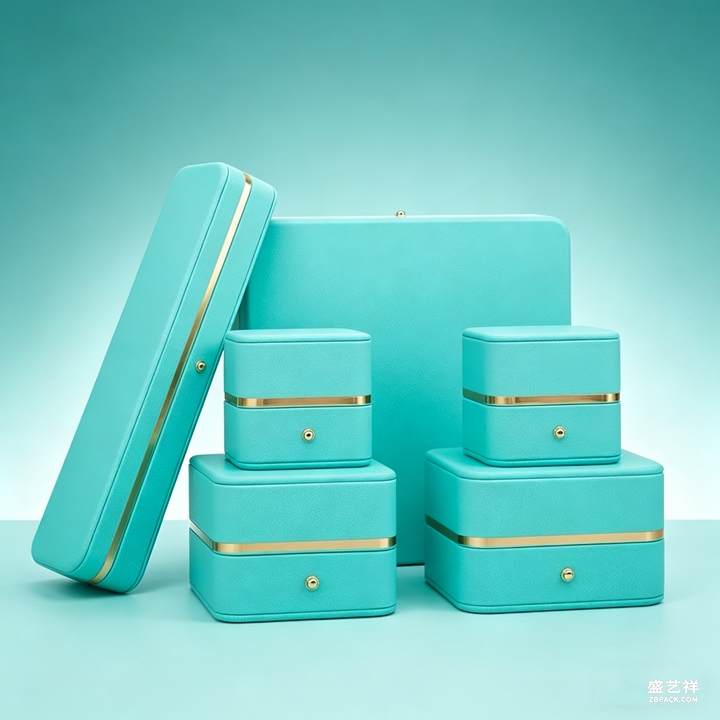
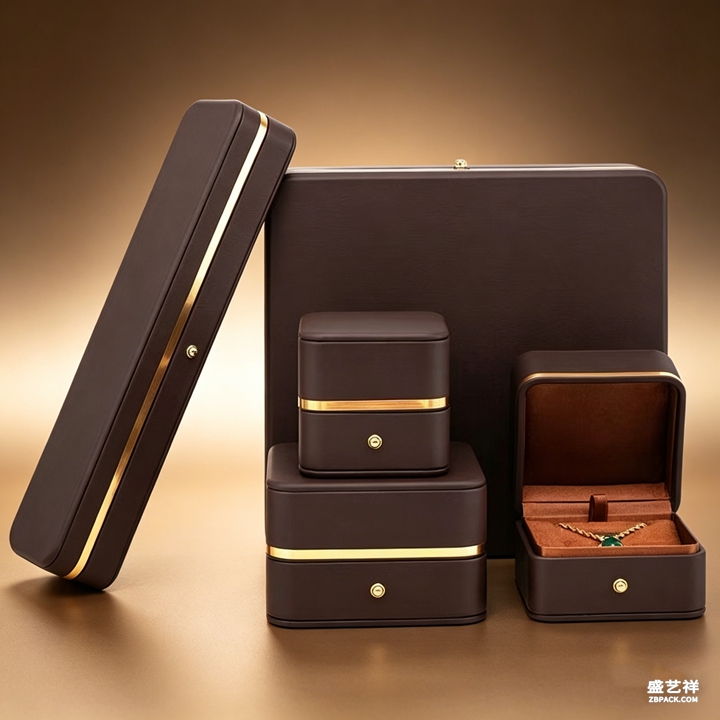
一只标价 3299 元的 18K 金项链,凭什么比“裸链”贵 50 块还被抢购?在珠宝行业,答案常常不在链子本身,而藏在那个被随手发到朋友圈的盒子里。当包装开始替产品说话,它就不再只是成本,而是一笔能撬动溢价的隐形资产。这背后是一条被数据反复验证的规律:包装的“身价”必须和首饰本身的价位同频,否则要么亏了成本,要么亏了体面。
答:不同价位的顾客,对“盒子该长什么样”的预期完全不同。尚普咨询《2025 中国 K 金首饰市场洞察》显示,42% 的消费者把“品牌首饰盒”列为首选包装;而在 3000 元以上的高客单区间,品牌盒的渗透率飙到 61%——越高价的单品,顾客越把包装当作“身价”的一部分。数据还显示,带定制礼盒的单品客单价较裸链高出 27%,退货率反而低 4.3 个百分点;天猫平台监测也发现,用品牌礼盒的 SKU 转化率普遍高出同价位裸链 32%、客单价提升 18%。这说明分层不是“区别对待”,而是让盒子的成本与顾客的心理预期对齐:入门款硬塞高级盒是浪费,高定款套个裸袋则是掉价。盛艺祥在做珠宝包装设计时,第一步就是确认这件首饰属于哪一档。
答:核心是“轻量化、标准化,但品牌识别不缺席”。入门款走量,适合用纸盒或首饰袋批量采购(这正是首饰盒批发、珠宝盒工厂小批量柔性生产的强项),把单盒成本压下来;但即便省钱,也要保留品牌色与 logo 烫印,否则就容易沦为被 38% 受访者吐槽“送礼最怕盒子拿不出手”的裸链加绒布袋组合。更聪明的做法是借环保材料平衡质感与成本——新锐品牌 K·shine 的“夏季限定小绿盒”用可降解甘蔗浆外盒加玉米淀粉内托,上市两周同款项链销量环比上涨 210%,高客单占比从 24% 抬升到 30%。盒子贵不贵不重要,重要的是它有没有“记忆点”。
答:到了高定档,“少即是贵”是一条被反复验证的定律。深圳一项调研显示,75% 的 Z 世代消费者愿意为“极简包装”支付溢价,68% 的人认为过度包装是对资源的浪费。从心理学看,哈佛商学院的研究指出高质量包装能把支付意愿提升多达 30%;尼尔森的数据则表明,73% 的消费者会把“豪华包装”直接等同于“更高品质”。所以当一件高定珠宝用克制的线条、单一品牌色、素面内衬来呈现,它传递的是“我不靠堆砌来证明自己”的自信——这正是“高端简约珠宝首饰品包装设计,更容易被顾客青睐”这句话的真实注脚。盛艺祥在珠宝包装设计上,也始终主张把复杂留给工艺,把简单留给视觉。
答:三件事不能省:定制盒、对应证书位、可持续。珠宝盒定制要做的是异形内托与磁吸天地盖,让项链、戒指在盒内“各就其位”而非乱晃;同时预留鉴定证书、保卡的标准卡位,让附件与首饰一起被妥善保管。材质上则尽量可复用——潘多拉 2021 年全面改用 100% 再生纸盒,客户忠诚度提升 33%;蘑菇基泡沫内托能减少约 45% 的填埋废弃。换句话说,高定包装的目标不是“一次用完即弃”,而是让盒子本身成为藏品的延伸,甚至能传家。盛艺祥的珠宝包装设计一直强调:盒子的寿命,应该和里面的珠宝一样长。
答:要,而且越高端越要一致。柜台的珠宝陈列道具、珠宝摆台与送到顾客手里的礼盒,必须使用同一种材质语言与品牌色——否则顾客从橱窗走到收银台再到拆盒,体验就会“跳戏”,信任感被打折。美国零售联合会(NRF)的研究显示,统一的道具与包装组合能提升门店转化 18%–30%。实践中,盛艺祥常把展台绒布的底色与盒内衬布做成同色,做到线上详情页、线下柜台、手中礼盒“三处同频”。这种一致性,才是品牌识别最便宜也最牢固的护城河。从全球视角看,2025 年珠宝包装市场已达 38 亿美元规模,且仍以每年 6.5% 的速度增长——分层运营,正是这个庞大市场里最被低估的那根杠杆。
答:看三个指标,而不是凭感觉。第一,盒成本占货值比:入门款建议控制在 3% 以内,轻奢 3%–6%,高定 6%–10% 为健康区间,超出就要警惕“为包装买包装”。第二,转化与客单价:品牌礼盒相对裸链已有 +32% 转化、+18% 客单的基准数据,可作为对照。第三,复购与社媒:好的包装会自己变成内容——K·shine 的小绿盒在抖音“夏日礼盒”话题下贡献了 3.2 亿次播放,很多用户是先被盒子种草、再反向搜索项链。定期用 A/B 测试不同价位盒型,才能避免“一刀切”带来的浪费。盛艺祥与珠宝盒工厂协作时,也会把这三组数字写进验收清单。
本文为原创内容,版权归盛艺祥所有。如需转载请注明出处。
盛艺祥(Shengyixiang)——高端珠宝包装设计与定制专家,为品牌护航。
A necklace listed at ¥3,299 shouldn't outsell its "bare-chain" twin by 50 yuan and still sell out—yet in jewelry, the deciding factor often isn't the chain at all. It's the box that ends up screenshotting its way across social feeds. When packaging starts speaking for the product, it stops being a cost line and becomes an invisible asset that quietly lifts willingness to pay. Behind this lies a data-backed rule: a box's status must match the piece's price tier, or you lose either on cost or on dignity.
A: Because customers at different price points expect very different boxes. According to Shangpu Consulting's 2025 China K-gold Jewelry report, 42% of consumers name a "branded jewelry box" as their preferred packaging, and above the ¥3,000 tier that penetration jumps to 61%—the pricier the piece, the more the box reads as part of its status. The same data shows custom-boxed SKUs carry a 27% higher average order value than bare chains while posting a 4.3-point-lower return rate; Tmall's monitoring finds boxed SKUs convert 32% better and earn 18% higher AOV than bare-chain equivalents. Tiering isn't favoritism—it's aligning box cost with expectation. Shengyixiang's jewelry packaging design always starts by pinning down which tier a piece belongs to, then building the box around that promise rather than the other way around.
A: Lightweight, standardized, but never anonymous. High-volume entry pieces suit paper boxes or pouches bought in bulk—exactly where flexible small-batch production from jewelry box factories and wholesale supply shines—keeping per-box cost down. Even so, keep the brand color and a foil-stamped logo, or you risk the "bare chain + plain pouch" combo that 38% of respondents said embarrassed them as a gift. Smarter still: borrow eco materials to balance cost and feel. K·shine's limited "little green box" used a degradable bagasse outer shell and corn-starch insert; within two weeks the matching necklace's sales rose 210% month-on-month and its high-ticket share climbed from 24% to 30%. The box doesn't have to be expensive—it has to be memorable. Shengyixiang's jewelry packaging design applies this by pairing cost-efficient blanks with one signature foil mark, so even entry-tier pieces feel owned rather than generic, and the brand stays recognizable across every price point.
A: At the haute tier, "less is more" is a repeatedly proven law. A Shenzhen survey found 75% of Gen Z will pay a premium for minimal packaging, and 68% see over-packaging as wasted resources. Psychologically, Harvard Business School research shows quality packaging can lift willingness to pay by up to 30%, while Nielsen data shows 73% of consumers equate luxurious packaging with higher quality. So when a haute piece arrives in restrained lines, a single brand color, and unprinted lining, it signals a confidence that says "I don't need to pile on to prove myself"—the real meaning behind the line that high-end, minimal jewelry packaging design is simply more favored by customers. Shengyixiang's jewelry packaging design keeps complexity in the craft and simplicity on the surface.
A: Three things you can't skip: a custom box, a certificate slot, and sustainability. Jewelry box customization builds contoured inserts and magnetic clamshell lids so necklaces and rings stay "in their place" instead of rattling. It also reserves standard slots for appraisal certificates and warranty cards, keeping documents and piece together. On materials, favor reuse—Pandora's switch to 100% recycled boxes in 2021 lifted customer loyalty 33%, and mushroom-foam inserts cut landfill waste about 45%. The goal isn't "use once and discard" but making the box an extension of the heirloom itself. Shengyixiang's jewelry packaging design holds that a box's life should match the jewelry inside.
A: Yes—and the higher the tier, the more it matters. Counter display props, jewelry display stands, and the gift box in the customer's hands must share one material vocabulary and one brand color; otherwise the experience "jumps the track" from window to checkout to unboxing, and trust takes the hit. The National Retail Federation (NRF) finds unified prop-and-packaging systems lift in-store conversion 18%–30%. In practice, Shengyixiang often matches the velvet under-tone of a display stand to the box lining, syncing the online page, the counter, and the gift box into one frequency. That consistency is the cheapest, sturdiest moat for brand identity. Globally, the jewelry packaging market reached $3.8 billion in 2025 and still grows about 6.5% a year—tiered operation is its most underrated lever.
A: Watch three metrics, not gut feel. First, box-cost-to-product-value ratio: keep entry under 3%, premium 3%–6%, haute 6%–10%; above that, beware "packaging for packaging's sake." Second, conversion and AOV: boxed SKUs already show a +32% conversion and +18% AOV baseline versus bare chains to benchmark against. Third, repurchase and social: good packaging becomes content on its own—K·shine's little green box drove 320 million views under a summer gift-box hashtag, with many users discovering the necklace only after the box. Regular A/B tests across tier box types prevent the waste of one-size-fits-all. Shengyixiang bakes these three numbers into its acceptance checklist with jewelry box factories.
This is original content. Copyright belongs to Shengyixiang.
Shengyixiang — your expert in high-end jewelry packaging design & customization.