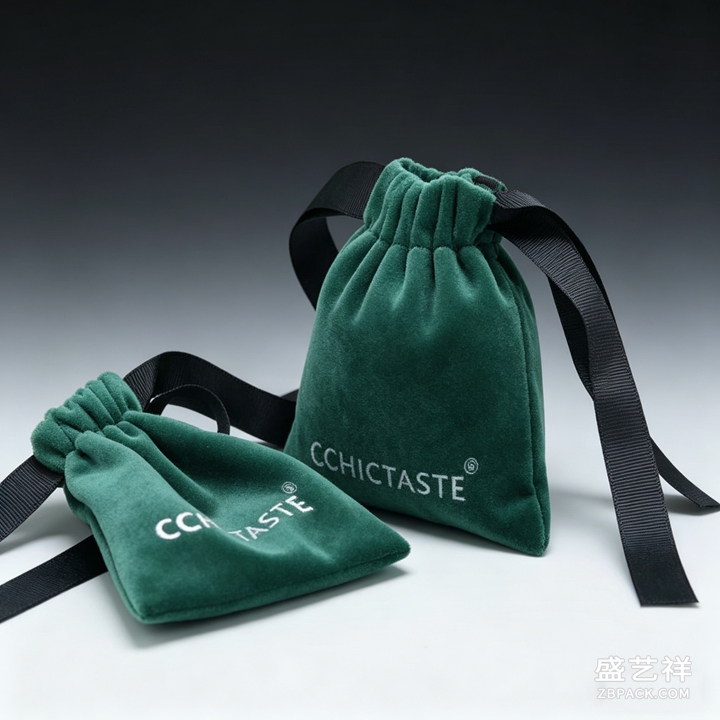
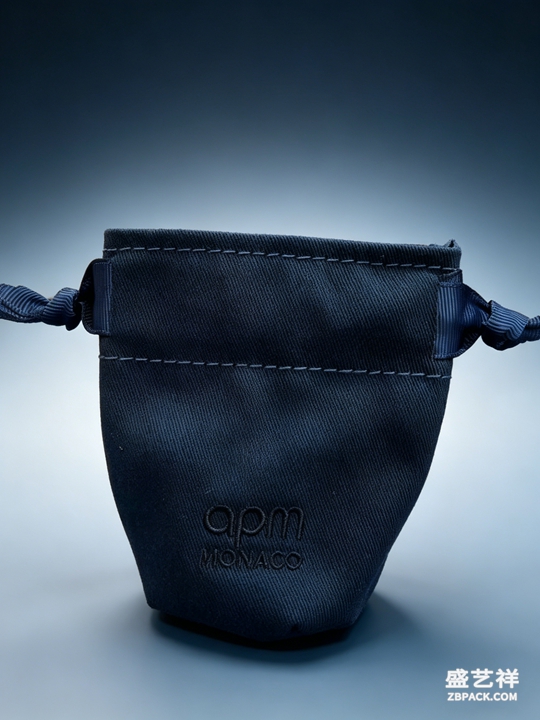
一只好开的珠宝盒 | Why Easy-Open Jewelry Packaging Wins More Loyal Customers

一只好开的珠宝盒 Why Easy-Open Jewelry Packaging Wins More Loyal Customers

发布时间:2026-08-19    浏览量:4 Publish: 2026-08-19    Views: 4

很多品牌肯花钱把盒子做漂亮,却很少有人把这一句写进验收单:这只盒子,顾客能不能一只手轻松打开。下面六个问题,来自门店店长、采购和真实顾客的高频困惑。

问一:难开的包装,真会影响生意吗?

会,而且流失得很安静。Uprinting 于 2026 年 4 月通过 Pollfish 调研 1000 名美国成年消费者,结果显示:78.8% 的人每月至少有几次要借工具才能打开包装,40.6% 几乎每周都要打一场"拆包装的仗";48.1% 曾单纯因为包装而放弃一个产品——不是价格,不是品质;在千禧一代中这个比例升到 55.7%。更关键的是态度:70.6% 表示难开的包装会让他们降低对品牌的评价,其中 27.1% 会直接判定"这个牌子廉价";51.9% 承认自己曾在拆包装时受过伤。英国 Which? 的调查也早有印证:约三分之二的人有过"包装怒",四成人拆包装时伤到过自己,四分之一的人经常需要别人帮忙才打得开。

放回珠宝语境,问题很具体:过紧的盒盖、系成死结的缎带、裹得严实的收缩膜。顾客在柜台前僵住,销售伸手去撬——那一下就把前面所有"高级"撬没了。

问二:珠宝为什么比别的品类更该做"易开启"?

因为珠宝的客群里,手劲不足的人比例更高。美国关节炎基金会 2024 年 Ease of Use 研究(Stable Kernel 执行,850 名消费者,其中 480 人有关节炎或慢性疼痛)显示:90% 的关节炎人群与 68% 的普通消费者在开启包装上遇到困难;70% 的关节炎人群搞不定需要旋、拧、捏的结构;包装曾让 89% 的关节炎人群和 65% 的普通消费者感到疼痛;54% 的关节炎人群会因为难开而不再回购。全球约 15 亿人长期受慢性疼痛困扰,约占人口两成,且关节炎人群规模预计到 2030 年再增四成。

国内的数据更直接。中消协数据显示 2024 年银发群体珠宝消费规模达 1200 亿元,2025 年预计突破 1500 亿元,增速约 25%;世界黄金协会与长城证券的统计中,55—65 岁人群足金饰品拥有率高达 94%;阿里研究院《银发消费态势观察》则指出,50 岁以上"品质引领型"人群仅占银发人口 21%,却贡献 74% 的消费额,其中旅游珠宝类高阶消费占比超过一成,且银发客群线下渠道购买占比约 73%,偏好"轻便""易佩戴"。换句话说:珠宝最能付钱的一群人,恰恰最不该被一只硬盒子拦住。首饰盒设计先要考虑的不是版式,是手。

珠宝包装

问三:高端简约的包装,是不是反而更容易打开?

是。高端简约的珠宝首饰品包装设计更容易被顾客青睐,一半原因在视觉,另一半藏在动作里。简约不是省料,是把力气集中到一个动作上:层数少、封条少、缎带打活结、一次掀盖到位。反过来,堆四层缎带、加三道封膜的盒子看着"用料足",拆的时候只剩狼狈。真正的高级感是"顺"——不需要说明书、不需要剪刀、不需要第二只手。

消费者也用钱投票:52.7% 的人愿意为易开、可再封的包装多付一点,Z 世代达 60.9%;86% 的关节炎消费者和 76% 的普通消费者把"包装好不好用"列为购买考量;一半以上的人愿意为更好用的产品换品牌或付溢价。盛艺祥在珠宝盒定制里的做法是把"开启动作数"写进图纸,通常控制在两步以内。

问四:具体怎么设计才算"好开"?

关节炎基金会与 Target 联合发布的 Ease of Use 设计指南给出四个可量化维度:重量、直线力与旋转力、抓握跨距、不得有锐边且不得依赖额外工具。落到珠宝盒上可以拆成八条:

一,磁吸吸力要有区间——太弱掉盖,太强掀不开,验收口径定为"单手拇指可掀",不靠指甲;二,留抓握位,盒盖前沿做 3—5mm 错位或凹槽,让指腹有地方吃力,别为了齐平牺牲开启;三,合页阻尼让盖子停得住,避免回弹砸手;四,缎带一律打活结并留出可拉的一端;五,内衬卡位"松一档",戒圈过紧、耳钉插孔过紧都容易在取件时拉扯镶口;六,免工具原则,任何非得动剪刀、小刀才能进入的结构不做;七,折边、卡纸边缘、金属包角一律倒钝;八,内卡养护说明字号不小于 9pt。这八条都是珠宝盒工厂能标准化落地并逐批抽检的项目。

问五:门店的陈列道具,怎么做到"谁都拿得到"?

美国 ADA 2010 无障碍设计标准是一把好用的量尺:至少一段服务台面高度控制在 28—36 英寸(约 71—91cm),平行入位段长度不少于 36 英寸;台前留出 30×48 英寸(约 76×122cm)净地面空间;台面上的托盘与刷卡设备要落在可及范围——前向伸手最高 48 英寸(约 122cm),侧向最高 54 英寸;通道净宽不小于 36 英寸(约 91cm),转身处 60 英寸;取物区间建议落在离地 15—48 英寸;门把手用杆式而非圆球式,单手可操作。

落到珠宝陈列道具与珠宝摆台上:主推位要放在坐姿也能看清的高度带,而不是只顾站姿视线;试戴托盘做成可移动的,把货送到顾客面前,而不是让顾客挪过来;展台底座别大幅外扩,避免绊脚、也别挡住轮椅靠近;灯光 CRI 大于 90、色温 2700—3300K,既护色也照顾视力下降的顾客。一句话:包装讲"手",陈列讲"身",两件事同一个目标——别让人在你的柜台前费劲。

珠宝陈列道具

问六:这笔投入怎么验收、到底值不值?

验收看四项:开合力(多批次抽测,以单手拇指可掀为准)、开合寿命(磁吸与合页的循环次数写进合同)、锐边(全周手感摸检)、盲测(请一位非从业者和一位年长者各拆一次,记录耗时与卡点)。

回报也有数。Uprinting 的同一份调研里,如果品牌把难开的包装改好,35% 的消费者会更常买、22.3% 会推荐给别人、14.7% 会从现用品牌切过来,合起来约七成的人愿意为"一个更好开的盒子"给出忠诚度回报;信任标识同样有效,一半普通消费者和 59% 的关节炎人群曾因为包装上的认证标识而下单。反向的代价则更值得记住:产品上市之后再回头改模,行业里常见的说法是六位数美元级的重做成本,而把易开启放进第一版图纸,代价往往只是多打几次样。

一只好盒子的标准从来不只是"看着贵",还得"拆着顺"。

本文为原创内容,版权归盛艺祥所有。如需转载请注明出处。
盛艺祥(Shengyixiang)——高端珠宝包装设计与定制专家,为品牌护航。

Brands spend real money making a box look expensive, yet almost nobody writes the one line that matters into the inspection sheet: can a customer open this with one hand? Below are six questions we hear most often from store managers, buyers and shoppers.

Q1: Does hard-to-open packaging really cost sales?

It does, and the loss is quiet. In April 2026 Uprinting surveyed 1,000 US adults through Pollfish. The findings: 78.8% have needed a tool to open packaging at least a few times a month, and 40.6% fight that battle almost weekly. 48.1% have walked away from a product specifically because of its packaging — not the price, not the quality — rising to 55.7% among Millennials. Attitude matters even more: 70.6% say frustrating packaging makes them think less of a brand, and 27.1% immediately conclude the brand is cheap or low quality. 51.9% report being physically hurt while opening something. A UK Which? survey said much the same years earlier: roughly two thirds have experienced "wrap rage", four in ten have injured themselves, and a quarter regularly need help just to get a package open.

In jewelry the failure points are specific: a lid pressed too tight, a ribbon tied into a dead knot, shrink film wrapped like armour. The customer stalls at the counter, the sales associate reaches over to pry it open — and that single gesture undoes every premium cue that came before it.

Q2: Why does jewelry need easy-open design more than most categories?

Because a larger share of jewelry buyers simply do not have strong hands. The Arthritis Foundation's 2024 Ease of Use Study, conducted by Stable Kernel with 850 consumers including 480 living with arthritis or chronic pain, found that 90% of the arthritis group and 68% of general consumers struggle to open packaging; 70% of those with arthritis cannot manage structures that require twisting, turning or pinching; packaging has caused physical pain for 89% of the arthritis group and 65% of general consumers; and 54% of the arthritis group will not repurchase a product that was difficult to open. Globally around 1.5 billion people live with chronic pain, about 20% of the population, and the arthritis population is projected to grow roughly 40% by 2030.

Chinese data points the same way. The China Consumers Association reports silver-haired jewelry spending reached RMB 120 billion in 2024 and is expected to exceed RMB 150 billion in 2025, growing about 25%. World Gold Council and Great Wall Securities figures show 94% ownership of pure gold jewelry among people aged 55 to 65. Alibaba Research's silver-economy report notes that the "quality-led" cohort aged 50 and above is only 21% of the silver population yet accounts for 74% of its spending, with travel and jewelry making up more than a tenth, and roughly 73% of purchases still happening in physical stores, with a clear preference for lightweight, easy-to-wear pieces. In short: the buyers most able to pay are exactly the ones a stubborn box should never block. Good jewelry box design starts with the hand, not the layout.

jewelry packaging

Q3: Is minimalist premium packaging actually easier to open?

Yes. High-end, understated jewelry packaging wins customers for two reasons — half of it is what they see, half of it is what they do. Minimal does not mean thin; it means concentrating effort into one motion: fewer layers, fewer seals, a slip knot instead of a dead knot, one clean lift of the lid. A box loaded with four ribbons and three seal films looks generous on the shelf and feels clumsy in the hand. Real luxury is smoothness — no instructions, no scissors, no second hand required.

Shoppers back this with money: 52.7% say they would pay more for easy-open, resealable packaging, rising to 60.9% among Gen Z; 86% of consumers with arthritis and 76% of general consumers treat usability as a purchase factor; and more than half would switch brands or pay a premium for something easier to use. In our own custom jewelry box work, Shengyixiang writes the number of opening actions into the drawing and normally holds it to two steps or fewer.

Q4: What exactly makes a jewelry box easy to open?

The Ease of Use Design Guides, published by the Arthritis Foundation with Target, define four measurable dimensions: weight, linear and rotational force, grip span, and no sharp edges or reliance on extra tools. Translated to a jewelry box, that becomes eight rules.

One, magnet strength needs a working range — too weak and the lid drops, too strong and it will not lift; the acceptance criterion is a single-thumb lift, never a fingernail. Two, build in a grip: a 3–5mm offset or recess along the front edge gives the fingertip something to pull against, rather than sacrificing openability for a perfectly flush line. Three, damped hinges hold the lid where it stops so it cannot snap back onto a hand. Four, ribbons are always slip knots with a pull end left free. Five, keep inserts one notch loose — over-tight ring slots and earring holes tug at settings during removal. Six, follow a no-tool rule: if a structure needs a blade to get into, it does not ship. Seven, deburr every folded edge, board edge and metal corner. Eight, care instructions on the insert card should be set no smaller than 9pt. All eight are items a jewelry box factory can standardise and sample-check batch by batch.

Q5: How do you make in-store display props reachable for everyone?

The 2010 ADA Standards for Accessible Design offer a practical measuring stick. At least one section of a service counter should sit 28–36 inches (about 71–91cm) above the floor, with a parallel-approach section at least 36 inches long; leave 30 by 48 inches (about 76 by 122cm) of clear floor space in front; keep trays and card readers within reach — 48 inches (about 122cm) maximum for a forward reach, 54 inches for a side reach; keep aisles at least 36 inches (about 91cm) clear and 60 inches where customers turn; place reachable merchandise between 15 and 48 inches; and specify lever handles rather than round knobs so doors work with one hand.

Applied to jewelry display props and risers, that means putting hero positions in a band that reads clearly from a seated eye line, not only a standing one; making try-on trays portable so the piece travels to the customer instead of the reverse; keeping plinth bases tight so nobody trips and a wheelchair can still pull close; and lighting at CRI above 90 with 2700–3300K warmth, which protects colour and helps ageing eyes at the same time. Packaging is about the hand; display is about the body. Same goal: nobody should have to work hard at your counter.

jewelry display props

Q6: How do you inspect it, and is it worth the money?

Inspect four things: opening force, sampled across batches against the single-thumb standard; cycle life, with magnet and hinge counts written into the contract; sharp edges, checked by hand around the full perimeter; and a blind test, asking one non-industry adult and one older adult to open it once each while you log the time and where they hesitate.

The return is measurable. In the same Uprinting study, when a brand fixes bad packaging 35% of consumers say they would buy more often, 22.3% would recommend it, and 14.7% would switch from their current brand — about seven in ten willing to reward a box that simply opens better. Trust marks work too: half of general consumers and 59% of those with arthritis have bought a product because of a certification seal on the pack. The reverse cost is worth remembering: redesigning tooling after a product is already in market is commonly described in the industry as a six-figure exercise, whereas writing easy-open into the first drawing usually costs no more than a few extra samples.

A good box was never judged only on looking expensive. It also has to open well.

This is original content. Copyright belongs to Shengyixiang.
Shengyixiang — your expert in high-end jewelry packaging design & customization.

返回资讯列表 Back To News List