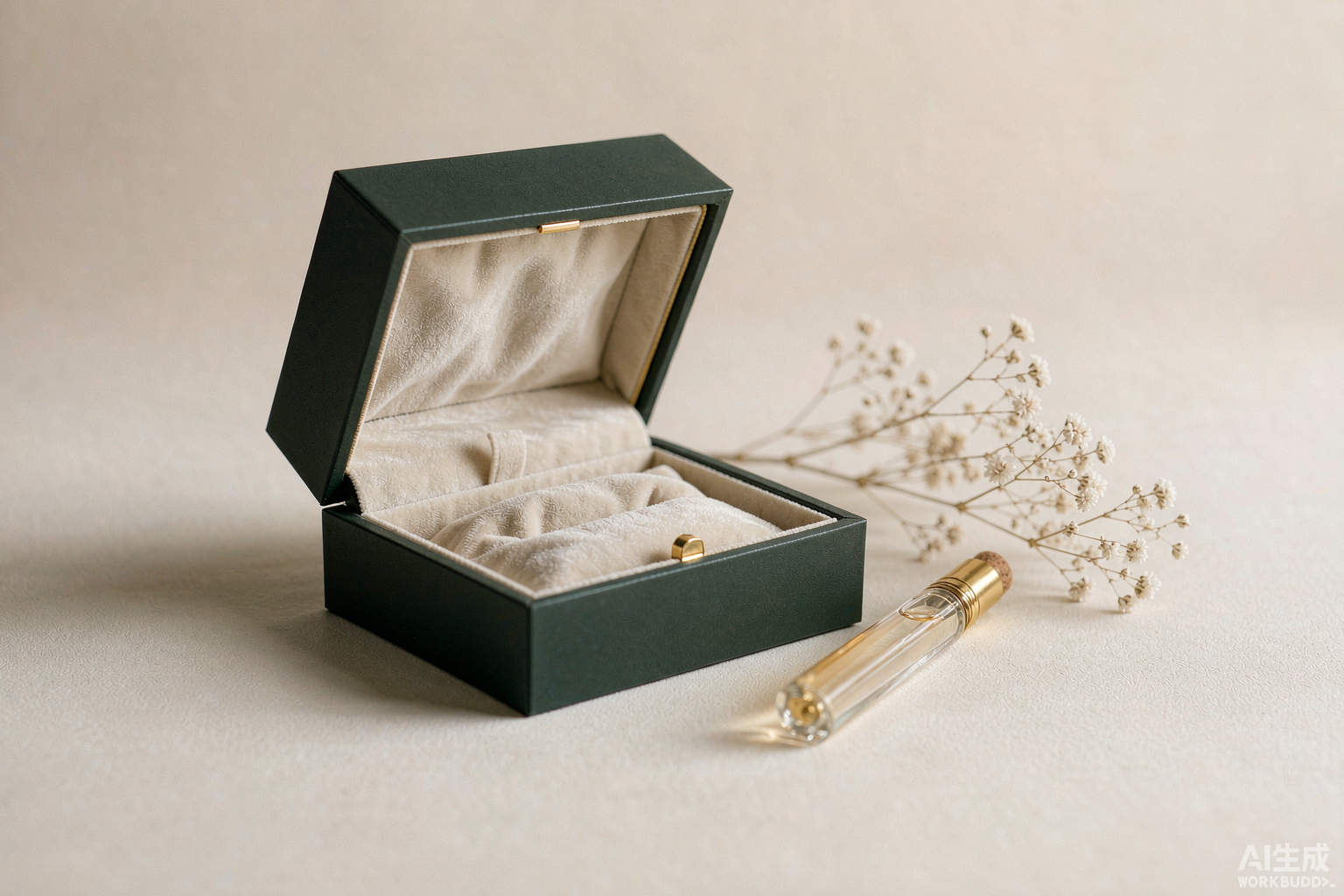
盒子闻起来也讲究 How Scent Shapes Jewelry Packaging and Store Experience
顾客拿到一只珠宝礼盒,第一眼看的是设计,第一口"吸"进去的却是味道。视觉和触感有人反复打磨,气味这一关,往往整条供应链都没人认领。
一问:顾客真的会因为"味道"退货吗?
会,而且很难挽回。嗅觉是唯一绕过大脑中转、直接接入边缘系统的感官,情绪与记忆几乎同步被点亮。常被引用的一组对比是:人对气味的记忆留存约 35%,对看到的画面只有约 5%。这意味着一次"塑胶味""油漆味"的开盒,会被记住的时间远比一次配色失误更长。
珠宝盒的处境更特殊:体积小、内部密闭、常年闭合,材料一旦带味,挥发物会在盒腔里累积到很高浓度;顾客开盖那一秒正好是峰值。加上溶剂类物质的气味阈值极低——甲苯、二甲苯、丁酮只需要微量残留,鼻子就能捕捉到"焦糊味"或"化学味"。产品本身可能毫无问题,差评却写在了盒子头上。
二问:珠宝盒的异味到底从哪来?
几乎全部来自工艺,而不是材料"天生难闻"。最常见的四个源头:一是溶剂型油墨与上光油;二是复合与糊盒用的胶,酯类(乙酸乙酯、乙酸丁酯)贡献残留总量,酮类(丁酮、环己酮)带来典型"溶剂臭";三是覆膜、裱贴等叠加工序,每多一层就多一道胶与一次烘干不彻底的风险;四是本体材料,木盒油漆释气、PU 与皮革鞣制助剂、植绒背胶、回收浆纸的纸味都可能超出预期。
国内的红线其实很明确。《油墨中挥发性有机化合物(VOCs)含量的限值》(GB 38507-2020)对水性柔印油墨(吸收性承印物)限值 ≤5%、单张胶印油性油墨 ≤3%、能量固化胶印油墨 ≤2%、喷墨油墨 ≤30%;《胶粘剂挥发性有机化合物限量》(GB 33372-2020)要求水基型包装用胶 ≤50 g/L;清洗剂另有 GB 38508-2020 约束。检测口径上,含量总量用顶空气相色谱法(GB/T 38608),溶剂残留沿用 GB/T 10004 的思路——总量 ≤5.0 mg/m²、苯类溶剂不得检出(检出限 0.01 mg/m²);主观感受则有 GB/T 31404-2015 的嗅觉法判定,要求常温下包装内无明显异味。出口欧盟还要另算:胶粘剂与涂料执行 Directive 2004/42/CE(50–750 g/L),苯、甲苯受 REACH 附件 XVII 限制在 0.1% 以内。
三问:高端简约的盒子,为什么闻起来也更"干净"?
"高端简约的珠宝包装更容易被顾客青睐"这句话,通常被理解成视觉判断。放到气味这一维度,它其实是一条工艺结论:少一层结构,就少一处味源。
堆料方案的代价是叠加工序——多一次覆膜、多一层裱贴、多一遍上光、多几处金属件粘接,每一道都带一份溶剂和一份胶。极简做法反过来收敛了变量:哑光触感纸替掉覆膜、水性或 UV 固化替掉溶剂型、纸对纸的单一材质结构减少异种材料粘接、磁吸取代大面积胶合。结果是盒子闻起来只剩下纸和绒的本味。把预算从装饰挪到"无味工艺",成品往往同时更贵气、也更经得起鼻子检验。这也是盛艺祥在珠宝包装设计里反复强调的取舍:减法不是省钱,是把钱花在看不见但闻得到的地方。
四问:反过来主动给包装加香,值不值?
值,但要放对位置。嗅觉品牌化已经是成规模的生意:全球气味营销市场约 36 亿美元(2024)、预计 2033 年达到 64 亿美元,年复合增速约 6.6%;2025 年北美占约 34.21%、亚太约 29.98%、欧洲约 26.88%,香氛耗材占收入约 58.2%。效果侧的数据也很直白:约 84% 的消费者表示对拥有签名气味的品牌记忆更深,约 60% 的人仅凭气味就能认出品牌;门店销售最高提升约 11%,顾客停留平均延长约 15 分钟,愉悦度提升可达 40%。康奈尔大学的研究显示,酒店签名香能把客人满意度提升约 36%。做法上,路易威登给购物袋加香、Lush 靠气味把人从街上"拉"进店,都是把嗅觉当成延展出门店的品牌资产。中国市场同样在长:颖通与德勤发布的《2025 中国香水香氛行业白皮书》显示,2024 年中国香水市场约 249 亿元,预计 2028 年突破 339 亿元、年复合增速约 8%;51 城百货购物中心监测中,香水香氛是近三年持续正增长的线下美妆品类,2025 年迄今同比增速 3.7%、份额升至 6.4%。
但珠宝有三条硬约束:一是迁移风险,珍珠、琥珀、珊瑚、绒布托和皮质表带都会吸附香精;二是冲突风险,顾客自带香水与包装香撞味比无味更糟;三是合规,香精成分受 IFRA 规范约束,扩香设备还牵涉室内空气质量管理(美国环保署曾指出约 32% 的扩香设备需要定期维护)。所以珠宝的正确解法是:盒体本身追求"无味",香放在可分离、可拆除的载体上——香卡、香片,或首饰袋里的小香囊。饰品包装盒是长期陪伴的容器,香是一次性的问候,两者不该焊在一起。
五问:门店和陈列区的气味该怎么管?
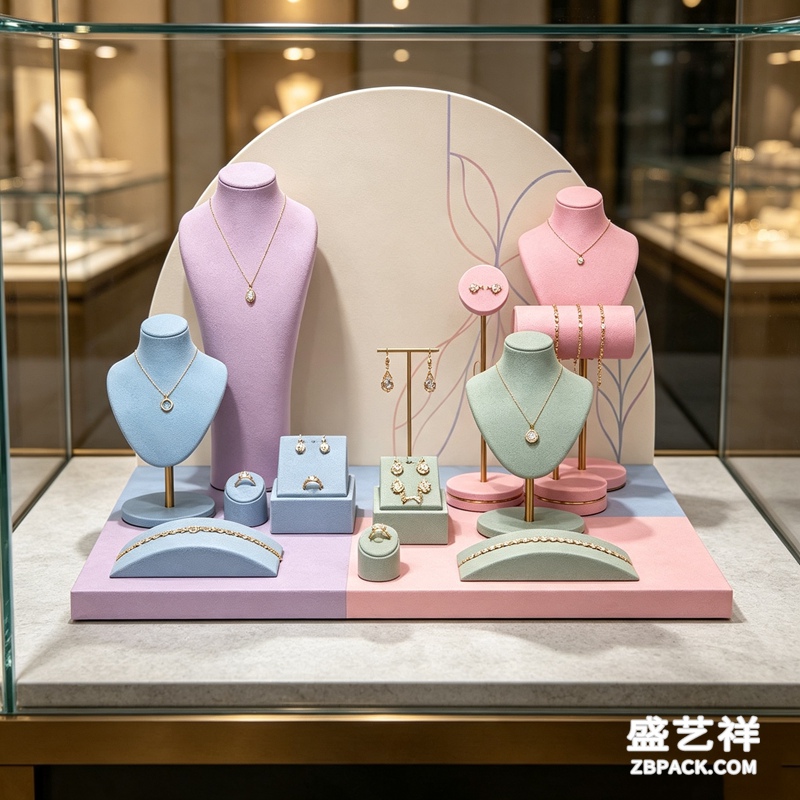
比包装更容易被忽略的是陈列现场。新到的珠宝陈列道具往往是气味重灾区:亚克力胶合件、喷漆木件、绒布托的背胶都会释气,柜内空间小、灯下温度高,释气速度还会被加速。稳妥的做法是先拆箱通风 48–72 小时再上柜,别让新道具带着味直接进入顾客的呼吸区。
试戴区浓度要控制在"察觉不到但记得住"的水平——顾客低头看戒指时鼻子离台面仅几十厘米,稍浓就成侵扰。珠宝摆台附近不放强香源,避免迁移到有机宝石;包材仓与成品仓分开存放,别让一批未熟化的盒子把整个仓库都染上味。有一点必须强调:数据里的停留延长和销售提升,前提都是气味与品牌调性一致。气味不对,越浓越扣分。
六问:下单前怎么把"没味道"写成可验收的条款?
五条就够用。第一,索取油墨、胶粘剂、清洗剂的 VOCs 含量检测报告,逐项对 GB 38507、GB 33372、GB 38508;第二,检测三件套写清口径:顶空气相色谱测总量(GB/T 38608)+ 溶剂残留(GB/T 10004 口径)+ 嗅觉法(GB/T 31404);第三,加一条最接近真实使用场景的土办法——样盒密封静置 24 小时后开盖,由 2–3 人独立盲评,判定"无明显异味"方可放行;第四,把工艺选型直接写进图纸:水性或 UV 固化油墨、水基胶、免覆膜触感纸、木盒必须封边并延长晾置、植绒使用低 VOC 背胶;第五,把出货前的熟化期(通风晾置 48–72 小时)写进合同,这一项最容易在赶交期时被悄悄砍掉。
算账很简单:一次异味投诉带走的是退货运费、一条差评和一次复购。无味是及格线,签名香才是加分项——顺序反了,加香只会把问题放大。盛艺祥在珠宝盒定制和珠宝袋加工上的做法,是把气味当成和公差、色差同级的验收项,先做到干净,再谈讲究。
本文为原创内容,版权归盛艺祥所有。如需转载请注明出处。
盛艺祥(Shengyixiang)——高端珠宝包装设计与定制专家,为品牌护航。
When a customer receives a jewelry box, the first thing they see is the design. The first thing they inhale is the smell. Visual and tactile details get polished endlessly; scent is usually the one checkpoint nobody in the supply chain owns.
Q1: Do customers really walk away because of a smell?
They do, and the damage is hard to undo. Smell is the only sense that bypasses the brain's relay station and connects directly to the limbic system, lighting up emotion and memory at the same time. A figure widely cited in sensory marketing captures the asymmetry: people retain roughly 35% of what they smell versus about 5% of what they see. A single "plastic" or "paint" note at the moment of opening is remembered far longer than an off colour.
Jewelry boxes make the problem worse. They are small, sealed and kept closed for long stretches, so any volatile residue accumulates inside the cavity until it reaches a high concentration — and the customer lifts the lid exactly at that peak. Solvent compounds also have very low odour thresholds; trace amounts of toluene, xylene or methyl ethyl ketone are enough for the nose to register a burnt or chemical smell. The jewelry itself may be flawless, yet the complaint lands on the packaging.
Q2: Where does that odour actually come from?
Almost always from process, not from materials being inherently unpleasant. Four sources dominate. First, solvent-based inks and coatings. Second, adhesives used in lamination and box gluing — esters such as ethyl and butyl acetate drive total residue, while ketones such as MEK produce the classic solvent stench. Third, stacked finishing steps: every additional film, wrap or varnish adds another layer of glue and another chance of incomplete drying. Fourth, the substrate itself — off-gassing lacquer on wooden boxes, tanning agents in leather and PU, flocking adhesives, and the papery note of recycled pulp.
China's limits are explicit. GB 38507-2020 caps VOC content in inks: water-based flexo inks on absorbent substrates at ≤5%, sheet-fed offset oil-based inks at ≤3%, energy-curable offset inks at ≤2%, inkjet inks at ≤30%. GB 33372-2020 requires water-based packaging adhesives to stay at ≤50 g/L, and GB 38508-2020 governs cleaning agents. On the testing side, total content is measured by headspace gas chromatography (GB/T 38608), solvent residue follows the GB/T 10004 logic of ≤5.0 mg/m² total with benzene-type solvents not detectable (detection limit 0.01 mg/m²), and subjective judgement is covered by the olfactory method in GB/T 31404-2015, which requires no obvious odour inside the package at room temperature. Exporting to the EU adds another layer: adhesives and coatings follow Directive 2004/42/CE (50–750 g/L), while benzene and toluene are restricted to 0.1% under REACH Annex XVII.
Q3: Why does minimalist high-end packaging also smell cleaner?
"Restrained, high-end jewelry packaging wins customers over more easily" is usually read as a visual claim. Viewed through scent, it becomes a manufacturing conclusion: one less layer means one less odour source.
Maximalist packaging pays for itself in extra operations — another lamination, another wrap, another varnish pass, a few more glued metal fittings — and each one carries a share of solvent and adhesive. Minimalism collapses those variables: matte touch paper replaces film lamination, water-based or UV-curable systems replace solvent-based ones, paper-to-paper construction removes dissimilar-material bonding, and magnetic closures replace large glued areas. What remains is the honest smell of paper and velvet. Moving the budget from decoration to odour-free processing usually produces a box that feels more expensive and survives the nose test at the same time. That trade-off sits at the centre of how Shengyixiang approaches jewelry packaging design: subtraction is not cost-cutting, it is spending where the result cannot be seen but can be smelled.
Q4: Is it worth deliberately adding a scent instead?
Yes — if it is placed correctly. Olfactory branding is now a real industry. The global scent marketing market was around USD 3.6 billion in 2024 and is projected to reach USD 6.4 billion by 2033, a CAGR of roughly 6.6%. In 2025 North America held about 34.21% (roughly USD 615.7 million), Asia Pacific about 29.98% (roughly USD 539.6 million) and Europe about 26.88%, with scent consumables accounting for some 58.2% of revenue. The behavioural numbers are equally blunt: about 84% of consumers say they remember a brand better when it has a signature scent, and roughly 60% can identify a brand by smell alone. Scented retail environments report sales lifts of up to 11%, dwell time extended by about 15 minutes on average, and mood improvements of up to 40%. Cornell research found signature hotel scents raised guest satisfaction by about 36%. In practice, Louis Vuitton scents its shopping bags and Lush pulls shoppers in from the street on smell alone — both treat scent as brand equity that travels beyond the store. China is growing too: the 2025 China Fragrance Industry White Paper from Ying Tong and Deloitte puts the 2024 domestic fragrance market at about RMB 24.9 billion, forecast to pass RMB 33.9 billion by 2028 at roughly 8% CAGR, with fragrance the one offline beauty category posting three straight years of growth across 51 monitored cities — up 3.7% year to date in 2025 and 6.4% of category share.
Jewelry, however, imposes three hard constraints. Migration: pearls, amber, coral, velvet trays and leather straps all absorb fragrance. Conflict: a packaging scent clashing with the customer's own perfume is worse than no scent at all. Compliance: fragrance ingredients fall under IFRA standards, and diffusion hardware touches indoor air quality management — the US EPA has noted that around 32% of scent devices require regular maintenance. The workable answer is to keep the box itself odour-neutral and put the fragrance on a separable, removable carrier: a scent card, a scent sheet, or a small sachet tucked into the jewelry pouch. A gift box is a long-term container; a scent is a one-time greeting. The two should not be welded together.
Q5: How should a store manage scent around its displays?
The sales floor is easier to overlook than the packaging. New jewelry display props are frequently the worst offenders: bonded acrylic, lacquered wood and the backing adhesive on velvet trays all off-gas, and because case interiors are small and lighting raises the temperature, off-gassing accelerates. The safe practice is to unbox and ventilate props for 48–72 hours before they go into a case, rather than letting fresh fittings release solvent straight into the customer's breathing zone.
In the try-on area, concentration should sit at the level of "not noticed, but remembered." A customer leaning over a ring is only tens of centimetres from the counter surface, so a slightly heavy dose becomes intrusive. Keep strong scent sources away from display risers to avoid migration into organic gemstones, and store packaging materials separately from finished goods so one uncured batch does not perfume the whole warehouse. One caveat matters: every published lift in dwell time and sales assumes the scent is congruent with the brand. When it is not, more intensity simply means more damage.
Q6: How do you turn "no odour" into a verifiable clause?
Five items are enough. First, request VOC content reports for inks, adhesives and cleaning agents, checked line by line against GB 38507, GB 33372 and GB 38508. Second, specify the test set explicitly: headspace GC for total content (GB/T 38608), solvent residue on the GB/T 10004 basis, and the olfactory method in GB/T 31404. Third, add the practical test closest to real use — seal a sample box for 24 hours, then open it and have two or three people evaluate it blind, releasing the batch only on a verdict of "no obvious odour." Fourth, write process choices into the drawing: water-based or UV-curable inks, water-based adhesives, unlaminated touch paper, edge-sealed and extended-cure wooden boxes, low-VOC flocking adhesive. Fifth, contract the pre-shipment curing window (48–72 hours of ventilated rest), because that is the step most quietly deleted when deadlines tighten.
The arithmetic is simple. One odour complaint costs a return shipment, a public review and a repeat purchase. Odour-free is the pass mark; a signature scent is the bonus. Reverse that order and fragrance only amplifies the problem. Across custom jewelry boxes and pouch production, Shengyixiang treats smell as an inspection item on par with tolerance and colour deviation — clean first, refined second.
This is original content. Copyright belongs to Shengyixiang.
Shengyixiang — your expert in high-end jewelry packaging design & customization.