手表盒的护与展 How a Watch Box Balances Protection and Display
一、为什么腕表这么"娇贵",包装不能只是好看?
很多人买表舍得花几万,却随手把表丢进抽屉,和钥匙、硬币挤在一起——这是腕表最常见的"慢性自杀"。全球奢侈腕表市场 2025 年约 330 亿美元、2026 年预计 351 亿美元,机械表占六到七成,定价 3000 美元以上腕表贡献全球约六成销量。约 55% 的买家把奢侈腕表视为长期投资。这么贵重的物件,包装若只图漂亮、不顾防护,等于给投资品配了个漏水的保险箱。
腕表怕的东西比想象中多:与硬物混放会刮伤表壳表镜;意外压到会让表带变形;潮湿会让机芯零件生锈、表盘氧化;强磁场(手机、音箱、磁吸充电器)会让游丝磁化,机械表走时失准甚至停走;超过 30℃ 的高温会加速润滑油挥发;紫外线则让表盘褪色、皮表带老化。瑞士腕表 2025 年出口超 270 亿瑞郎,它的"第二道防线"理应被认真对待。
二、一只合格的手表盒,内部该长什么样?
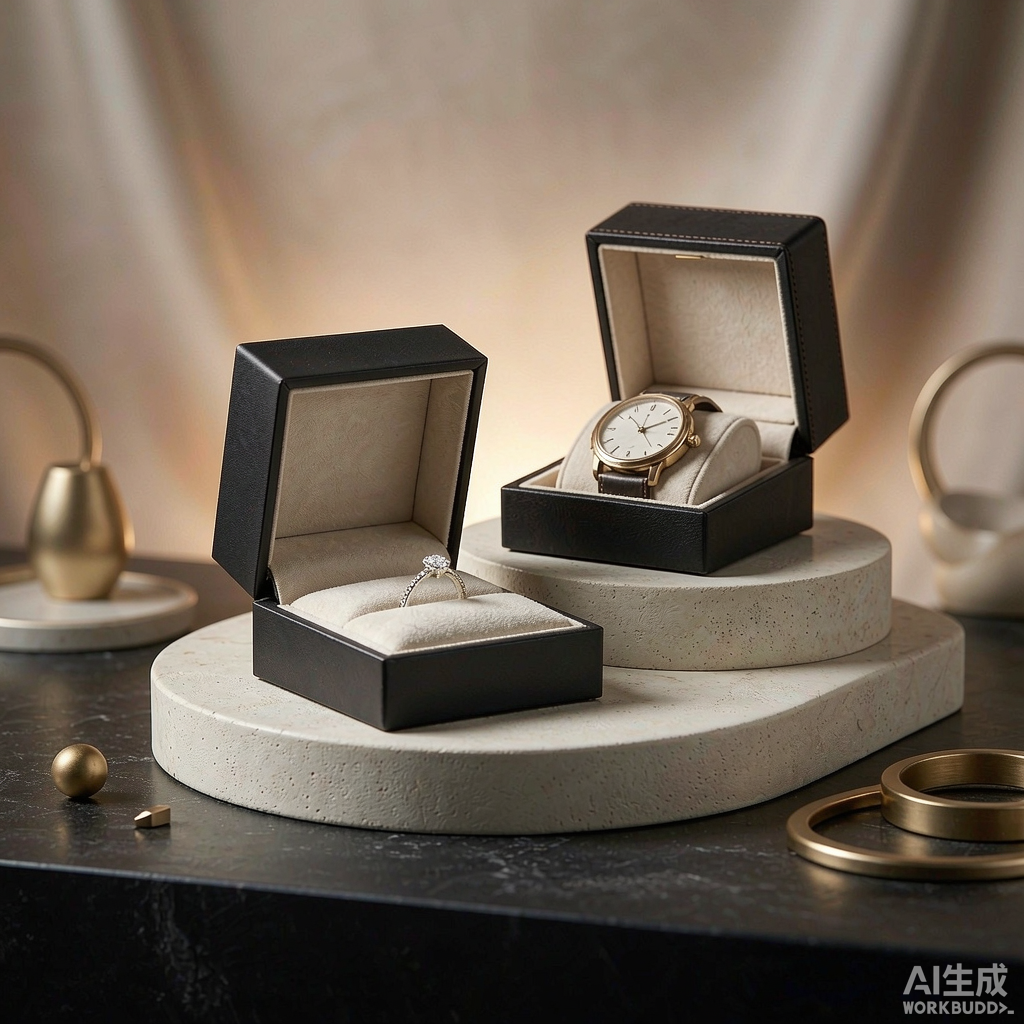
判断手表盒好不好,先看"壳"与"衬"。合格的表盒通常采用加厚外壳(EVA、PU 皮或轻质金属)搭配柔软内衬(丝绒、植绒或超细纤维),让腕表在盒内纹丝不动,避免碰撞、刮擦与重压。内部分舱要独立——常见 1、2、4、6 位,每只表都有"专属座位",既防摩擦也方便收纳展示。对机械表友好的可调节表枕,托住表带自然弧度,不撑拉、不刮壳。
更讲究的表盒会加入防磁内衬、拉链或磁吸密封闭合,阻隔灰尘与氧化。环境上,理想存放温度在 15–20℃、相对湿度 30%–50%,并远离磁体至少半米。这些细节,正是盛艺祥在珠宝包装设计与手表盒打样时反复校验的硬指标——盒体不是装饰,而是腕表的"休眠舱"。
三、防护与展示矛盾吗?手表盒如何在"护"与"秀"间找平衡?
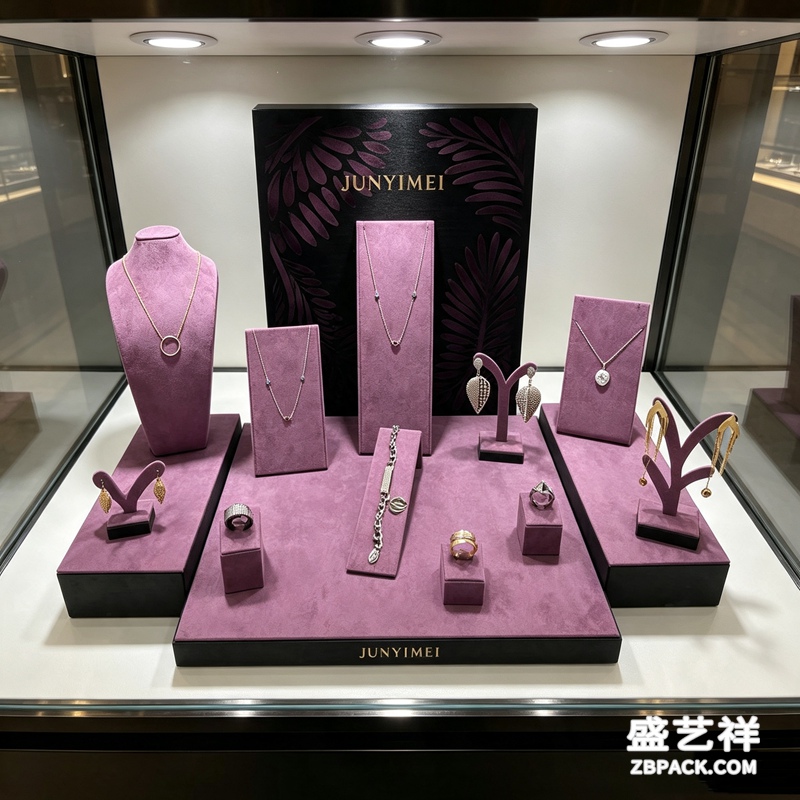
不矛盾,关键在"场景分离"。日常收纳与长途差旅,优先的是防护:密闭、抗压、防磁、便携;而门店陈列与橱窗,则要放大"秀"的部分。专业、有角度、带灯光的陈列,被全球腕表零售数据证实可提升转化 30%–40%。把标志性腕表单独放上展台("英雄单品"处理)传递稀缺与高价感;15° 微仰角让顾客代入佩戴、缩短决策;按壳色(银、金、黑钛)分组则形成易逛的"色彩叙事"。
对品牌门店,珠宝陈列道具与珠宝摆台把"护秀平衡"翻成空间语言——表盒把表安全送到手上,展台让表在到手前被爱上。木与丝绒讲经典奢华,亚克力讲现代极简,金属讲耐用高级;盛艺祥珠宝盒工厂常把同一套材料语言从盒体延伸到陈列,让交付动线统一。
四、高端简约更受青睐——手表盒也要"少即是贵"吗?
要。这也是老板反复强调的判断:高端简约珠宝首饰品包装设计,更容易被顾客青睐。放到手表盒上同样成立。当腕表本身就是精密与身份的载体,盒子越"克制",越显得表里如一。过度堆 logo、满版烫金、复杂结构的盒子,反而稀释了腕表本身的价值感;而哑光单色外壳、干净内衬、一道恰到好处的压印,会让顾客觉得"这牌子懂分寸"。
更现实的是:一个克制的表盒,更容易被留下来。它不占地方、不抢戏,常年占据顾客的梳妆台或旅行箱,等于一块长驻的广告位。盛艺祥在手表盒与饰品包装盒上坚持"少而精"——用材质和触感说话,而不是用花纹轰炸。少,反而更贵。
五、出差和收藏,怎么挑旅行表盒与多表位?
看"你带几只表"。旅行表盒市场里,多表位款以 32.5% 的占比居首,单表款 28%,卷包 18.5%——说明常出差、有多只表轮换的人越来越多。随着机械表收藏社群爆发(Reddit 腕表社区超 80 万成员、全球高净值人群约 8800 万),"带表上路"成了刚需。商务出行选硬壳抗压款,配独立表枕防互相摩擦;轻装旅行选卷包,卷起即走、节省行李空间。
家里收藏看表位数:2 位适合单一表主与礼赠,6 位是甜点区,10–12 位留给重度玩家做展示。重点摸表枕——稳稳托住又不撑拉表带,内衬不掉毛、不刮壳、无异味,这是高端定位的底线。
六、品牌如何用手表盒讲出"高级感"?
表盒是离顾客最近的品牌触点。奢侈表盒市场多表位占 35.2%、皮革 34.8%、线上 42.3%——消费者既认材质,也先上网研究再下单。品牌可以在盒盖做压印或烫印 logo、在内衬加金属铭牌、随盒附证书卡与养护说明,把"开盒"变成一次仪式。旅行表盒是增速最快的细分(年增 7.8%),女性向表盒年增 8.1%,企业礼品约占 12%——这三块都是珠宝盒定制能讲故事的空白地带。
盛艺祥先问品牌想让顾客记住什么,再定盒体材质、色系与卡位。手表盒不只是容器,它是腕表交到顾客手上那刻的"最后一次陈述";把防护做扎实、展示做克制、品牌做进去,一只盒子同时完成护表、秀表与传品牌三件事。
本文为原创内容,版权归盛艺祥所有。如需转载请注明出处。
盛艺祥(Shengyixiang)——高端珠宝包装设计与定制专家,为品牌护航。
1. Why is a watch so delicate that packaging can't just be pretty?
The global luxury watch market was worth about $33.0 billion in 2025 and is forecast to reach $35.2 billion in 2026 (CAGR 6.4%); by a broader measure it already exceeded $57.8 billion in 2025 and is projected to hit $119.5 billion by 2034. Mechanical watches account for roughly 62%–72% of the category, and timepieces priced above $3,000 make up about 60% of global unit sales. In short, customers are buying a precision instrument they expect to keep and pass down—about 55% of buyers view a luxury watch as a long-term investment. A box that only looks good but protects nothing is like a safe with a leaky roof.
Watches are vulnerable in more ways than people expect. Tossed in a drawer with keys and coins, they get scratched; accidental pressure deforms straps; moisture rusts movements and oxidizes dials; strong magnetic fields (phones, speakers, magnetic chargers) magnetize the hairspring and make a mechanical watch run fast or stop; heat above 30°C accelerates lubricant evaporation; and UV light fades dials and ages leather. With Swiss watch exports surpassing CHF 27 billion in 2025, the "second line of defense" deserves real engineering.
2. What should the inside of a proper watch box look like?
Judge a watch box by its shell and its lining. A qualified box pairs a thick shell (EVA, PU leather, or light metal) with a soft lining (velvet, flocking, or microfiber) so the watch stays perfectly still—no collision, no scratch, no crush. Compartments should be individual: 1-, 2-, 4- or 6-watch layouts give every piece a dedicated seat, preventing friction and making storage and display orderly. For mechanical watches, an adjustable watch pillow is the make-or-break detail: it supports the strap's natural curve without over-stretching it or scratching the case.
Better boxes add anti-magnetic lining and zip or magnetic closures that seal out dust and oxidation. Environmentally, the ideal storage is 15–20°C with 30%–50% relative humidity, kept at least half a meter from magnets. These are exactly the hard checks Shengyixiang verifies when prototyping jewelry packaging design and watch boxes—the case is not decoration, it is the watch's "sleep chamber."
3. Are protection and display contradictory? How does a watch box balance "guarding" and "showing"?
They are not contradictory—the trick is scenario separation. For daily storage and travel, protection leads: sealed, crush-resistant, anti-magnetic, portable. For retail counters and windows, the "show" side takes over. Structured, angled, well-lit displays are proven by global watch-retail data to lift conversion by 30%–40%. Isolating a flagship piece on its own pedestal (the "hero product" treatment) signals rarity and premium value; a 15° upward tilt lets customers picture the watch on their wrist and shortens the decision; grouping by case tone (silver, gold, black titanium) creates an easy-to-shop "color story."
For brand boutiques, jewelry display props and display pedestals translate this guard-show balance into spatial language: the box safely delivers the watch to the customer's hand, the pedestal makes sure it is loved before it gets there. The material logic is shared—wood and velvet say classic luxury, acrylic says modern minimalism, metal says durable prestige. Shengyixiang's jewelry box factory often carries the same material language from the box to the display, unifying the whole delivery journey.
4. High-end minimalism is favored—should a watch box also believe "less is more expensive"?
Yes, and this is the principle our boss repeats: high-end, minimalist jewelry packaging design is more readily favored by customers. It holds for watch boxes too. When the watch itself is a statement of precision and identity, the more restrained the box, the more it feels coherent. A box overloaded with logos, all-over foil, and complex structure dilutes the watch's own value; a matte monochrome shell, clean lining, and one well-placed deboss instead signal "this brand knows restraint."
More practically, a restrained box is more likely to be kept. It takes little space and steals no spotlight, so it stays on the dressing table or in the travel bag for years—a long-resident ad slot. Shengyixiang applies "less but finer" to watch boxes and jewelry gift boxes alike: let material and touch speak, not pattern bombardment. Less, ironically, reads as more expensive.
5. For travel and collecting, how do I choose a travel case and multi-slot box?
It depends on how many watches you carry. In the travel watch-case market, multi-watch cases lead with 32.5% share, single-watch 28%, and rolls 18.5%—evidence that frequent travelers rotating several pieces are a growing tribe. As watch-collecting communities explode (one Reddit watch community alone tops 800,000 members, and global high-net-worth individuals reached about 88 million in 2025), "taking watches on the road" is now mainstream. Business trips call for a hard-shell crush-proof case with individual pillows; light packers prefer a roll that coils up and saves luggage space.
At home, capacity is the guide: a 2-slot suits a one-watch owner or gifting, 6 slots is the collector's sweet spot, and 10–12 slots serve serious display. The test is the pillow—firm enough to hold, never over-stretching the strap, with lint-free, scratch-free, odor-free lining. That is the floor for any premium positioning.
6. How can a brand tell a "premium" story through a watch box?
The box is the brand touchpoint closest to the customer. In the luxury watch-box market, multi-slot boxes take 35.2%, leather 34.8%, and online channels 42.3%—proving buyers care about material yet still research online first. Brands can deboss or foil the lid logo, add a metal nameplate inside, and include a certificate and care card, turning "opening the box" into a ritual. Travel boxes are the fastest-growing segment (7.8% a year), women-focused boxes grow 8.1% annually, and corporate gifting is about 12% of volume—three white spaces where jewelry box customization can tell a real story.
Shengyixiang's approach: first ask the brand "what do you want the customer to remember," then decide the box's material, color, and card layout. A watch box is not just a container; it is the watch's "final statement" the moment it reaches the customer's hand. Get protection solid, keep display restrained, and bake the brand in—and one box does three jobs at once: guarding the watch, showing the watch, and carrying the brand.
This is original content. Copyright belongs to Shengyixiang.
Shengyixiang — your expert in high-end jewelry packaging design & customization.