珠宝快递怎么不坏 How to Ship Jewelry Without Damage or Disputes
一枚戒指不到十克,看着比手机结实得多,却常常在最后一公里出问题——镜面起雾、镀层发花、链子缠成死结,甚至整只包裹不见了。珠宝的电商运输包装,考的从来不是材料多贵,而是结构算得准不准。下面六个问题来自真实的采购与售后现场。
问一:珠宝这么小,运输包装真值得下功夫吗?
值得,而且它直接挂钩退货率和复购率。Mondi 发布的《2026 电商趋势报告》调研了欧洲及土耳其的 6000 名消费者,结论相当明确:98% 的人把"保护商品"列为电商包装的第一诉求,86% 期待包装可持续,约三分之二承认包装会影响开箱体验并促成复购,而 72% 的人表示会因为包装过大而不再回购同一家店。
损失是可以量化的。行业统计显示,跌落是物流货损的头号原因,占比超过 60%;珠宝配饰品类的电商退货率约在 10%–15%,虽然主因是"和想象中不一样",但"损坏或有瑕疵"稳定占到全品类退货原因的 15%。跨境更严峻——2026 年上半年首饰类一件代发的物流投诉中,47% 来自丢件破损,32% 来自清关被扣。反过来看,国内某平台对珠宝品类改用防震内托加独立保险盒之后,货损率压到 0.15%,而行业平均是 0.8%,相差五倍以上。
问二:一套合格的珠宝运输包装该怎么分层?
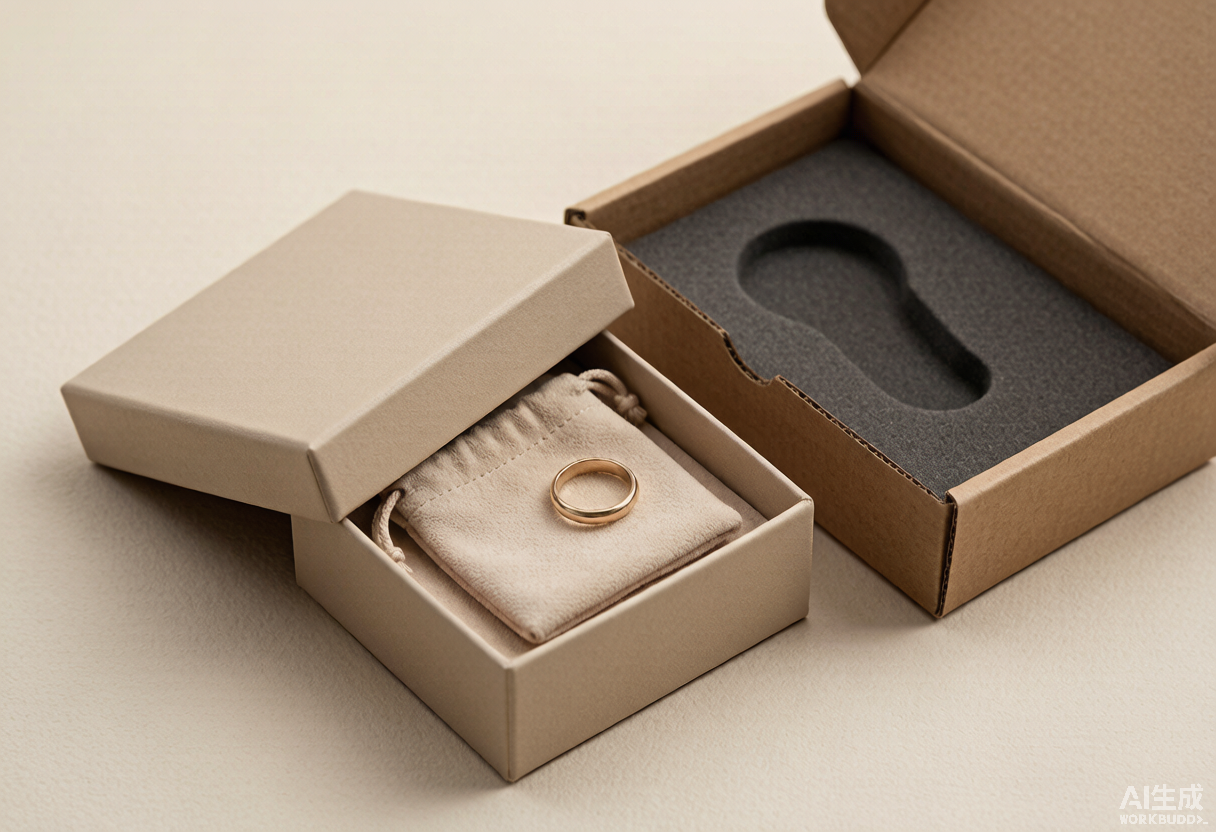
三层,缺一不可:抗压外箱、定位内盒、单件隔离。
验证标准建议直接对齐 ISTA 3A,这是主流快递网络(顺丰、DHL、FedEx、UPS)和亚马逊等平台普遍认可的预运输测试协议。它按毛重分级设定跌落高度,9.1 公斤以下跌 76 厘米。珠宝包裹几乎都不到 5 公斤,一律按此验证。完整流程还包含温湿预处理、随机振动(3–100 Hz,Grms 约 0.51)、集中冲击,以及十次定向跌落加四次旋转棱跌落,顺序遵循"最弱面—最弱棱—最弱角"。其中角跌落最狠,能量最集中。
要盯的材料参数有三个:瓦楞的边压强度 ECT 决定堆码抗压,耐破强度反映抗冲击,缓冲材料的 G 值曲线决定传到饰品上的加速度。实务中最常见的失败并不是外箱破了,而是内托间隙过大导致箱内二次碰撞,开箱后镜面和爪镶处多出细划痕。所以内盒必须卡死,链类要用固定位防缠绕。
问三:为什么高端简约的包装在电商链路里反而更抗造?
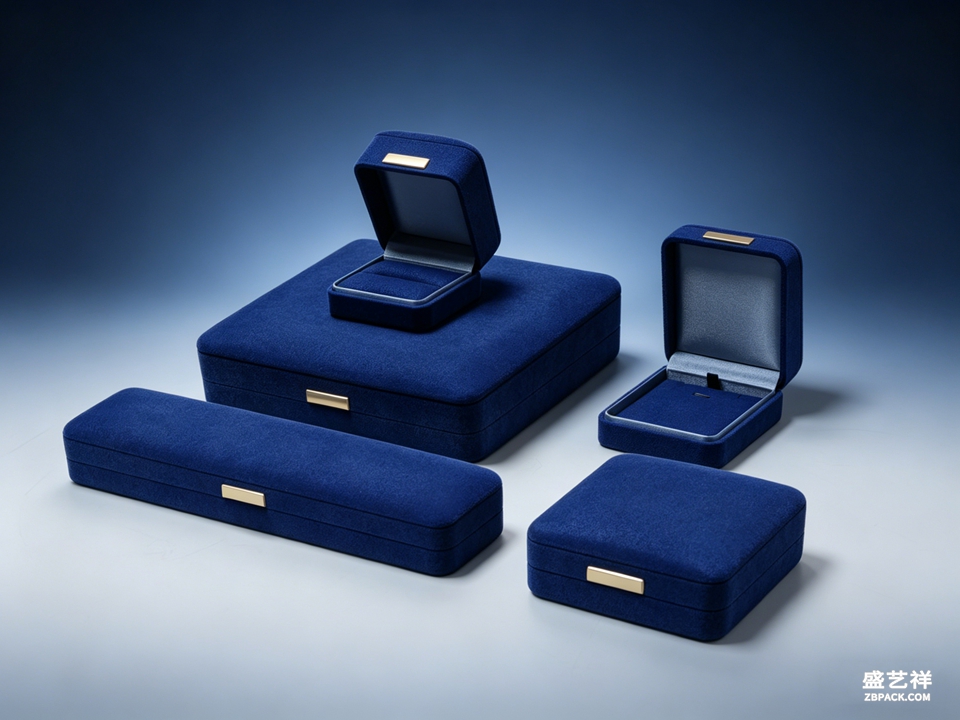
因为高端简约珠宝首饰品包装设计更容易被顾客青睐,而在物流环节,它同时还是一套更可控的工程方案。
消费端数据很直接:52% 的消费者更偏好极简、尺寸贴合的包装,胜过夸张的开箱表演;35% 的人曾因包装过度或难以打开而弃用某个品牌;易开启设计能让满意度提升 18%。同时,品牌化包装能把商品的感知价值平均抬高 24%,40% 的消费者称优质包装会让他们更愿意复购,18 至 34 岁人群中 61% 分享过开箱内容。
工程收益更硬:行业平均箱内空隙率高达 40%,而 78% 的包裹按体积重计费,尺寸贴合能减少约 24% 的材料消耗,过去一年已有 38% 的 DTC 品牌主动缩小包装以降低运费。简约意味着空隙更少、缓冲路径更短、跌落时位移更小。少一层浮夸装饰,往往就多一分抗摔余量。
问四:银饰和镀层件寄出去为什么容易发黑发花?
八成是湿度和摩擦,不是材质本身不行。
珠宝在运输仓储中的理想区间是相对湿度 45%–55%。低于 40%,皮质配件和纸盒会脆化;高于 65%,盒内冷凝风险上升,银饰硫化发黑、镀层起点蚀都从这里开始。抗氧化片和防变色纸要放在独立隔层,不能直接压在饰面上;干燥剂用量必须和盒体容积匹配,过量反而会让皮革和纸基材料变脆。抗硫化能力可以要求供应商出具 ISO 4538 加速试验报告,行业里较稳妥的验收线是 72 小时零变色。
摩擦这一项常被低估。多件混装、彼此贴着一路振动,是镀层微划痕最大的来源。对策不复杂:每件独立囊袋或独立卡位,内衬做抗静电处理,厚度控制在 1.2–1.8 毫米。这类细节在正规珠宝盒工厂的打样阶段就应该定死,量产后再改成本高得多。
问五:跨境和节假日高峰,还要额外防什么?
防丢、防拆、防退货潮。
跨境的现实压力在于时效与合规。欧美市场若超过 20 天未送达,退款率会飙到 30% 以上。有个真实案例:一位做 Etsy 的银饰卖家早期走邮政小包发美国,三个月丢件 14 单、损失超 1.2 万元,另有 6 单清关被扣;改走首饰专线并启用预清关后,丢件率降到 0.07%,退款率下降 18 个百分点,单店利润提升 23%。包装侧的配合是:外箱低调、不印高价值品类字样,加防拆封条与易碎标,单据独立成袋,申报重量与实测一致。奢侈品类电商退货率高达 18%–30%,其中"穿戴一次再退"占相当比例,业内验证有效的手段是加一枚必须保留才能退款的防拆吊牌。
节假日是另一道坎。节后退货量通常比年均高出 25%–40%,电商退货每年额外产生约 60 亿磅包装废弃物。让包装"可二次封装"因此变得很实际——41% 的消费者本来就会二次使用包装,用原包装原路退回,反向物流中的损坏率会明显下降。
问六:采购这类包装,怎么谈价、怎么验收?
先说谈价。数据显示,年营收千万美元以下的 DTC 品牌有 73% 只用一家包装供应商,而拥有两家及以上合格供应商的品牌,平均采购价要低 12%–18%,且 82% 的供应商在看到竞品报价时愿意让步。多数品牌 18 个月才重新议价一次,合理节奏其实是 6 至 12 个月。交期上,国内瓦楞件通常 2–3 周,海外采购要 6–10 周;万件以上量级从中国采购的单价优势在 40%–60%。做首饰盒批发时,这个账要提前算清楚。
再说验收清单,建议写进合同附件:ISTA 3A 测试报告(含照片与判定结论)、瓦楞 ECT 值、缓冲材料 G 值曲线、内衬克重与厚度、抗静电固化工艺、ISO 4538 抗硫化报告、材质单一化与可回收标识。合规方面,67% 的消费者期待包装可回收,而瓦楞纸板回收率高达 91.4%,是最省心的外层选择。
最后一条建议是做 SKU 分档:按体积和货值把盒型收敛到三档,2026 年已有 57% 的 DTC 品牌计划削减包装 SKU 数量以简化运营,自动选箱系统的采用率两年翻倍至 18%。盛艺祥在承接珠宝包装设计时,通常会把跌落验证、湿度管理、内托定位与门店陈列的材质语言一次性写进方案,避免上线后返工。
回到开头:珠宝运输包装比的不是用料贵不贵,而是算得准不准。它保护的是货,守住的是复购。
本文为原创内容,版权归盛艺祥所有。如需转载请注明出处。
盛艺祥(Shengyixiang)——高端珠宝包装设计与定制专家,为品牌护航。
A ring weighs less than ten grams and looks far tougher than a phone, yet it is the last mile that ruins it: fogged crystals, dulled plating, tangled chains, sometimes a parcel that never arrives. E-commerce packaging for jewelry is not a contest of expensive materials. It is a contest of engineering precision. Here are six questions that come straight from buyers and after-sales teams.
Q1: Jewelry is small and sturdy. Does transit packaging really deserve this much attention?
It does, because it sits directly on top of your return rate. Mondi's eCommerce Trend Report 2026, based on a survey of 6,000 consumers across Europe and Turkiye, is blunt about it: 98% rank product protection as their top expectation for e-commerce packaging, 86% expect it to be sustainable, roughly two-thirds say packaging shapes the unboxing experience and drives repeat purchases, and 72% say they would avoid buying again from a retailer that ships oversized boxes.
The losses are measurable. Drops are the single largest cause of logistics damage, accounting for more than 60% of incidents. Jewelry and accessories run a 10% to 15% e-commerce return rate; while the leading cause is expectation mismatch, damaged or defective goods account for a steady 15% of all returns across categories. Cross-border is harsher still: in the first half of 2026, 47% of logistics complaints on jewelry dropshipping orders involved loss or breakage, and 32% involved customs holds. The upside is equally concrete. One Chinese platform that switched to shock-absorbing inserts plus a sealed inner box pushed its damage rate down to 0.15%, against an industry average of 0.8%.
Q2: How should a proper jewelry transit pack be layered?
Three layers, none optional: a crush-resistant outer carton, a located inner box, and per-piece isolation.
Validate against ISTA 3A. It is the pre-shipment protocol most parcel networks and marketplaces recognise, and it sets drop heights by gross weight: 76 cm for packages under 9.1 kg, 61 cm for 9.1 to 18.2 kg. Almost every jewelry parcel falls under 5 kg, so 76 cm is the working benchmark. The full sequence adds atmospheric conditioning, random vibration from 3 to 100 Hz at roughly 0.51 Grms, concentrated impact, ten directional drops and four rotational edge drops, following a weakest-face, weakest-edge, weakest-corner order. Corner drops are the cruellest test because the contact area is smallest and the energy most concentrated.
Three material parameters matter: edge crush test values on the corrugate govern stacking strength, burst strength reflects impact resistance, and the cushioning G-curve determines how much acceleration reaches the piece. In practice, the most common failure is not a crushed carton. It is an inner tray with too much clearance, letting the item rattle and pick up hairline scratches on polished surfaces and prong tips. Lock the inner box in place, and give chains a dedicated anchor so they cannot tangle.
Q3: Why does restrained, minimal packaging survive shipping better?
Because high-end minimalist jewelry packaging design wins customers over more easily, and in logistics it also happens to be the more controllable engineering solution.
The consumer data is unambiguous: 52% of shoppers prefer minimalist, right-sized packaging over elaborate unboxing theatre, 35% have abandoned a brand over excessive or hard-to-open packaging, and easy-open features lift satisfaction scores by 18%. At the same time, branded packaging raises perceived product value by an average of 24%, 40% of consumers say premium packaging makes them more likely to repurchase, 44% have photographed packaging they found attractive, and 61% of shoppers aged 18 to 34 have shared unboxing content on social media.
The engineering payoff is harder still. Average void space inside e-commerce cartons runs at 40%, while 78% of parcels are billed on dimensional weight. Right-sizing can cut material use by roughly 24%, and 38% of DTC brands reduced their packaging size in the past year purely to lower shipping costs. Less void means shorter cushioning paths and smaller displacement on impact. Strip out the theatrical layer and you usually gain drop tolerance.
Q4: Why does silver and plated jewelry arrive tarnished or scuffed?
Eighty percent of the time it is humidity and friction, not the metal.
The working range for jewelry in transit and storage is 45% to 55% relative humidity. Below 40%, leather trims and paperboard turn brittle. Above 65%, condensation risk climbs and that is where silver sulphidation and plating pitting begin. Anti-tarnish strips and papers belong in a separate compartment, never pressed against a finished surface, and desiccant dosage must match the internal volume, since too much will embrittle leather and paper substrates. Ask suppliers for an ISO 4538 accelerated tarnish report; zero discolouration at 72 hours is a reasonable acceptance line.
Friction is the underrated half. Mixing several pieces in one cavity and letting them vibrate against each other is the biggest single source of micro-scratches on plating. The fix is simple: an individual pouch or cavity per piece, an antistatic-treated lining, thickness held between 1.2 and 1.8 mm. These details should be locked down at the sampling stage in a serious jewelry box factory, because changing them after mass production is expensive.
Q5: What extra protection do cross-border and peak-season shipments need?
Guard against loss, tampering and the post-holiday return wave.
Timing and customs drive cross-border risk. In Western markets, refund requests spike above 30% once delivery passes twenty days. A real case: an independent silver jewelry seller on Etsy initially shipped to the US via postal small packet, lost 14 parcels in three months worth over RMB 12,000, and had six shipments held at customs. After moving to a jewelry-specific line with pre-clearance, the loss rate fell to 0.07%, refunds dropped 18 percentage points, and store profit rose 23%. Packaging can support that: keep the outer carton discreet with no high-value category wording, add tamper-evident seals and single-use fragile labels, bag documents separately, and keep declared weight matched to actual weight. Luxury categories carry an 18% to 30% return rate, with wardrobing a meaningful share of it, and a tamper-evident tag that must stay attached for a refund is a proven countermeasure.
Peak season is the other pressure point. Post-holiday returns typically run 25% to 40% above the annual average, and e-commerce returns generate an estimated six billion pounds of additional packaging waste each year. Making packaging resealable is therefore practical rather than idealistic: 41% of consumers already reuse their packaging, and returns sent back in the original pack sustain noticeably less damage in reverse logistics.
Q6: How should buyers negotiate and inspect this kind of packaging?
On price first. Some 73% of DTC brands under USD 10 million in revenue rely on a single packaging supplier, while brands with two or more qualified suppliers pay 12% to 18% less on average, and 82% of suppliers will move on price when shown a competitive quote. Most brands renegotiate only every 18 months; every 6 to 12 months is the healthier cadence. On lead times, domestic corrugate typically takes two to three weeks against six to ten weeks for offshore sourcing, and China-sourced packaging runs 40% to 60% cheaper per unit above ten thousand units. Anyone doing jewelry box wholesale should run that arithmetic before committing.
On inspection, put the checklist in the contract annex: the ISTA 3A report with photographs and verdict, corrugate ECT values, the cushioning G-curve, lining weight and thickness, antistatic treatment, the ISO 4538 tarnish report, and material simplification with clear recycling marks. On compliance, 86% of consumers expect sustainable packaging and 67% expect it to be recyclable, while corrugated board recycles at 91.4%, the highest of any packaging material and the least troublesome outer choice available today.
One last recommendation: tier your SKUs. Consolidate box formats into three tiers by volume and value. In 2026, 57% of DTC brands plan to cut packaging SKU counts to simplify operations, and adoption of automated cartonization has doubled in two years to 18%. When Shengyixiang takes on a jewelry packaging design brief, drop validation, humidity management, insert location and in-store material language are written into a single scope from the start, so nothing needs reworking after launch.
Back to the opening point: shipping jewelry well is not about spending more on materials. It is about calculating correctly. The packaging protects the goods, and what it really preserves is the repeat order.
This is original content. Copyright belongs to Shengyixiang.
Shengyixiang — your expert in high-end jewelry packaging design & customization.