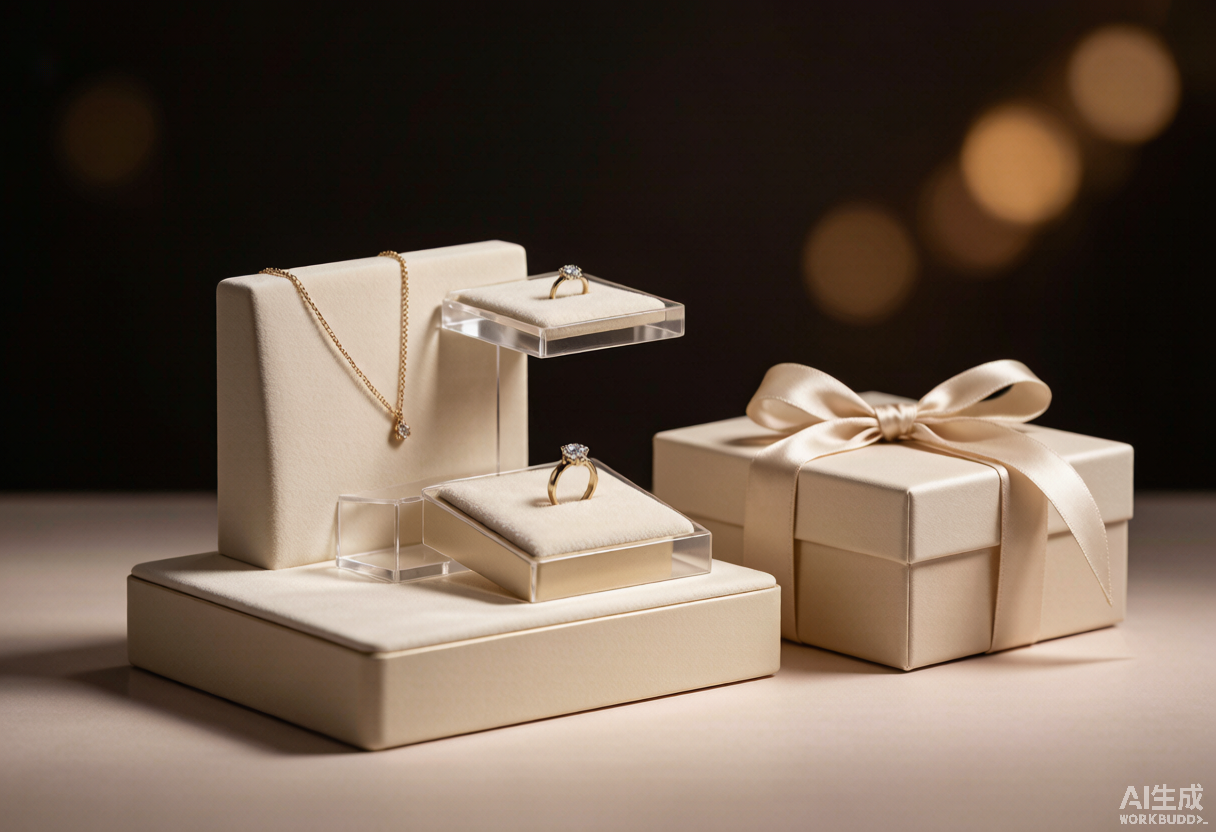
三秒决定展台成败 Three Seconds Decide Your Jewelry Trade Show Booth
一家展商在香港国际珠宝展租下不小的展位,四天收了两百多张名片,成交却不如隔壁九平米的小摊。货没差多少,差在展台——差在有没有让对的人在三秒里停下脚步。
问一:珠宝展会上,展台真的能决定成交吗?
能,而且比多数人想象得更早决定。Exhibit Surveys 的经典结论是:一位观众决定要不要在某个展位停下来,只需要大约三秒。Freeman 的调研显示,观众平均一天要经过二十六个展位;CEIR 的数据更具体——一场三天展会,专业观众实际在场约八点三小时,分到每个展位只有两三分钟,真正愿意停留二十五到四十五分钟的,全场只有三到五家。
看看到场的人是谁:CEIR 统计,八成一的与会者拥有采购决策权,七成二明确打算购买在展会上看到的产品,而七成六的观众此前与他们走访的展商没有任何业务往来。也就是说,展会本质上是获客渠道,不是老客户联谊。成本上也划算:一条展会线索的平均获取成本约一百四十二美元,而一次上门销售拜访要五百九十六美元,低了七成六;展会线索平均三点五次跟进即可成交,冷线索需要四点五次。
结论很直接:展台的第一份工作不是"好看",是在三秒之内把对的人拦下来。
问二:为什么高端简约的展台和包装更容易被专业买家选中?
因为展馆里最稀缺的不是空间,是注意力带宽。核心信息必须在三到六米外读得清楚——一句能读懂的主张加一到两件主推,胜过满墙 SKU。简约不是东西少,是优先级可见。
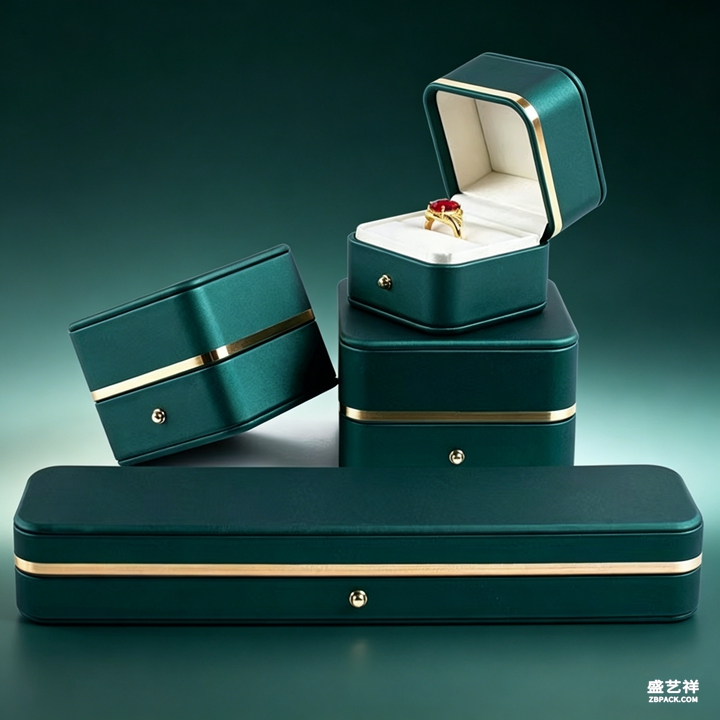
第二重作用更容易被忽略:专业买家在展位上看的从来不只是货,还有你交付时长什么样。样品盒的开合阻尼、内衬的平整度、丝带的手感、卡片的克重,都是当场就能验证的品控证据。一套克制的珠宝包装设计在展台上同时干两件事——衬托展品,以及替工厂自证。相反,满版烫金、双 logo 反复堆叠、荧光背板,热闹是热闹,买家读不出你是谁。
位置也在帮忙:两面以上开口的角位展位可见度普遍高出三成左右,开放式动线能明显降低"要不要进去"的心理成本。
问三:展台尺度和展架高度该怎么定?
先看规则。香港国际珠宝展的报价里,标准展位最小九平米,净地最小三十六平米;国内大展的主流规格是 3m×3m 双开口标摊(上海国际珠宝首饰展 2026 年的标摊招标里,这一规格预估就有四百六十四个)。海外展馆对结构限制更严,拉斯维加斯等场馆通常对标摊有限高要求(常见约八英尺),双层与高结构须提前报批,搭建材料要达到 Class A 阻燃等级。
再看人体尺度。洽谈台面九百到一千一百毫米,柜体深度三百五到四百五十毫米,过深的柜子里侧等于没展。珠宝陈列道具的核心工作是做出高度差:主看台放主推、次层放系列、底层放走量款,让人一眼看出重点。展位平均只能留住两三分钟,动线不该绕,样品要能被顺手拿起来。密度上宁疏勿密——留白本身就是价格信号。
问四:展馆的灯,为什么总把珠宝照丑?
展馆顶灯是为通行照明设计的,色温偏高、显色性一般:黄金发灰,银饰发闷,钻石出不了火彩。而标摊自带的灯光少得可怜——香港展的标准展位配置只有围板、地毯、楣板、一张会议台、三张椅子、四支射灯和一个纸筒,指望它照亮珠宝并不现实。
可行的做法:黄金与古法金用二千七到三千开尔文的暖光,白色金属、钻石和银饰用三千五到四千开尔文,显色指数一律要求高于九十,光束角控制在十五到三十度做重点照明,柜内补光必须独立于顶灯。光地展位还需自算电力与特装管理费,这项漏算是常见坑。
灯定了,底色跟着走:深色绒面衬钻石火彩,浅米、燕麦色配黄金,冷调深灰配铂金和银饰。珠宝摆台的颜色不是审美偏好,是配合光源的技术选择。
问五:样品怎么带、怎么护、怎么当场交付?
展会是包装一年里最被"专业检验"的四天。买家会开合、掂重、翻看内衬,缺陷藏不住。
带样上,按 SKU 独立卡位是底线,多件混装相互摩擦是展后返修的最大来源,内衬做到一点二至一点八毫米并经抗静电处理;银饰样品务必配抗氧化片,展馆干湿不可控,四天足够让镀层发闷。每天闭馆按流程收柜入箱,外箱保持低调、不写品名与金额。
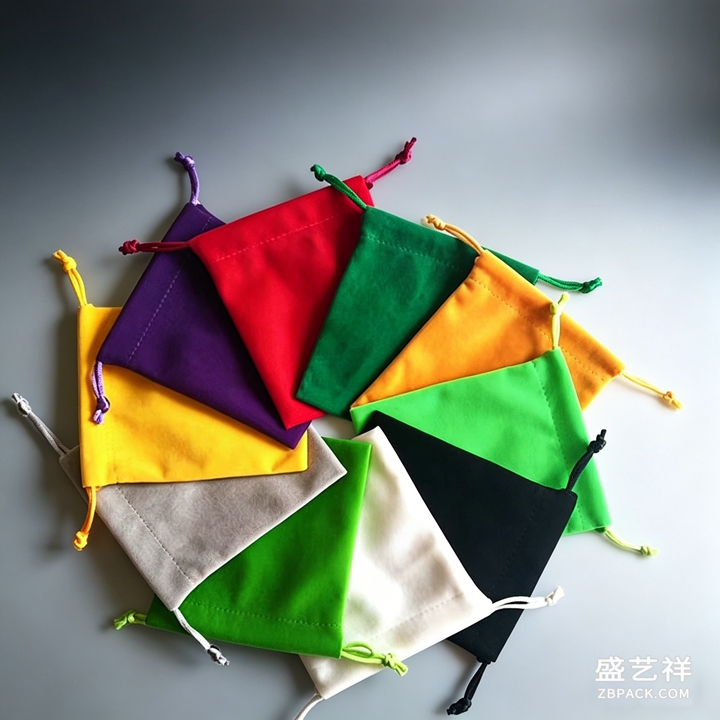
交付环节最容易被浪费。现场多数成交是意向,真正带走的是样品盒、资料卡和首饰袋——它们是离场之后仍在替你说话的展位。不少工厂把最好的盒子只用于拍照,却给来访客户塞一个软塌塌的纸袋。做珠宝盒定制的经验是:给展会准备的样品包装,标准要比日常出货高半档,因为它面对的是同行的眼睛。
问六:预算怎么分,效果怎么衡量?
先把成本摆清楚。香港国际珠宝展净地按分区与开口面数计,每平米约四百七十七至五百九十一美元,标准展位约五百三十九至六百四十七美元;国内低不少,如天津珠宝展光地一千二百元每平米(三十六平米起订)、标摊一万元九平米。搭建另计,上海展标摊中标单价在每个一千五百至一千八百元区间,海外特装可高至每平米万元起。
分配上建议七三开:七成花在会被看清的地方——灯光、主看台、主推件、样品与交付物,三成给背板和季节性装饰。背板做得再大,观众也只在三秒里看主推件。
衡量上有个刺眼的数字:只有约四成九的展商正式测算展会 ROI,而在认真测算的展商里,七成七报告为正回报。差距不在效果,在有没有量。建议盯四个递进指标:过道人流、驻足率、有效线索数(每条线索成本=总预算÷线索数),以及九十天和一百八十天的成交额——展会线索的成交周期普遍是六十到一百八十天,用三十天窗口评判必然低估。最后是跟进:仍有约一半展商拖到五个工作日后才联系客户,而二十四小时内跟进的转化率大约是一周后的三倍。
说到底,展台是一间只营业四天的门店,包装是唯一能被带走的那部分展台。盛艺祥常说的一句话是:让顾客离场之后,手里还留着你的水准。
本文为原创内容,版权归盛艺祥所有。如需转载请注明出处。
盛艺祥(Shengyixiang)——高端珠宝包装设计与定制专家,为品牌护航。
An exhibitor rents a sizeable stand at a major jewelry fair, collects two hundred business cards over four days, and still closes less business than the nine-square-metre booth next door. The merchandise is comparable. The booth is not.
Q1: Does the booth itself really decide whether deals happen?
It does, and earlier than most people assume. Research by Exhibit Surveys puts the decision window at roughly three seconds: that is how long a visitor takes to decide whether to stop at a stand. Freeman data shows attendees pass about twenty-six booths per show day, and CEIR figures indicate a professional visitor spends around 8.3 hours on the floor across a three-day event — two to three minutes per booth, with only three to five stands earning a genuine twenty-five to forty-five minute conversation.
Who are these people? CEIR reports that 81% of attendees hold buying authority, 72% plan to purchase at least one product they see at the show, and 76% are not currently doing business with the exhibitors they visit. Trade shows are an acquisition channel, not a reunion. The economics support that: the average trade show lead costs about $142 versus $596 for a field sales call — 76% cheaper — and closes in roughly 3.5 follow-up calls against 4.5 for a cold lead.
So the booth's first job is not to look impressive. It is to stop the right person within three seconds.
Q2: Why do restrained, minimal booths and packaging win professional buyers?
Because the scarce resource in an exhibition hall is attention bandwidth, not floor space. The working rule is that your core message must be legible from three to six metres away. One readable proposition plus one or two hero pieces outperforms a wall of SKUs. Minimalism here is not about showing less; it is about making priority visible.
There is a second function that is easy to miss. Professional buyers are not only evaluating the jewelry — they are evaluating what delivery will look like. The closing resistance of a sample box, the flatness of the lining, the weight of a card, the hand of a ribbon: all of it is quality-control evidence they can verify on the spot. Disciplined jewelry packaging design does two jobs at a booth — it frames the product and it vouches for the factory. Full-bleed foil, duplicated logos and fluorescent backdrops do the opposite: busy, but illegible.
Position helps too. Corner stands open on two or more sides typically gain around 30% more visibility, and open, threshold-free layouts lower the psychological cost of walking in.
Q3: How should booth dimensions and display heights be set?
Start with the rules. At the Hong Kong jewelry fair, a standard booth starts at nine square metres and raw space at thirty-six. Domestically, the 3m×3m double-open shell scheme dominates — a 2026 Shanghai jewelry show construction tender alone estimated 464 units of that configuration. Overseas venues are stricter: halls such as those in Las Vegas commonly cap standard booth height (about eight feet is typical), require advance approval for double-deck or tall structures, and demand Class A fire-rated materials. Exhibitors unfamiliar with local codes lose money to on-site rectification and schedule slippage.
Then human scale. Counter height of 900–1100mm and case depth of 350–450mm work; anything deeper and the back row may as well not exist. The real job of jewelry display props is to create height differentiation — hero tier, series tier, volume tier — so importance reads instantly. With only two or three minutes of dwell time, circulation should not force detours, and samples must be easy to pick up. Keep density low: white space is itself a price signal.
Q4: Why does hall lighting make jewelry look worse?
Because ceiling lighting is designed for circulation, not for gemstones: high colour temperature, mediocre colour rendering. Gold reads grey, silver reads dull, diamonds lose their fire. Meanwhile the shell scheme provides very little — a Hong Kong standard booth includes panels, carpet, a fascia name board, one meeting table, three chairs, four spotlights and a wastebasket. Four spotlights will not light jewelry.
Practical settings: 2700–3000K for gold and heritage gold; 3500–4000K for white metals, diamonds and silver; CRI above 90 without exception; 15–30 degree beam angles for accent work; and in-case lighting kept independent of the ceiling. Raw-space exhibitors must also budget power and management fees separately — many shows levy a construction management charge per square metre, and underestimating electrical cost is a common mistake.
Once lighting is fixed, backgrounds follow: deep velvet behind diamonds, oatmeal and warm off-white under gold, cool charcoal beneath platinum and silver. Display base colour is an engineering decision, not a taste preference.
Q5: How should samples be transported, protected and handed over?
A fair is the four days a year when your packaging faces the most expert scrutiny. Buyers open it, weigh it, inspect the lining. Nothing hides.
For transport, individual slots per SKU are the baseline — friction between mixed pieces is the single largest source of post-show refinishing. Lining should run 1.2–1.8mm with anti-static treatment. Silver samples need anti-tarnish tabs: hall humidity is uncontrolled, and four days is enough to dull a plating. Repack into cases at closing each day, and keep outer cartons discreet, with no product names or values printed.
Handover is where value leaks. Most on-floor outcomes are intentions, not invoices; what physically leaves with the buyer is the sample box, the spec card and the pouch — the part of your booth that keeps talking after the hall empties. Many factories reserve their best box for photography and hand visitors a limp paper bag, discarding the final impression. For custom jewelry box work, the rule of thumb is simple: sample packaging built for a trade show should sit half a grade above your normal shipping standard, because the audience is your own industry.
Q6: How should the budget be split, and how is performance measured?
Costs first. Hong Kong raw space runs roughly $477–591 per square metre depending on zone and open sides, with standard booths at about $539–647 per square metre. Domestic pricing is lower — one 2026 Chinese jewelry fair quotes raw space at RMB 1,200 per square metre (36 sqm minimum) and shell booths at RMB 10,000 per nine square metres. Construction is separate: winning bids for Shanghai shell booths landed around RMB 1,500–1,800 per unit, while bespoke overseas builds can start near RMB 10,000 per square metre.
A workable split is 70/30: seventy percent into what will actually be seen — lighting, the hero platform, hero pieces, samples and take-away items — and thirty percent into backdrops and seasonal decoration. However large the backwall, visitors spend their three seconds on the hero piece.
One statistic should sting: only about 49% of exhibitors formally measure trade show ROI, yet among those who do, 77% report positive returns. The gap is measurement, not performance. Track four sequential metrics: aisle traffic, stop rate, qualified leads (cost per lead = total budget ÷ leads), and revenue at 90 and 180 days — show leads typically close in a 60–180 day cycle, so a 30-day window guarantees you undervalue the channel. Finally, follow up fast: roughly half of exhibitors wait more than five business days, while contacting a lead within 24 hours converts about three times better than waiting a week.
A booth is a store that trades for four days. Packaging is the only part of that store a buyer can carry home.
This is original content. Copyright belongs to Shengyixiang.
Shengyixiang — your expert in high-end jewelry packaging design & customization.