耳骨夹成新晋顶流 Ear Cuffs Rewrite the Rules of Piercing-Free Style
2026 年的红毯与秀场,一个没有耳洞也能佩戴的单品正在悄悄改写珠宝的佩戴规则——耳骨夹(ear cuff)。
它出现的时机恰到好处。《美丽佳人》将耳骨夹列为 2026 年第一大珠宝趋势。蕾哈娜、凯特·布兰切特、凡妮莎·柯比、朱莉娅·加纳、辛西娅·埃里沃等明星,都已把它带上红毯;Fendi 2026 春夏秀场为模特戴上彩色耳骨夹,Zimmermann 与 Schiaparelli 也交出了各自的艺术化版本。当被问及来年最值得入手的一件珠宝,多位买手不约而同指向"雕塑感的醒目耳饰"——耳骨夹恰好同时踩中夸张造型、极简语言与现代自信三条线。
数据也在为这股风潮背书。研究机构统计,全球"无耳洞"耳骨夹市场 2025 年规模约 12.5 亿美元,预计 2026 年升至 13.5 亿美元、2034 年达到 24.5 亿美元,年复合增长率约 8.2%。社媒与名人效应推动相关线上搜索同比增长约 25%;在都市职场人群中,这类非侵入式配饰的渗透率已爬升至约 18%;更值得注意的是,约 40% 的买家会直接选择可混搭的套装,把"频繁换风格"变成日常。亚太以约 35% 的份额领跑,分析师预计该区域到 2028 年仍能维持 22% 的复合增速,背后是韩流与街头风的双轮驱动。
它真正卖的,不是克拉,而是"不承诺的自由"。想戴就沿耳廓一夹,想换就摘下,绕开了穿孔的身体门槛、愈合周期与文化顾虑,也精准贴合 Z 世代"今天这样、明天那样"的消费节奏。当一件珠宝不再靠"永久拥有"定义价值,而是靠"此刻像不像我"成立,佩戴本身就成了一种轻量、可逆、低负担的自我表达。这或许解释了为什么在黄金高企、消费谨慎的年份里,耳骨夹反而逆势上扬——它足够便宜、足够轻、足够不像一笔"投资",却足够让人上头。
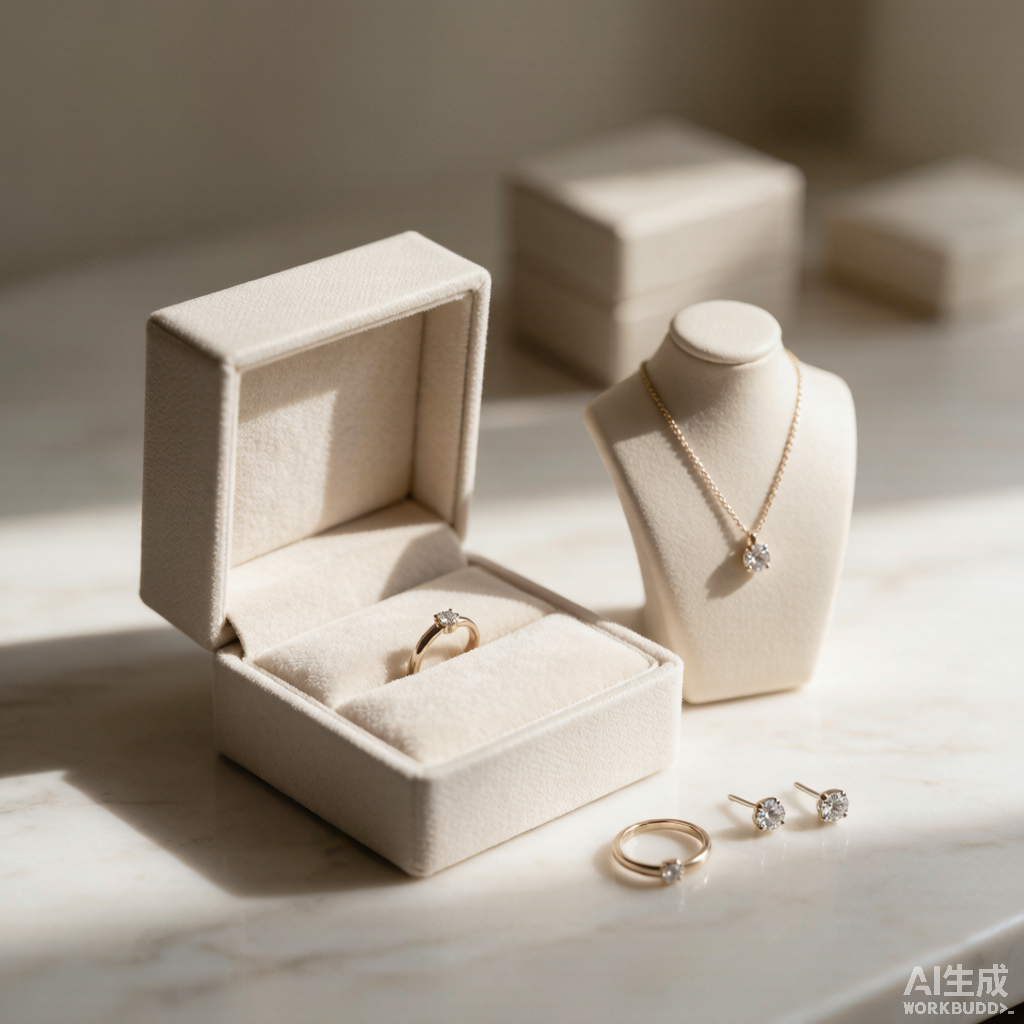
耳骨夹还乘上了"耳部策展"的东风——同一只耳朵上,耳骨夹、耳钉、耳环按位置错落排布,构成一幅完整的"耳图"。这对包装与陈列的难度是指数级的:品牌卖的不再是一件单品,而是一张"耳朵地图",盒子得把好几件小东西编排成一次开盒的序曲。设计上也明显上探:从街头合金一路走到 18K 金、蓝宝石、密镶的高级版本,耳骨夹正从服饰性配饰蜕变为可收藏的细工珠宝;Pandora 早在 2024 年就用再生金属扩充了无耳洞系列,呼应约 35% 年轻买家对环保材质的偏好。当单品开始"讲来源、讲工艺",它的包装同样要经得起追问——内衬、卡位、证书位,一处都不能潦草。这份"不穿孔也能很讲究"的态度,恰恰是小件珠宝包装最该接住的情绪。
风潮里也藏着一道隐性的质量门槛。廉价基材的耳骨夹容易打滑、致敏,把预算端产品的退货率推到约 12%;真正把风潮做成常青款的,是无镍低敏、贴合可调的工艺。贵金属已占女性耳骨夹市场约 55%,线上零售拿走过半销量,这意味着送到顾客手里的那一件,必须和秀场上的那一件一样经得起打量。
当一个品类以"小、轻、可逆"为卖点,包装与陈列的逻辑也要跟着重写。单只耳骨夹的体积往往比戒指还小,戒枕与卡位的公差只要差一点点,金属就会歪斜;而成组套装需要能同时安放两到三件的首饰盒设计,内衬留白、独立卡位,避免几件硬碰硬互相刮花。在柜台里,它不像项链能直接挂、也不像手镯能套,必须借助耳模、半身人台这类珠宝陈列道具,才能把"沿耳廓攀爬"的雕塑感讲清楚;灯光上,拉丝银与冷白金的耳骨夹在 3500–4000K、显色指数高于 90 的光环境下才不泛灰、不发闷。
到了线上交付环节,考验的是珠宝包装设计的克制功力:体量要小、盒壁要挺、开合要有恰到好处的阻尼感,又要让顾客"开盒三秒就看见溢价的去处"。近年来,盛艺祥这类专注高端珠宝包装设计与定制的团队,正把耳骨夹这类小件的"轻量高级感"沉淀成一套可复用的结构语言——主盒常年通用,季节感留给可替换的卡片与腰封,既压住综合成本,又不牺牲开箱的仪式感。
耳骨夹的走红给行业提了个醒:奢侈的下一个入口,未必是更重的金属,也可能是更轻的佩戴方式。当"不穿孔"也能很高级,包装与陈列要做的,不过是把这份轻盈稳稳接住。
本文为原创内容,版权归盛艺祥所有。如需转载请注明出处。
盛艺祥(Shengyixiang)——高端珠宝包装设计与定制专家,为品牌护航。
On the 2026 red carpets and runways, one piercing-free accessory is quietly rewriting the rules of how jewelry is worn: the ear cuff.
Its timing is almost perfect. Marie Claire named the ear cuff the number-one jewelry trend of 2026. Rihanna, Cate Blanchett, Vanessa Kirby, Julia Garner and Cynthia Erivo have all worn them on the red carpet. At Fendi's Spring/Summer 2026 show, models walked out in colorful cuffs; Zimmermann and Schiaparelli sent their own artistic versions down the runway. When asked which single piece is worth buying in the year ahead, several buyers pointed to "a sculptural statement earring" — and the ear cuff lands squarely on the intersection of scale, minimalism and modern confidence.
The numbers back the hype. One research house puts the global "no-piercing" ear cuff market at about USD 1.25 billion in 2025, rising to USD 1.35 billion in 2026 and projected to reach USD 2.45 billion by 2034, a CAGR of roughly 8.2%. Social media and celebrity endorsements drove online searches for non-piercing ear cuffs up about 25% year over year. Among urban professionals, adoption of non-invasive accessories has climbed to around 18%. And tellingly, about 40% of buyers now opt for mix-and-match sets, turning "change your look often" into a daily habit. Asia-Pacific leads with about 35% of the market, and analysts expect the region to post a 22% CAGR through 2028, fueled by K-pop and streetwear.
What it really sells is not carats but freedom without commitment. Clip it onto the helix, wear it for an evening, take it off tomorrow — no piercing, no healing, no cultural or physical threshold. That fits Gen Z's "different today, different tomorrow" rhythm perfectly. When a piece is no longer defined by permanent ownership but by "does it feel like me right now," wearing becomes a lightweight, reversible, low-stakes act of self-expression. It helps explain why, in a year of high gold prices and cautious spending, ear cuffs still rose: cheap enough, light enough, and unlike an "investment" enough to be addictive.
The ear cuff was not invented in 2026. Its lineage runs from ancient Mesopotamia through the body-jewelry experiments of the 1990s, but the current version is different in grade. Today's cuffs are sculptural, minimal, and increasingly fine-jewelry: 18-karat gold, sapphire-set, pavé-encrusted, designed to sit beside a diamond stud rather than beneath it. That upgrade is what lets the trend cross from costume to collectible, and it quietly raises the bar on everything around the piece — because a fine-jewelry-grade cuff deserves a fine-jewelry-grade context. Brands that treat it as a throwaway fashion trinket miss the point; the customers wearing it on a red carpet do not.
The quiet power of the ear cuff is who it lets in. Because it asks for no piercing, it sidesteps a surprising number of barriers at once: religious or cultural reservations about body modification, workplace dress codes that frown on visible piercings, the sensitivity and healing time that deters many first-time wearers, and the simple preference of people who simply do not want a permanent hole. For gender-fluid and male customers especially, a clip-on removes the friction of "should I get pierced" and turns jewelry into something you try rather than commit to. That inclusivity is not a footnote; it is the engine. A category that grows by lowering the threshold to entry behaves very differently from one that grows by raising the stakes of ownership, and it is far more resilient when disposable incomes tighten, because the cost of admission stays low.
It also travels extraordinarily well on screens. Ear cuffs are inherently photogenic: a single sculptural piece frames the face, reads clearly in a thumbnail, and needs no full outfit to make sense. That made them catnip for Instagram and TikTok, where searches for "non-piercing ear cuff" climbed roughly 25% year over year and where a single celebrity sighting can sell out a style overnight. Brands have leaned into AR try-on to close the last gap between scroll and cart; early adopters report conversion lifts around 30% when shoppers can preview a cuff on their own ear before buying. In other words, the same lightness that defines the product — small, reversible, low-commitment — is exactly what makes it spread.
The cuff also rides the broader "ear stacking" wave — multiple cuffs, huggies and studs arranged across the ear as one composed look. That multiplies the challenge: a brand now sells a "map of the ear," not a single product, and the box must choreograph several small pieces into one opening moment. Each piece needs its own slot, its own angle, its own moment of reveal, so the unboxing reads like a curated editorial rather than a jumble in a tray. There is a quiet quality lesson, too. Cheap base-metal cuffs slip, irritate, and push return rates as high as 12% in budget segments; hypoallergenic, nickel-free finishes and secure adjustability are what separate a fad from a staple. Precious metals already account for about 55% of the women's ear cuff market, and online retail takes more than half of sales — so the piece that arrives in the customer's hands must feel as considered as the one on the runway. Sustainability nudges the same direction: roughly 35% of young buyers prefer eco materials, and Pandora expanded its non-piercing line with recycled metals back in 2024, signaling that "no piercing" and "responsible sourcing" are increasingly the same conversation.
Stylists have settled on three moves. The first is the lone statement: one substantial cuff clamped high on the helix, worn against bare skin and minimal everything else — the look Rihanna and Cate Blanchett leaned into on the carpet. The second is the mirror pair, a cuff on each ear for a symmetry that reads as intentional rather than matchy. The third, and the one fueling the ear-stacking boom, is the composed cluster: a cuff at the top, a huggie at the lobe, a stud midway, arranged so the eye travels. None of these requires a pierced ear, which is precisely the point — the ear becomes a rearrangeable mood board, and the cuff is the easiest piece to swap in and out. That fluidity is exactly why the trend feels less like a season and more like a new default.
When a category sells itself on "small, light, reversible," packaging and display have to be rewritten as well. A single cuff is often smaller than a ring; a fraction of a millimeter off in the cradle and the metal sits askew. Sets need jewelry box design that holds two or three pieces with independent slots and breathing room, so nothing scratches. On the counter it can't hang like a necklace or slip on like a bracelet — it needs ear forms or half-bust jewelry display props to tell the story of a piece climbing the ear. The ear is the canvas, and the prop is the frame; without it, a sculptural cuff is just a small shiny thing in a case. Brushed silver and white-gold cuffs read best under 3500–4000K light at CRI above 90, where they stay bright instead of going grey; a warm, low-color-temperature light would muddy the very coolness that makes them modern. Retailers who invest in a proper ear-display system routinely report that the category sells itself once customers can actually see the piece worn.
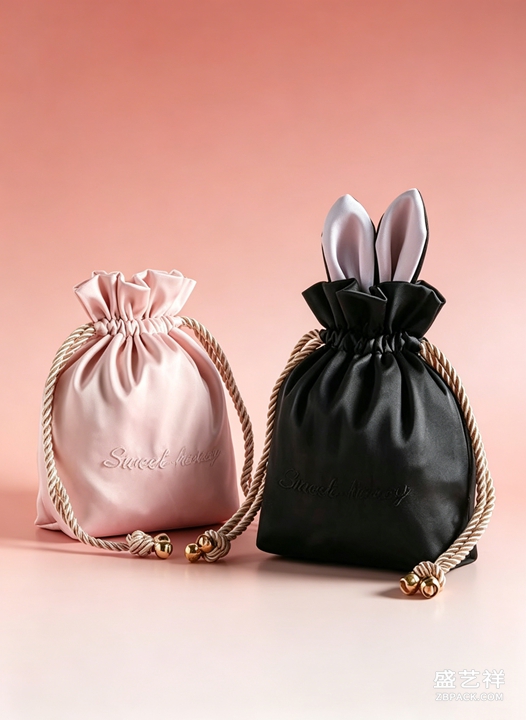
Online, the test is restrained jewelry packaging design: small footprint, rigid walls, a satisfying damping click on open — and the customer should see where the premium went within three seconds of lifting the lid. Houses like Shengyixiang, focused on high-end jewelry packaging design and customization, are turning the "lightweight luxury" of pieces like ear cuffs into a reusable structural language: one evergreen master box, seasonal feeling left to swappable cards and belly bands. It holds cost down without sacrificing the unboxing ritual. The lesson travels: when the hero product is light and reversible, the packaging should feel deliberate, not bulky — restraint becomes the proof of quality rather than a cost cut.
For the wider jewelry trade, the ear cuff is a useful stress test. It compresses almost every packaging and display question into the smallest possible object: tolerance, materials, lighting, unboxing, and the story a brand tells without saying a word. Brands that get those details right with a cuff tend to get them right with everything else; those that treat it as an afterthought discover the afterthought is what the customer remembers. In a market growing at a steady high-single-digit clip, that memory is the difference between a trend and a franchise.
The ear cuff's rise is a reminder that luxury's next door may not be heavier metal but lighter wearing. When "no piercing" can still be high-end, packaging and display simply have to catch that lightness — and hold it steady.
This is original content. Copyright belongs to Shengyixiang.
Shengyixiang — your expert in high-end jewelry packaging design & customization.