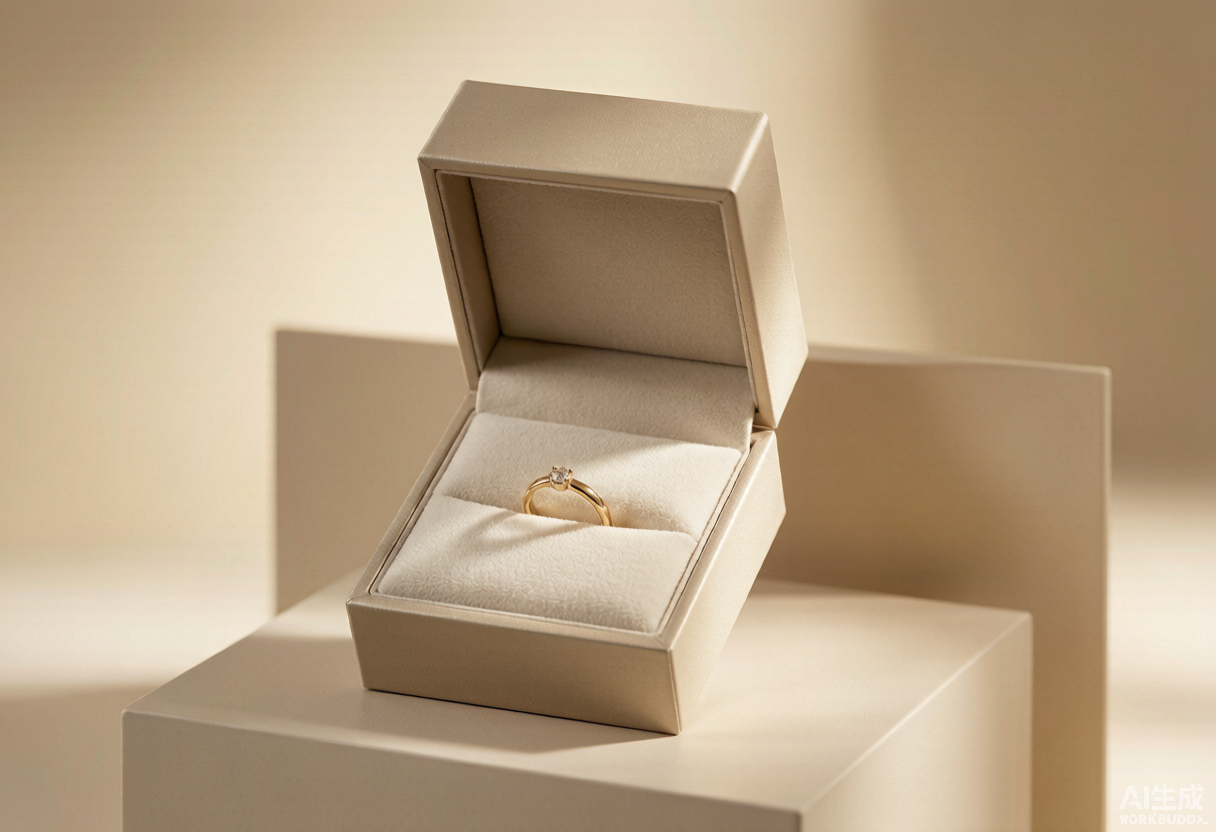
珠宝盒的结构美学 How Jewelry Box Structure Shapes the Buying Moment
一只珠宝盒,顾客还没看到里面的首饰,先感受到的是它的"结构"——怎么开、多重、内壁如何托住那件宝贝。结构先于装饰被感知,是品牌与顾客对话的第一句。本期用问答方式,聊聊珠宝盒的"结构工程":翻盖、天地盖、抽屉、书型、展示开窗,到底该怎么选。
问:为什么珠宝盒的"结构"值得单独研究?
因为结构决定了开箱的节奏,也决定了顾客对价值的第一判断。珠宝是被频繁当作礼物送人的品类,收礼人往往在看见首饰之前,先摸到盒子、先听到开合的那一声。行业调研显示,约 75% 的消费者认为精致的珠宝包装盒直接影响他们对首饰价值与复购意愿的判断;而在社媒上,#JewelryUnboxing 早已从话题标签变成独立的搜索品类。市场也在印证这一点:2026 年全球高端硬质礼盒市场约 46 亿美元,其中天地盖(lid & base)结构占盒型需求的 34%,磁吸闭合占闭合方式需求的 29%——结构本身,已经是一个被量化、被比价的维度。换句话说,结构不是装饰的附庸,它是包装体验的骨架。
问:翻盖、天地盖、抽屉、书型、展示开窗,各适合什么珠宝?
选结构的第一原则,是"按品类匹配使用场景"。戒指本身体积小、仪式感密度最高,多用翻盖小盒配单槽戒枕——全球戒指盒本就是珠宝礼盒市场最大的单一子类,约占 31.6% 的收入。项链、手链怕缠绕,适合抽屉盒平铺或书型盒展开陈列;高珠、婚戒追求仪式感,天地盖(上下两片分离)最稳妥;入门款和电商件则常用"展示开窗"——在盒面开一小窗覆透明膜,让顾客不拆封就能看见产品,直接建立信任。成本上,硬质抽屉/天地盖盒批量价约 1.5–3.5 美元/只,加植绒内衬的升级款约 2.5–5 美元,而基础纸板邮包仅 0.3–0.8 美元——结构越复杂,单价越高,所以更要"用对地方"。盛艺祥在做珠宝包装设计时,会把衬里配色与结构一起定:深绒衬钻、浅米配金、冷灰配白金,让盒型与内容说同一套话。
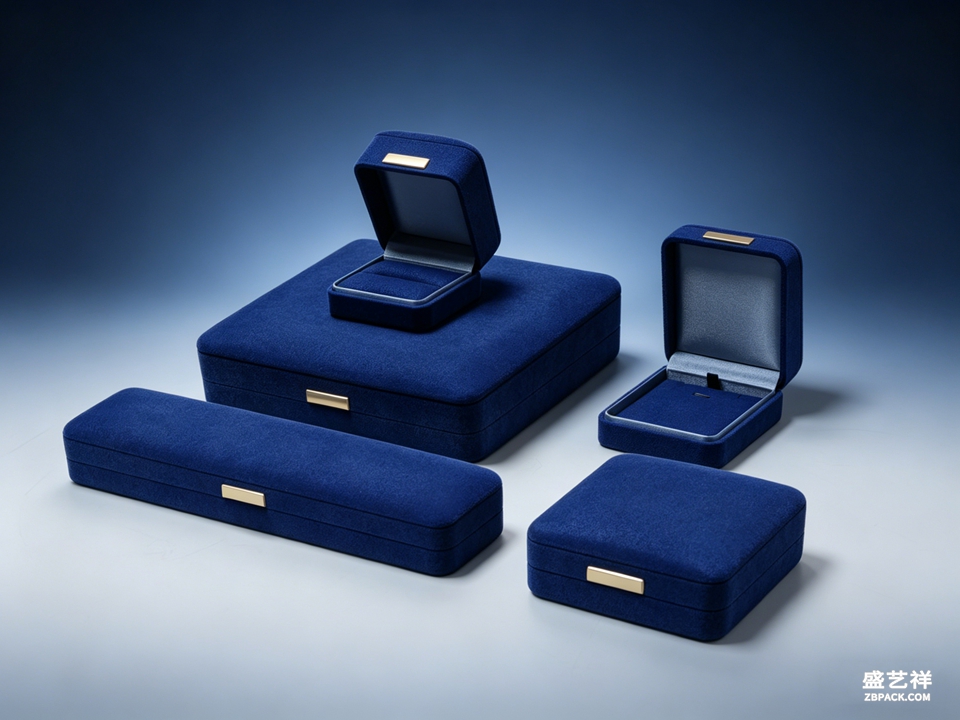
问:高端简约为何更受顾客青睐?(老板示例论点)
把这个问题落到"结构"上,答案很具体:简约不等于省钱,而是把预算从花哨的装饰,集中投到看不见却摸得着的地方——开合阻尼是否顺滑、磁吸吸力区间是否单手可掀、折边包角是否全周倒钝、哑光触感是否克制高级。行业数据反复印证这条逻辑:极简风格珠宝盒年复合增速超过 25%,消费者对"简约=高品质"的认同从 38% 升到 67%,约 78% 的人把极简等同于高级。更现实的是,抽屉盒、天地盖这类结构本身可复用——麦肯锡调研显示约 73% 的珠宝买家会保留并复用"好看又好用"的包装。也就是说,一个结构干净、手感扎实的盒子,会长期留在顾客的梳妆台或旅行箱里,成为 repeatedly 出现的品牌触点。这正是盛艺祥在首饰盒设计里坚持"外观做减法、公差做加法"的原因。
问:结构怎么兼顾"防护"和"展示"这对矛盾?
这是结构工程最考验功力的地方。运输要抗压、防压塌,陈列要开窗、要"看得见";两者天然打架。解法是把功夫做进细节:内衬卡位公差控制在 0.2 毫米 以内,戒枕开槽差 1 毫米戒指就歪、耳钉孔径大 0.3 毫米就晃动摩擦;磁吸吸力要落在"单手拇指可掀、不靠指甲抠"的区间;抗静电内衬厚度 1.2–1.8 毫米,既护石又防勾丝。纸板本身也有讲究,国际运输用 1200gsm 灰板抗压抗弯表现更稳。反过来,若主打电商效率,抽屉盒 slim 版总厚可压到 2 英寸以内,同样纸箱能多装约 2 倍 单元,直接省运费。防护与展示不是二选一,而是同一张工程图纸上的两个约束。
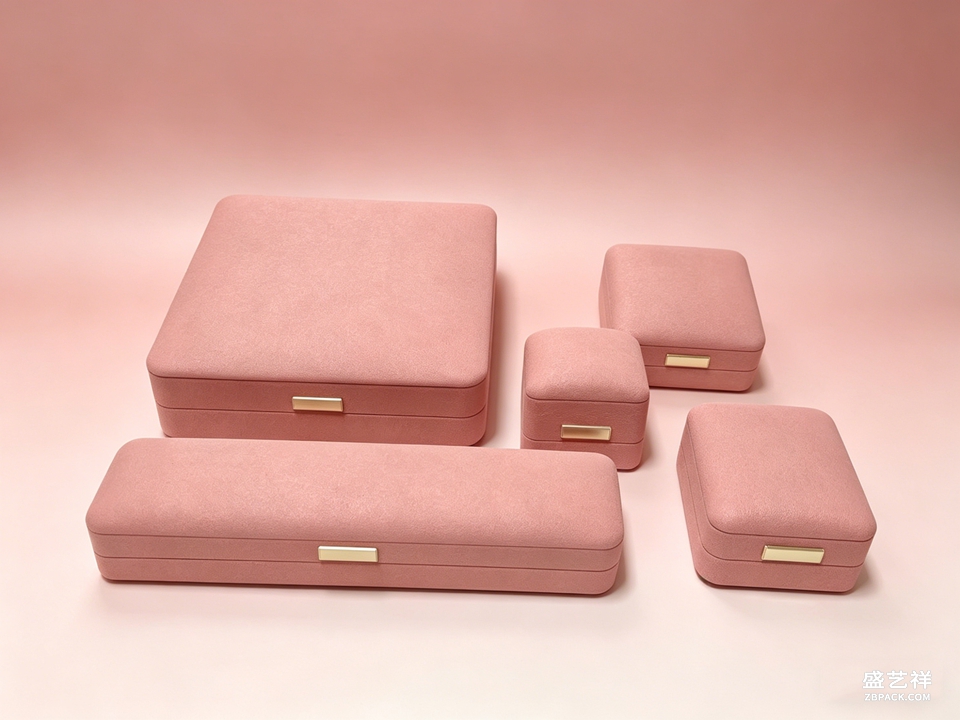
问:盒结构要不要和珠宝陈列道具、珠宝摆台讲同一套语言?
非常应该,而且这是很多品牌忽略的"低成本的统一感"。门店里,顾客先看到珠宝摆台上的展示道具,再被引导到试戴托盘,最后才接过那只包装盒——如果盒的开合逻辑、材质底色、折角语言,和柜台道具一致,认知成本就降下来了,品牌显得"想得很周全"。反过来,盒是哑光的、柜台是亮面的,盒是暖米的、道具是冷灰的,顾客潜意识里会读到"两批人做的"。美国零售联合会的多项研究指出,道具与包装视觉一致的组合能带来 18%–30% 的连带提升。所以盛艺祥在交付珠宝盒定制方案时,常把"结构语言"和陈列道具、珠宝摆台一并写进标准手册,让线上开箱与到店体验缝合。
问:选结构时,怎么验收、又怎么算 ROI?
验收至少盯四项:开合寿命的循环次数是否写进合同、磁吸吸力是否多批次抽测一致、折边包角是否全周倒钝无锐边、内衬卡位公差是否达标。这些都不是"看着还行",而是可量化的交付指标。ROI 方面有个好消息:结构升级往往比装饰便宜。磁吸升级约 +0.4–0.8 美元/只、内盖印字约 +0.1–0.25 美元,远低烫金压印的开销,却能显著拉升开箱记忆。有 DTC 珠宝品牌的实测案例:把 0.6 美元的折叠盒换成 3 美元的磁吸硬质盒,三个月内自然产生的开箱 UGC 从 0 涨到每月 50+ 条,客单价还提升了约 10%。盛艺祥依托柔性供应链,支持珠宝盒工厂小批量打样验证结构与手感,再上量产——先小步试错,远比上市后回头改模划算。归根结底,盒型结构不是成本项,而是品牌体验里最被低估的资产。
本文为原创内容,版权归盛艺祥所有。如需转载请注明出处。
盛艺祥(Shengyixiang)——高端珠宝包装设计与定制专家,为品牌护航。
Before a customer ever sees the jewelry inside, they feel the box's "structure" — how it opens, how heavy it sits in the hand, how the interior cradles the piece. Structure is perceived before decoration; it is the first sentence a brand speaks to its buyer. In this Q&A we look at the structural engineering of jewelry boxes: flip-top, lid & base, drawer, book-style, and window boxes — and how to choose.
Q: Why does a jewelry box's "structure" deserve its own study?
Because structure sets the pacing of the unboxing, and the first judgment of value. Jewelry is disproportionately gifted, so the recipient often touches the box and hears the lid before seeing the piece. Industry research shows roughly 75% of consumers believe an elegant jewelry box directly shapes their perception of value and intent to repurchase; on social media, #JewelryUnboxing has become a defined search category rather than a mere hashtag. The market agrees: the global luxury rigid-box segment reached about $4.6 billion in 2026, with lid & base formats holding 34% of box-format demand and magnetic closures 29% of closure demand. Structure is no longer decoration's handmaiden — it is a quantified, benchmarked dimension of the product.
Q: Flip-top, lid & base, drawer, book-style, window — what fits which jewelry?
Match the structure to the use case. Rings carry the highest "ceremony density" per square centimeter and use small flip-top boxes with a single slot — ring boxes are the largest single sub-segment of the jewelry gift-box market at about 31.6% of revenue. Necklaces and bracelets tangle easily, so drawer or book-style boxes that lay the piece flat work best. High jewelry and engagement rings want the ritual of a lid & base (two-piece) box. Entry-level and e-commerce pieces often use a window box — a cut-out with clear film so the buyer trusts the product before opening. On cost: rigid drawer/lid-and-base boxes run about $1.50–$3.50 each, velvet-insert upgrades $2.50–$5.00, versus $0.30–$0.80 for a basic cardboard mailer. Structure should be spent where it earns its keep. Shengyixiang treats lining color and structure as one decision in jewelry packaging design — deep velvet for diamonds, pale beige for gold, cool grey for platinum.
Q: Why does high-end minimalism win customer favor? (the boss's example)
Applied to structure, the answer is concrete: minimalism is not cheapness, but moving budget from flashy trim into what is felt but unseen — smooth opening damping, a magnetic pull a thumb can release, fully rounded board edges, and a restrained matte touch. The data repeats this logic: minimalist jewelry boxes grow at a CAGR above 25%, consumer association of "minimalist = premium" rose from 38% to 67%, and about 78% read minimalism as high quality. Practically, drawer and lid-and-base structures are reusable — a McKinsey study found about 73% of jewelry buyers keep and reuse packaging that is "beautiful and useful." A clean, well-built box lingers on the dresser or in the travel case as a recurring brand touchpoint. That is exactly why Shengyixiang's jewelry box design philosophy is "subtract on the surface, add on the tolerance."
Q: How does structure balance protection against display?
This is where engineering earns its keep. Shipping needs crush resistance; display wants a window. The fix lives in细节: insert-slot tolerance within 0.2 mm — a 1 mm error and the ring tilts, a 0.3 mm larger earring hole and it rattles; magnetic pull tuned so a thumb opens it without a fingernail; anti-static liners 1.2–1.8 mm thick that protect stones and resist snagging. Board matters too: 1200gsm greyboard resists warping and compression for international transit. Conversely, for e-commerce efficiency a slim drawer box under 2 inches tall can pack about 2× more units per carton, cutting freight directly. Protection and display are not either/or; they are two constraints on the same drawing.
Q: Should the box speak the same language as display props and showcases?
Strongly yes, and it is a low-cost uniformity most brands miss. In-store, a shopper sees the jewelry display props first, moves to the try-on tray, then receives the box. If the box's opening logic, base color, and edge language match the counter props, cognitive cost drops and the brand reads as "thought through." Mismatched finishes — matte box, glossy prop; warm-beige box, cool-grey prop — register subconsciously as two different teams. NRF-linked studies show prop-and-packaging visual consistency can lift attachment sales by 18%–30%. So Shengyixiang, when delivering jewelry box customization, often writes the "structural language" into the same standard as display props and showcases, stitching the online unboxing to the in-store moment.
Q: How do you accept a structure, and what is the ROI?
Acceptance has at least four checks: open-close cycle count written into the contract, magnetic pull verified across batches, all board edges rounded with no sharp corners, and insert tolerances met — all quantified, not "looks fine." On ROI, the good news is structural upgrades are usually cheaper than decoration. A magnetic upgrade costs about +$0.40–$0.80 per unit, interior-lid printing +$0.10–$0.25, far below foil stamping, yet they lift unboxing memory sharply. One DTC jewelry brand's case: swapping a $0.60 folding box for a $3 magnetic rigid box took organic unboxing UGC from 0 to 50+ posts a month in three months, with average order value up about 10%. Shengyixiang's flexible supply chain supports low-volume sampling to validate structure and touch before mass production — far cheaper than re-tooling after launch. Box structure is not a cost line; it is the most underrated asset in the brand experience.
This is original content. Copyright belongs to Shengyixiang.
Shengyixiang — your expert in high-end jewelry packaging design & customization.