彩宝迎来史诗行情 How Colored Gemstones Redefine Luxury Value in 2026
当黄金在高位震荡、天然钻石悄悄让出 C 位,2026 年的珠宝柜台正被另一种力量点燃——彩色宝石。从缅甸鸽血红到哥伦比亚祖母绿,从斯里兰卡蓝宝石到霓虹蓝帕拉伊巴碧玺,一场由稀缺性驱动的涨价潮正席卷全球。国际宝石市场数据显示,高端彩宝原料价格同比上涨超过 30%,高品质品种的涨幅甚至翻倍。
这不是短期炒作,而是一场结构性的价值重估。贝恩公司与胡润研究院联合发布的 2025—2026 财富报告揭示了一个清晰信号:全球高净值人群在珠宝与彩色宝石上的配置比例,已从三年前的 3% 跃升至 8%,成为增速最快的另类资产之一;与此同时,传统房产配置从 42% 降至 35%,公开市场股票与基金从 28% 降至 24%。资金正从波动大、流动性受限的资产,转向更稳健、更私密的实物——而体积小、价值密度高、文化溢价强的彩色宝石,恰好契合这一偏好。
拍卖场是最诚实的晴雨表。2026 年 Christie's 日内瓦“Magnificent Jewels”专场,一枚 22.28 克拉无烧克什米尔蓝宝石戒指由 Chaumet 打造,拍出 274.4 万瑞士法郎;同场 Bvlgari 一枚 9.82 克拉克什米尔蓝宝石以 136 万瑞士法郎成交。苏富比、佳士得全球珠宝专场中,顶级彩宝溢价率已从早年的 20% 攀升至 50% 以上。英国 Dawsons 拍卖行的数据更直接:藏家口味正从“静奢”转向“极繁”,色彩浓烈的彩色宝石成为年度风格主角——一枚卡地亚 Kashmir 蓝宝石胸针以估价的 3.25 倍(34 万英镑)落槌,一条维多利亚时期蓝宝石钻石手镯则从 1.5 万英镑估价跳至 7 万英镑。
需求侧的代际切换同样剧烈。中宝协 2025 年消费数据显示,90 后、00 后已占珠宝消费的 47%,他们的决策第一要素是款式设计与颜值(占比 37%),保值投资仅排第 5 位(8%)。小红书、抖音上“小众彩宝”相关内容互动量同比增长 137%。当年轻人用钱包投票,行业便从资源驱动,转向审美驱动、设计驱动与情绪价值驱动。悦己佩戴已占彩宝消费的 42%,超过了传统的婚庆嫁娶。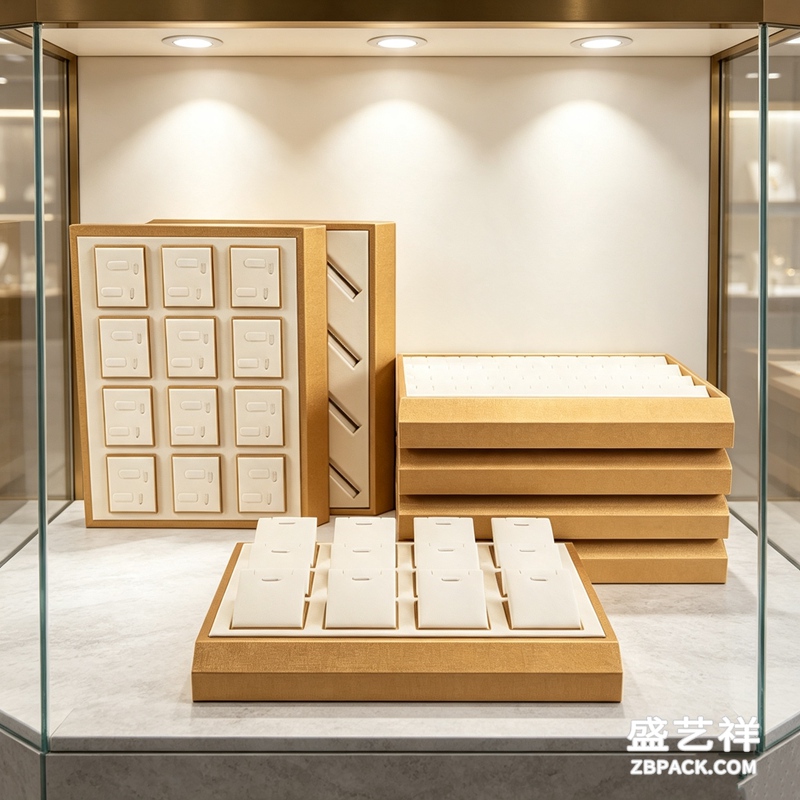
更有意思的是市场的“两端分化”。一端是投资级:3 克拉以上无烧、无油顶级宝石,买家以高净值人群与家族办公室为主,价格不受消费周期影响,持续走高;马亨盖尖晶石五年涨幅高达 152%,无烧缅甸红宝石涨 85%,帕拉伊巴碧玺涨 78%。另一端是消费级:1 克拉以下轻奢款、优化处理宝石、小众设计款,主打颜值与性价比,价格平稳。这两条看似独立的赛道,共同撑起了整个品类的增长空间。从产业规模看,中国彩色宝石市场已从 2021 年的 245 亿元增至 2026 年的 450 亿元,五年近乎翻倍,年复合增长率维持在 13% 以上,远高于全球 6.8% 的平均增速;广东以 42% 的企业占比稳居全国第一,深圳、番禺、汕尾可塘集聚了全球超七成的切割与镶嵌产能。
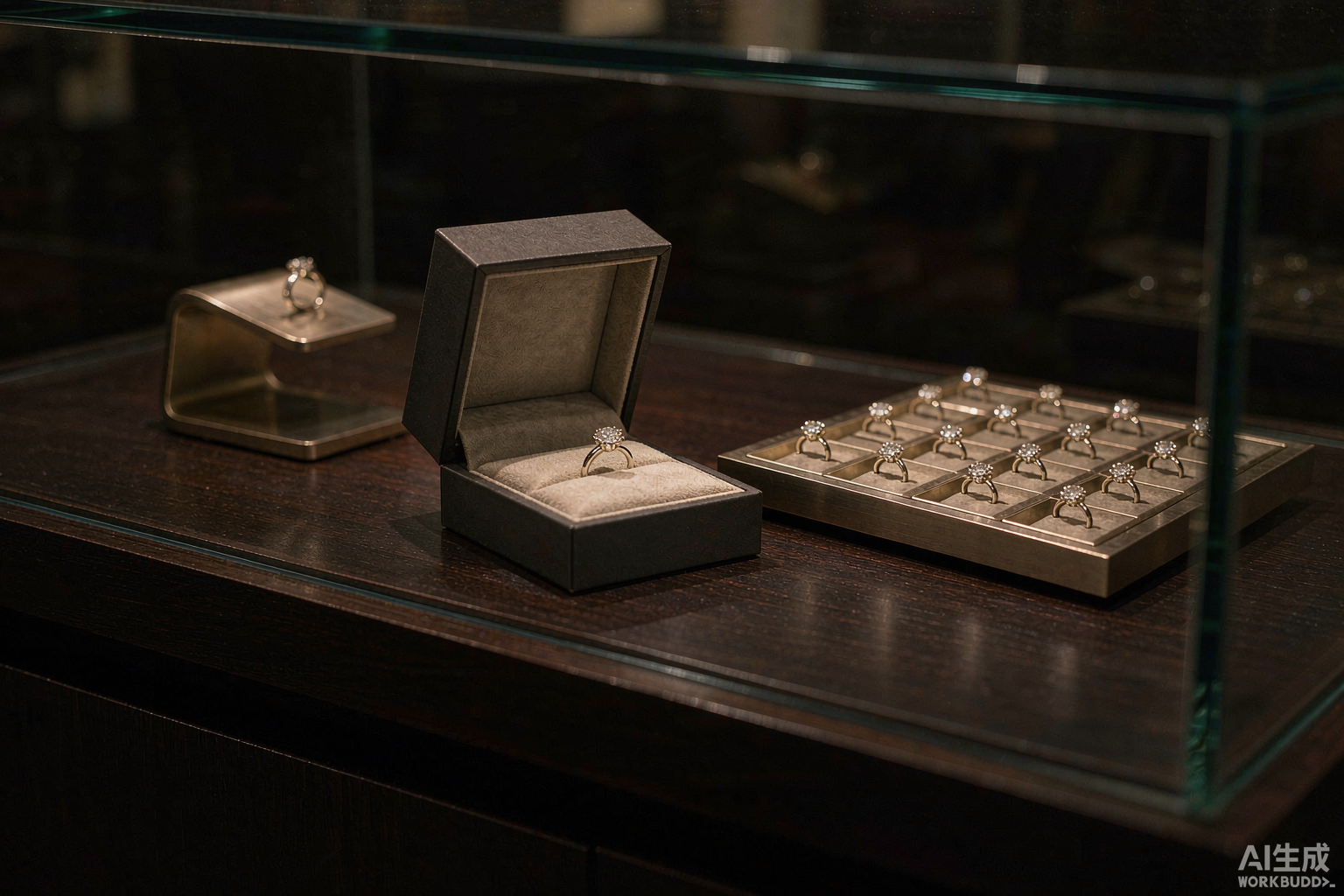
那么,这场行情与“包装”有什么关系?关系比想象中更直接。当一颗无烧缅甸红宝石的单价以万元计、权威证书比石头本身还被看重,它的运输与陈列就不再只是“装一下”,而近乎资产保管。一枚裸石需要独立的首饰盒分层卡槽,避免与硬物摩擦产生划痕;配套的 GIA、GUILD 证书必须随盒归档——这恰恰是珠宝盒定制最擅长的细节:为证书、腰码照片与检测单预留专属卡位,让“石证合一”成为交付标准。
门店端,珠宝摆台的打光逻辑也随之改变。彩色宝石的“显色”极度依赖光源:暖白光下红宝石更艳,冷白光下蓝宝石更透,高显色指数(CRI>90)是还原火彩的前提。一台读懂宝石颜色的珠宝陈列道具,不再是简单的托架,而是把“火彩”翻译成购买欲的转换器。当年轻消费者为“出片”买单,陈列的灯光与底色,直接决定了社交平台的传播效率。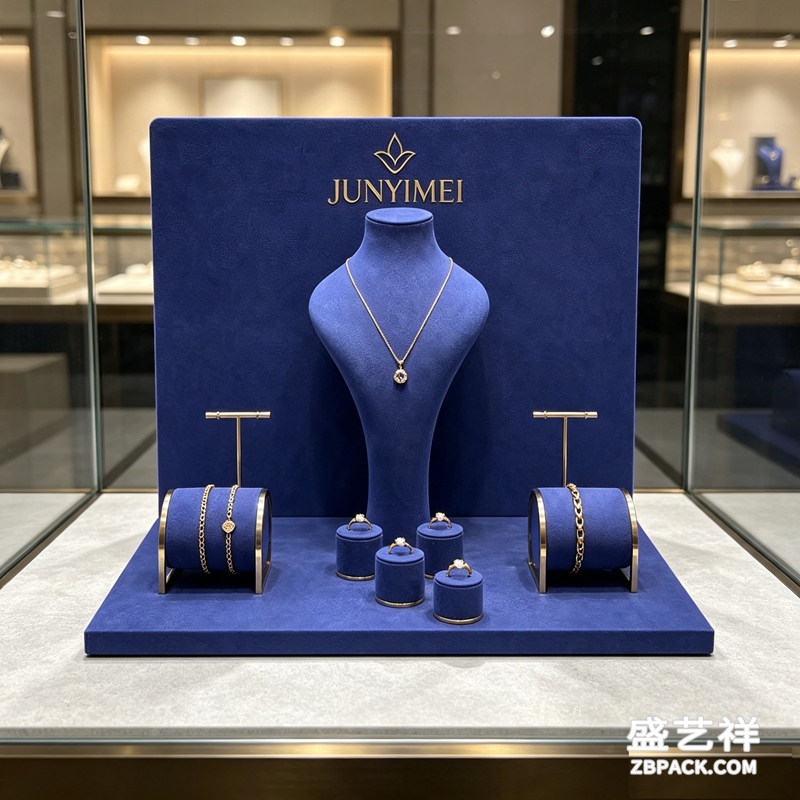
而在品牌层面,当消费者愿意为设计、工艺与故事付费,而非单纯为矿口溢价买单,盛艺祥这样的高端珠宝包装设计者,正把“少而精”的克制美学,从盒体延伸到整条交付动线——从开箱仪式感到陈列语言,让价值与色彩一起被看见、被记住。
彩宝的史诗行情提醒我们:珠宝的价值坐标,正在从“显贵”迁向“显己”。谁能把稀缺变成可佩戴、可收藏、可被妥善安放的日常,谁就握住了下一阶段的叙事权。
本文为原创内容,版权归盛艺祥所有。如需转载请注明出处。
盛艺祥(Shengyixiang)——高端珠宝包装设计与定制专家,为品牌护航。 When gold trades sideways at historic highs and natural diamonds quietly surrender the center stage, another force is igniting the jewelry counter in 2026: colored gemstones. From Myanmar's pigeon-blood rubies to Colombian emeralds, from Sri Lankan sapphires to neon-blue Paraiba tourmalines, a scarcity-driven price wave is sweeping the global market. International gem data shows that raw material prices for high-end colored stones rose more than 30% year on year, with premium varieties doubling in some cases.
This is not a short-term hype cycle. It is a structural revaluation of value. The Bain & Company and Hurun Research 2025–2026 Wealth Report reveals a clear signal: the share of global high-net-worth wealth allocated to jewelry and colored gemstones climbed from 3% three years ago to 8% today, making it one of the fastest-growing alternative asset classes. Over the same period, allocations to traditional real estate fell from 42% to 35%, and to public equities and funds from 28% to 24%. Capital is migrating away from volatile, illiquid assets toward something more tangible and more discreet — and colored gemstones, with their small volume, high value density, and strong cultural premium, fit that appetite perfectly.
The auction room is the most honest barometer. At Christie's 2026 Geneva 'Magnificent Jewels' sale, a 22.28-carat unheated Kashmir sapphire ring by Chaumet realized CHF 2.744 million; a Bvlgari 9.82-carat Kashmir sapphire crossed CHF 1.36 million. Across Sotheby's and Christie's global jewelry auctions, premiums on top-tier colored stones have climbed from around 20% a decade ago to over 50% today. Britain's Dawsons Auctioneers puts it more bluntly: collector taste is shifting from 'stealth wealth' to 'maximalism,' with vivid colored gems becoming the style story of the year. A Cartier brooch set with a Kashmir sapphire hammered at £340,000 — 3.25 times its estimate — while a Victorian sapphire-and-diamond bangle jumped from a £15,000 guide to £70,000.
On the demand side, the generational handover is just as dramatic. According to the Gem and Jewelry Association of China's 2025 consumer data, buyers born in the 1990s and 2000s now account for 47% of jewelry spending. For them, design and looks rank first (37%), while investment value sits fifth at just 8%. On Xiaohongshu and Douyin, content about 'niche colored gemstones' saw interaction grow 137% year on year. As young consumers vote with their wallets, the industry is moving from a resource-driven model toward one powered by aesthetics, design, and emotional value. Self-purchase now drives 42% of colored-gemstone consumption, overtaking traditional bridal demand.
Trading platforms confirm the shift in real time. Nivoda's Q2 2026 gemstone data shows sapphires accounting for 49.4% of all colored-stone sales, with blue the dominant hue (54%), followed by green and teal (25%); cushion cuts jumped from 6.3% to 9.4% of sales as jewelers broadened their cut mix beyond the classic oval. By value, the 3–5 carat and 5-carat-plus bands together now represent more than a quarter of gemstone spend, up from about a fifth in Q1 — buyers are trading up to larger, more statement-led center stones.
What makes the market fascinating is its 'two-speed' split. At one end sits the investment tier: unheated, untreated stones above three carats, bought by high-net-worth individuals and family offices, whose prices rise regardless of consumer cycles. Mahenga spinel is up 152% over five years, unheated Burmese ruby 85%, Paraiba tourmaline 78%. At the other end is the consumer tier: sub-carat fashion pieces, treated stones, and indie designs that trade on looks and value, with stable pricing. Two seemingly separate tracks together sustain the category's growth. At the industry level, China's colored-gemstone market expanded from RMB 24.5 billion in 2021 to RMB 45 billion in 2026 — nearly doubling, with a CAGR above 13%, far ahead of the global average of 6.8%. Guangdong alone hosts 42% of the country's colored-stone enterprises, with Shenzhen, Panyu, and Keqiang in Shanwei concentrating over 70% of the world's cutting and setting capacity.
The rally also has a darker underside: supply. Myanmar's ongoing conflict has severely disrupted ruby production, tightening an already scarce source of pigeon-blood material; Colombia's emerald regions face their own regulatory and environmental headwinds. Scarcity, in other words, is not a marketing slogan here — it is a logistics fact, and it is exactly what underwrites the premium.
So what does this rally have to do with packaging? More than one might think. When a single unheated Burmese ruby costs tens of thousands of yuan per carat and its certificate matters as much as the stone itself, transport and display stop being a matter of 'just wrapping it up' — they become asset custody. A loose stone needs an individual compartment in a jewelry box to avoid scratches from hard contact; the accompanying GIA or GUILD certificate must be archived with the piece. That is precisely the detail where custom jewelry box design excels: reserving dedicated slots for certificates, laser-inscription photos, and grading reports so that 'stone and papers travel as one.'
In the retail space, the lighting logic of the jewelry display prop is changing too. A colored stone's color is intensely light-dependent: rubies glow warmer under warm white, sapphires read cleaner under cool white, and a high color-rendering index (CRI above 90) is the prerequisite for revealing fire. A display prop that understands a stone's color is no longer a simple stand — it is a converter that translates brilliance into desire. As young shoppers buy for the 'photo opportunity,' the lighting and backdrop of the display directly determine how efficiently a piece travels across social platforms.
At the brand level, as consumers pay for design, craft, and story rather than mere mine-origin premium, specialists in high-end jewelry packaging design are extending a restrained 'less but better' aesthetic from the box itself to the entire delivery journey — from the unboxing ritual to the language of the display, making both value and color seen and remembered. Shengyixiang, a high-end jewelry packaging and customization house, treats this convergence as its core brief.
The epic run in colored gemstones reminds us that the coordinates of jewelry value are shifting from 'displaying wealth' to 'expressing self.' Whoever can turn scarcity into something wearable, collectible, and properly kept will hold the narrative of the next chapter.
This is original content. Copyright belongs to Shengyixiang.
Shengyixiang — your expert in high-end jewelry packaging design & customization.
返回资讯列表
Back To News List
这不是短期炒作,而是一场结构性的价值重估。贝恩公司与胡润研究院联合发布的 2025—2026 财富报告揭示了一个清晰信号:全球高净值人群在珠宝与彩色宝石上的配置比例,已从三年前的 3% 跃升至 8%,成为增速最快的另类资产之一;与此同时,传统房产配置从 42% 降至 35%,公开市场股票与基金从 28% 降至 24%。资金正从波动大、流动性受限的资产,转向更稳健、更私密的实物——而体积小、价值密度高、文化溢价强的彩色宝石,恰好契合这一偏好。
拍卖场是最诚实的晴雨表。2026 年 Christie's 日内瓦“Magnificent Jewels”专场,一枚 22.28 克拉无烧克什米尔蓝宝石戒指由 Chaumet 打造,拍出 274.4 万瑞士法郎;同场 Bvlgari 一枚 9.82 克拉克什米尔蓝宝石以 136 万瑞士法郎成交。苏富比、佳士得全球珠宝专场中,顶级彩宝溢价率已从早年的 20% 攀升至 50% 以上。英国 Dawsons 拍卖行的数据更直接:藏家口味正从“静奢”转向“极繁”,色彩浓烈的彩色宝石成为年度风格主角——一枚卡地亚 Kashmir 蓝宝石胸针以估价的 3.25 倍(34 万英镑)落槌,一条维多利亚时期蓝宝石钻石手镯则从 1.5 万英镑估价跳至 7 万英镑。
需求侧的代际切换同样剧烈。中宝协 2025 年消费数据显示,90 后、00 后已占珠宝消费的 47%,他们的决策第一要素是款式设计与颜值(占比 37%),保值投资仅排第 5 位(8%)。小红书、抖音上“小众彩宝”相关内容互动量同比增长 137%。当年轻人用钱包投票,行业便从资源驱动,转向审美驱动、设计驱动与情绪价值驱动。悦己佩戴已占彩宝消费的 42%,超过了传统的婚庆嫁娶。
更有意思的是市场的“两端分化”。一端是投资级:3 克拉以上无烧、无油顶级宝石,买家以高净值人群与家族办公室为主,价格不受消费周期影响,持续走高;马亨盖尖晶石五年涨幅高达 152%,无烧缅甸红宝石涨 85%,帕拉伊巴碧玺涨 78%。另一端是消费级:1 克拉以下轻奢款、优化处理宝石、小众设计款,主打颜值与性价比,价格平稳。这两条看似独立的赛道,共同撑起了整个品类的增长空间。从产业规模看,中国彩色宝石市场已从 2021 年的 245 亿元增至 2026 年的 450 亿元,五年近乎翻倍,年复合增长率维持在 13% 以上,远高于全球 6.8% 的平均增速;广东以 42% 的企业占比稳居全国第一,深圳、番禺、汕尾可塘集聚了全球超七成的切割与镶嵌产能。
那么,这场行情与“包装”有什么关系?关系比想象中更直接。当一颗无烧缅甸红宝石的单价以万元计、权威证书比石头本身还被看重,它的运输与陈列就不再只是“装一下”,而近乎资产保管。一枚裸石需要独立的首饰盒分层卡槽,避免与硬物摩擦产生划痕;配套的 GIA、GUILD 证书必须随盒归档——这恰恰是珠宝盒定制最擅长的细节:为证书、腰码照片与检测单预留专属卡位,让“石证合一”成为交付标准。
门店端,珠宝摆台的打光逻辑也随之改变。彩色宝石的“显色”极度依赖光源:暖白光下红宝石更艳,冷白光下蓝宝石更透,高显色指数(CRI>90)是还原火彩的前提。一台读懂宝石颜色的珠宝陈列道具,不再是简单的托架,而是把“火彩”翻译成购买欲的转换器。当年轻消费者为“出片”买单,陈列的灯光与底色,直接决定了社交平台的传播效率。
而在品牌层面,当消费者愿意为设计、工艺与故事付费,而非单纯为矿口溢价买单,盛艺祥这样的高端珠宝包装设计者,正把“少而精”的克制美学,从盒体延伸到整条交付动线——从开箱仪式感到陈列语言,让价值与色彩一起被看见、被记住。
彩宝的史诗行情提醒我们:珠宝的价值坐标,正在从“显贵”迁向“显己”。谁能把稀缺变成可佩戴、可收藏、可被妥善安放的日常,谁就握住了下一阶段的叙事权。
本文为原创内容,版权归盛艺祥所有。如需转载请注明出处。
盛艺祥(Shengyixiang)——高端珠宝包装设计与定制专家,为品牌护航。 When gold trades sideways at historic highs and natural diamonds quietly surrender the center stage, another force is igniting the jewelry counter in 2026: colored gemstones. From Myanmar's pigeon-blood rubies to Colombian emeralds, from Sri Lankan sapphires to neon-blue Paraiba tourmalines, a scarcity-driven price wave is sweeping the global market. International gem data shows that raw material prices for high-end colored stones rose more than 30% year on year, with premium varieties doubling in some cases.
This is not a short-term hype cycle. It is a structural revaluation of value. The Bain & Company and Hurun Research 2025–2026 Wealth Report reveals a clear signal: the share of global high-net-worth wealth allocated to jewelry and colored gemstones climbed from 3% three years ago to 8% today, making it one of the fastest-growing alternative asset classes. Over the same period, allocations to traditional real estate fell from 42% to 35%, and to public equities and funds from 28% to 24%. Capital is migrating away from volatile, illiquid assets toward something more tangible and more discreet — and colored gemstones, with their small volume, high value density, and strong cultural premium, fit that appetite perfectly.
The auction room is the most honest barometer. At Christie's 2026 Geneva 'Magnificent Jewels' sale, a 22.28-carat unheated Kashmir sapphire ring by Chaumet realized CHF 2.744 million; a Bvlgari 9.82-carat Kashmir sapphire crossed CHF 1.36 million. Across Sotheby's and Christie's global jewelry auctions, premiums on top-tier colored stones have climbed from around 20% a decade ago to over 50% today. Britain's Dawsons Auctioneers puts it more bluntly: collector taste is shifting from 'stealth wealth' to 'maximalism,' with vivid colored gems becoming the style story of the year. A Cartier brooch set with a Kashmir sapphire hammered at £340,000 — 3.25 times its estimate — while a Victorian sapphire-and-diamond bangle jumped from a £15,000 guide to £70,000.
On the demand side, the generational handover is just as dramatic. According to the Gem and Jewelry Association of China's 2025 consumer data, buyers born in the 1990s and 2000s now account for 47% of jewelry spending. For them, design and looks rank first (37%), while investment value sits fifth at just 8%. On Xiaohongshu and Douyin, content about 'niche colored gemstones' saw interaction grow 137% year on year. As young consumers vote with their wallets, the industry is moving from a resource-driven model toward one powered by aesthetics, design, and emotional value. Self-purchase now drives 42% of colored-gemstone consumption, overtaking traditional bridal demand.
Trading platforms confirm the shift in real time. Nivoda's Q2 2026 gemstone data shows sapphires accounting for 49.4% of all colored-stone sales, with blue the dominant hue (54%), followed by green and teal (25%); cushion cuts jumped from 6.3% to 9.4% of sales as jewelers broadened their cut mix beyond the classic oval. By value, the 3–5 carat and 5-carat-plus bands together now represent more than a quarter of gemstone spend, up from about a fifth in Q1 — buyers are trading up to larger, more statement-led center stones.
What makes the market fascinating is its 'two-speed' split. At one end sits the investment tier: unheated, untreated stones above three carats, bought by high-net-worth individuals and family offices, whose prices rise regardless of consumer cycles. Mahenga spinel is up 152% over five years, unheated Burmese ruby 85%, Paraiba tourmaline 78%. At the other end is the consumer tier: sub-carat fashion pieces, treated stones, and indie designs that trade on looks and value, with stable pricing. Two seemingly separate tracks together sustain the category's growth. At the industry level, China's colored-gemstone market expanded from RMB 24.5 billion in 2021 to RMB 45 billion in 2026 — nearly doubling, with a CAGR above 13%, far ahead of the global average of 6.8%. Guangdong alone hosts 42% of the country's colored-stone enterprises, with Shenzhen, Panyu, and Keqiang in Shanwei concentrating over 70% of the world's cutting and setting capacity.
The rally also has a darker underside: supply. Myanmar's ongoing conflict has severely disrupted ruby production, tightening an already scarce source of pigeon-blood material; Colombia's emerald regions face their own regulatory and environmental headwinds. Scarcity, in other words, is not a marketing slogan here — it is a logistics fact, and it is exactly what underwrites the premium.
So what does this rally have to do with packaging? More than one might think. When a single unheated Burmese ruby costs tens of thousands of yuan per carat and its certificate matters as much as the stone itself, transport and display stop being a matter of 'just wrapping it up' — they become asset custody. A loose stone needs an individual compartment in a jewelry box to avoid scratches from hard contact; the accompanying GIA or GUILD certificate must be archived with the piece. That is precisely the detail where custom jewelry box design excels: reserving dedicated slots for certificates, laser-inscription photos, and grading reports so that 'stone and papers travel as one.'
In the retail space, the lighting logic of the jewelry display prop is changing too. A colored stone's color is intensely light-dependent: rubies glow warmer under warm white, sapphires read cleaner under cool white, and a high color-rendering index (CRI above 90) is the prerequisite for revealing fire. A display prop that understands a stone's color is no longer a simple stand — it is a converter that translates brilliance into desire. As young shoppers buy for the 'photo opportunity,' the lighting and backdrop of the display directly determine how efficiently a piece travels across social platforms.
At the brand level, as consumers pay for design, craft, and story rather than mere mine-origin premium, specialists in high-end jewelry packaging design are extending a restrained 'less but better' aesthetic from the box itself to the entire delivery journey — from the unboxing ritual to the language of the display, making both value and color seen and remembered. Shengyixiang, a high-end jewelry packaging and customization house, treats this convergence as its core brief.
The epic run in colored gemstones reminds us that the coordinates of jewelry value are shifting from 'displaying wealth' to 'expressing self.' Whoever can turn scarcity into something wearable, collectible, and properly kept will hold the narrative of the next chapter.
This is original content. Copyright belongs to Shengyixiang.
Shengyixiang — your expert in high-end jewelry packaging design & customization.