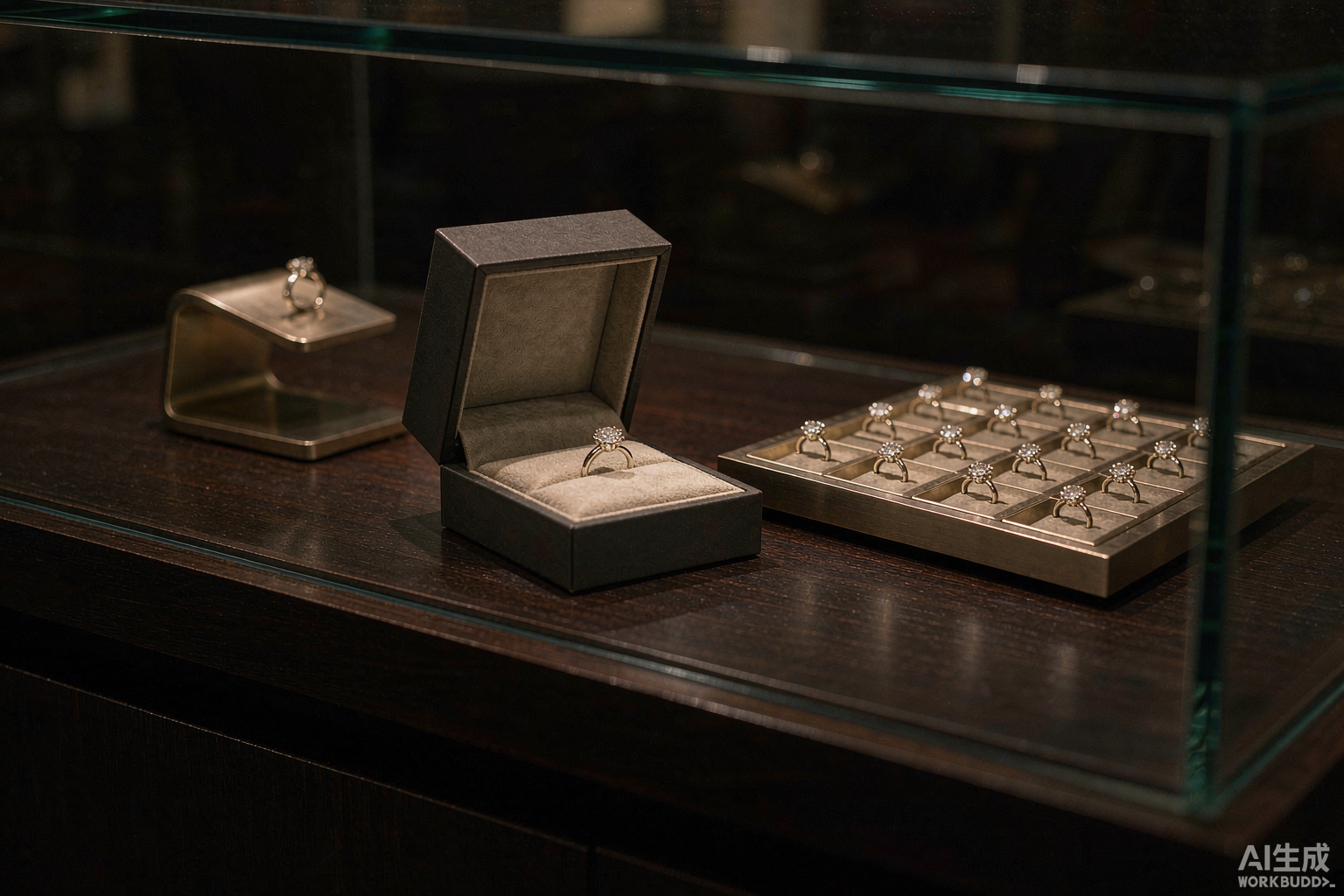
柜台损耗怎么管住 How Display and Packaging Cut Jewelry Store Losses
金价一路走高,柜台里同一个空位,今天赔的钱和三年前不是一个量级。多数店主会想到装监控、加保险,却很少想到:陈列道具怎么摆、盒子怎么封,本身就是防损的第一道工序。这篇用公开的行业数据,把"损耗"这件事拆开讲。
问一:珠宝门店的损耗到底有多大?
先看专业口径。美国珠宝安全联盟(JSA)2025 年度犯罪报告显示:全年针对珠宝企业的案件 1233 起,比 2024 年的 1420 起下降 13%,但损失金额反而上升 1.5%,达到 1.447 亿美元。其中入室盗窃 262 起,独占 8070 万美元损失;抢劫 218 起,损失 3880 万美元,同比增加 25.6%。更值得警惕的是案值集中化:损失超过 100 万美元的入室盗窃从 8 起跳到 20 起,保险柜与金库被攻击 37 起,平均单案损失 110 万美元。
再看零售大盘。美国零售联邦最后一版全国零售安全调查(2022 财年)给出的损耗率是销售额的 1.6%,总额 1121 亿美元;构成里外部盗窃占 36%、内部盗窃 29%、流程与单据差错 27%、原因不明 6%——也就是说,接近三分之一的损耗根本不是贼偷的,而是收货、标价、记账环节漏掉的。Appriss Retail 2026 年度零售损失基准报告进一步指出,约 900 亿美元的年度损耗中有 73% 属于"可防"。行业通行的判断是:门店损耗率长期高于 2%,基本说明流程存在结构性漏洞。
落到国内门店,最常见的漏洞是盘点。珠宝单价高、SKU 多、体积小、陈列密集,人工逐件清点一次要 6 到 8 小时,账实差异普遍在 3%–5%;盘差与失窃合起来,可以吃掉营收的 2%–5%。这笔钱不写在任何一张促销海报上,但年底一定会出现在利润表里。
问二:陈列道具怎么摆才不容易丢?
先认清最高频的那类损失。Jewelers Mutual 援引 JSA 数据:抓走就跑(grab-and-run)占全部失窃事件的 65.1%,单次平均损失 9713 美元。它不需要工具、不需要团队,只需要店员分神那几秒。行业公认的三条动作纪律是:先验证件再取货、一次只出一件、柜面上同时不超过两件——整托盘二十枚戒指递出去,是给对方递机会。
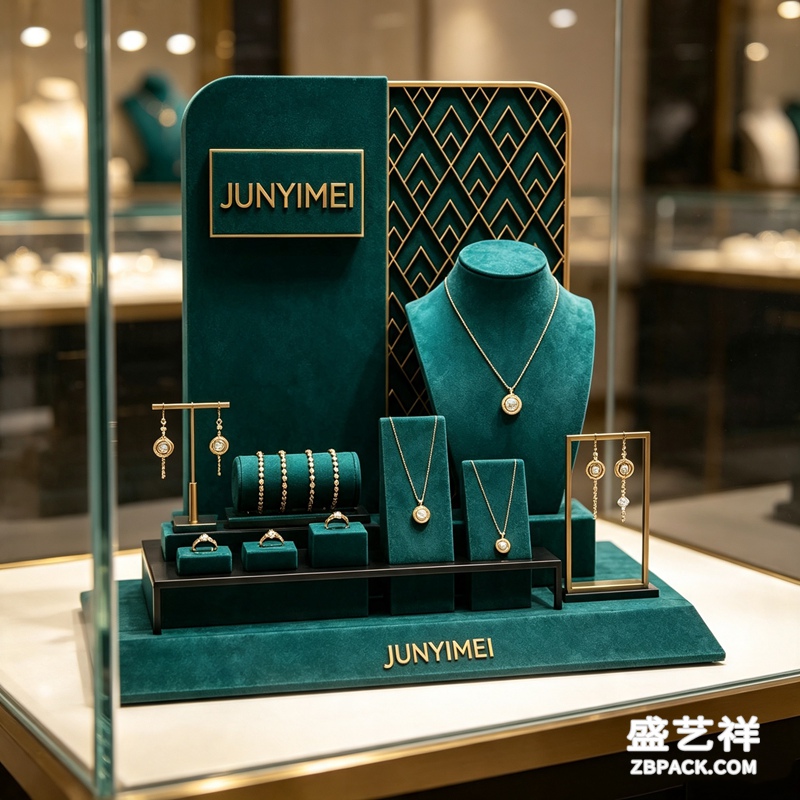
道具层面能做的事,比很多人想的多。第一,托盘和内格做成"每格一位",缺一件立刻显形,不必等打烊清点;第二,珠宝摆台用高度差区分主次,同时保证坐姿视线带内的每个货位都在店员视野里,别让高摆台挡住第二排;第三,锁具不是可选项——据 Capital One Shopping 的统计,78% 的多店零售商已在用锁柜或锁扣,其中 67% 是在一年之内扩大了这类措施;第四,打烊清空橱窗,道具"留白"比塞满更安全,也更显贵。
还有一组容易被忽略的 JSA 数据:抢劫最集中的时段是周五傍晚 18:00 到 19:00;加州占全年入室盗窃的 24%;从屋顶入侵的案件由 15 起增至 25 起,穿墙入侵在入侵方式中的占比从 17.4% 升到 19.1%。换句话说,只盯着正门和展窗,等于只锁了一半的门。
问三:高端简约的包装与陈列,是不是也更"防损"?
是,而且是同向的。老板们常说"高端简约的珠宝包装更容易被顾客青睐",从防损角度看,这句话还有第二层意思。
其一,稀疏克制的陈列等于"可清点"。每格一位、留白充分,少一件立刻看得见;塞满的柜子既掉价,也天然为夹带、调换提供掩护。其二,简约意味着少一层结构,就少一处藏匿点——层层套盒、多余绸带与衬纸,恰好给"塞、换、藏"留出空间。其三,哑光、低反光的道具与盒面让监控画面更干净,回看录像不会被一片眩光糊掉细节。其四,对外发出的包裹要低调:JSA 2025 年记录到 39 起场外犯罪,珠宝商住宅被盗从 4 起升到 11 起,张扬的外包装等于替货物贴标语。所以在盛艺祥的珠宝包装设计里,"少而准"从来不只是审美选择,它同时是一条风险控制线。
问四:一物一码、RFID 是不是只有大品牌玩得起?
先看效率差。RFID 手持读写器可以在密集陈列下批量识别,实测每分钟 200–300 件、准确率 99.8%,不必逐件拿取。国内案例里,菜百作为首个大规模应用 RFID 的珠宝企业,库存盘点效率提升超过 90%,人工误差率降到 0.02% 以下;华东某珠宝连锁上线后,每日打烊盘点从 3 小时压缩到 20 分钟,年度盘点损耗降低 70%,盘点人力成本节省约 70%;6000 件规模的盘点从 4 个工作日缩到 0.5 个工作日,库存准确性提升到 99.9% 以上;某高端品牌旗舰店部署后,季度门店损耗成本下降 45%。出入口读写门在未走出库流程时实时报警,可把损失再降 70%–90%;柜下读写器还能监测每件货的在位状态,取放超时即报警。
顺带的收益也真实:智能奉客盘会自动统计每件货当天被取出的次数,反过来指导补货与陈列位调整;结账时间从 5 分钟缩到 1 分钟;智能展示让转化率提升约 8%;消费者扫码即可验真,假货投诉下降 90%。
成本没有想象中高。UHF 珠宝标签(10×15mm)单枚约合人民币 0.2–0.5 元,固定式读写器约两三千元,手持机约四千到六千元,安全门约七千到一万一千元(按东南亚集成商公开报价换算,国内为同一量级)。对一家 SKU 上千件的门店,先上"手持机 + 标签"这一层就足够回本,读写门与柜内监测可以往后排。
问五:包装这一侧具体能做什么?
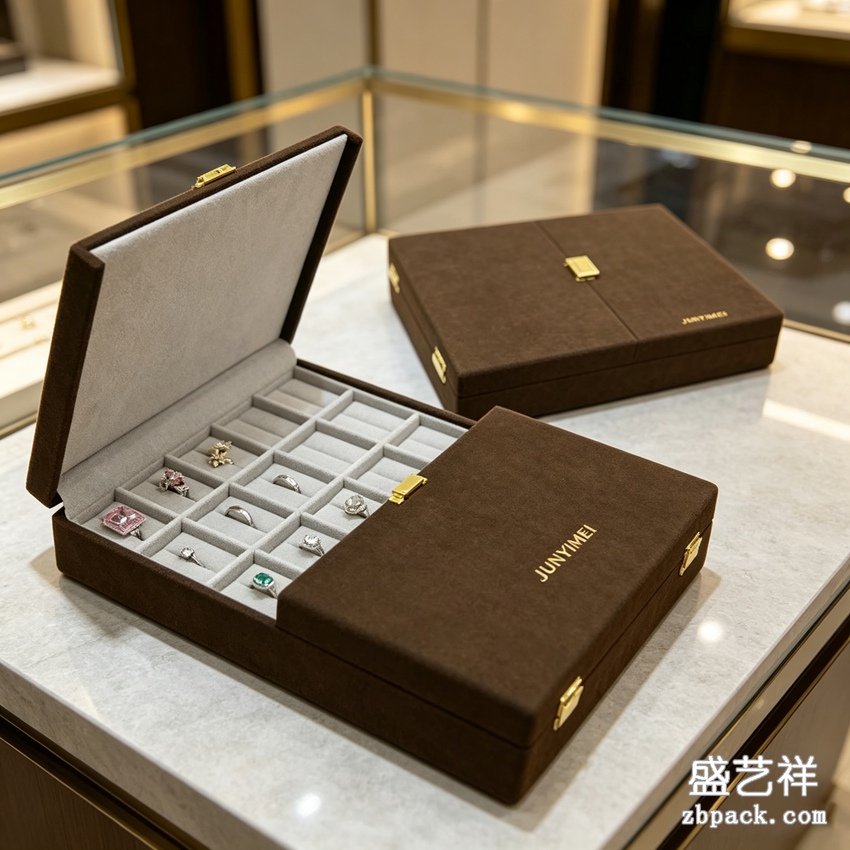
四件事,成本都不高。第一是封缄。一次性防拆封条、易碎材质标签或特种胶封装,强行剥离即损毁,杜绝撕下重复使用——退货、寄修、寄卖这三个场景最需要它。第二是"盒与件绑定":在饰品包装盒的内衬旁留出编号位与证书位,把序列号、证书号、材质与工艺绑成一条可查记录,二手转售和售后核验都要用到。第三是把卡位当清点单元:内衬做成"每件一位",空位本身就是提醒,试戴后立刻归位,比事后清点可靠得多。
第四件最容易返工:芯片仓位必须在开模阶段定下来。金属盒体、大面积烫金都会屏蔽信号,实验数据显示 NFC 标签埋在 1.2 毫米以内的树脂或漆层下,读取稳定率仍能保持 94% 以上,一旦遮蔽超过 2.5 毫米就跌到 78% 以下。天线避让区、非金属读取窗口这些细节,要在图纸阶段就和珠宝盒工厂谈清楚;等模具开完再改,交期和成本都会翻倍。
问六:这笔投入怎么算账、验收看什么?
算三笔账。一是人力:打烊盘点 3 小时变 20 分钟,一年省下的工时按当地时薪直接折现即可。二是损耗:公开案例区间是年度盘点损耗降 70%、旗舰店季度损耗成本降 45%;哪怕只兑现一半,对损耗率在 1.5%–2% 的门店也是净利级改善。三是顺带收益:结账更快、转化提升约 8%、假货投诉下降 90%,这些属于防损之外的红利。
验收看四条:①标签与内衬不刮伤金饰、不影响卡槽夹持,盒子倒置货品不脱位;②封缄件"拆过留痕",同时不破坏盒面质感;③芯片仓位与避让区写进图纸,首件必须做读取率抽测,且要在同柜密集陈列的条件下通过;④珠宝陈列道具与珠宝盒定制走同一套材质与色号,别为了塞设备把视觉语言弄乱。
说到底,防损不是买几台设备,而是把纪律做进结构里——可清点、可封缄、可读取,这三件事在开模之前就该画进图纸。做到了,柜台里少的那一件,你当天就会知道。
本文为原创内容,版权归盛艺祥所有。如需转载请注明出处。
盛艺祥(Shengyixiang)——高端珠宝包装设计与定制专家,为品牌护航。
With gold near record highs, one empty slot in a showcase costs far more today than it did three years ago. Most owners think about cameras and insurance. Few think about the fact that how props are arranged and how a box is sealed is already the first step of loss prevention. Here is what the published data actually says.
Q1: How large is loss in a jewelry store, really?
Start with the industry's own numbers. The Jewelers' Security Alliance (JSA) 2025 Annual Crime Report counted 1,233 crimes against jewelry businesses, down 13% from 1,420 in 2024 — yet dollar losses rose 1.5% to 144.7 million USD. On-premises burglaries accounted for 262 incidents and 80.7 million USD of that total; robberies numbered 218 and cost 38.8 million USD, up 25.6% year over year. The more troubling pattern is concentration: burglaries with losses above one million dollars jumped from 8 to 20, and safe or vault attacks reached 37 incidents with an average loss of 1.1 million USD.
Now the wider retail picture. The last National Retail Security Survey published by the National Retail Federation (fiscal 2022) put shrink at 1.6% of sales, or 112.1 billion USD. Its composition matters: external theft 36%, internal employee theft 29%, process and paperwork errors 27%, unknown 6%. Nearly a third of shrink is not stolen by anyone — it is lost at receiving, tagging and bookkeeping. The Appriss Retail 2026 Total Retail Loss benchmark adds that roughly 73% of about 90 billion USD in annual shrink is preventable. The working rule of thumb: a store running above 2% shrink for long has a structural process gap, not just a theft problem.
In practice, the weakest link is counting. Jewelry is high-value, high-SKU, small and densely displayed; a manual count takes six to eight hours and typically leaves a 3%–5% gap between records and reality. Combined count gaps and theft can absorb 2%–5% of annual revenue — money that never appears on a promotion poster but always appears on the year-end P&L.
Q2: How should display props be arranged so pieces do not disappear?
Know the most frequent loss first. Citing JSA figures, Jewelers Mutual reports that grab-and-run accounts for 65.1% of theft incidents, with an average loss of 9,713 USD per event. It needs no tools and no crew — only a few seconds of a salesperson's divided attention. Three disciplines are standard: check ID before bringing a piece out, show one piece at a time, and never have more than two pieces out of the case at once. Handing over a tray of twenty rings is handing over an opportunity.
Props can do more than people assume. First, build trays and inserts on a strict one-slot-one-piece logic, so a missing item shows immediately instead of at closing. Second, use height differences on jewelry display stands to rank pieces while keeping every position inside staff sightlines from a seated customer's angle — a tall riser should never hide the second row. Third, locks are not optional: Capital One Shopping data indicates 78% of multi-location retailers now use locking cases or hooks, and 67% expanded such measures within a single year. Fourth, clear windows at closing; negative space in a display is both safer and more premium-looking than a packed case.
One more set of JSA numbers is easy to overlook. Friday between 6:00 and 7:00 p.m. was the peak window for robberies. California accounted for 24% of burglaries. Roof entries rose from 15 to 25 incidents, and wall entry climbed from 17.4% to 19.1% of entry methods. Guarding only the front door and window means locking half the building.
Q3: Does high-end minimal packaging and display also reduce loss?
Yes — and the two goals point the same way. Owners often say that clean, minimal jewelry packaging wins customers more easily. From a loss-prevention view, that sentence has a second meaning.
First, sparse, disciplined display equals countable display. With one slot per piece and generous spacing, a gap is visible instantly; an overpacked case both cheapens the goods and provides cover for palming and swapping. Second, minimal means one layer fewer — and one hiding place fewer. Nested boxes, surplus ribbon and filler sheets create exactly the voids used to conceal or substitute. Third, matte, low-glare props and box surfaces keep camera footage clean; reviewing video should not mean fighting a wall of reflections. Fourth, outbound parcels should stay discreet: JSA logged 39 off-premises crimes in 2025, and burglaries at jewelers' homes rose from 4 to 11. Loud exterior packaging is a label announcing what is inside. In Shengyixiang's packaging design work, "less but exact" was never only an aesthetic choice — it is also a risk control line.
Q4: Are item-level codes and RFID only affordable for big brands?
Look at the efficiency gap first. Handheld RFID readers identify densely displayed items in bulk — measured at 200–300 pieces per minute with 99.8% accuracy, with no need to pick up each piece. In China, Caibai became the first jeweler to deploy RFID at scale, raising inventory efficiency by more than 90% and cutting manual error below 0.02%. An eastern-China jewelry chain compressed its nightly count from three hours to 20 minutes, reduced annual count-related loss by 70% and saved roughly 70% of counting labor. A 6,000-piece audit fell from four working days to half a day, with inventory accuracy above 99.9%. One flagship store reported quarterly loss costs down 45% after deployment. Exit portals that alarm in real time when goods leave without a release record can cut loss a further 70%–90%, while under-counter readers monitor whether each piece is in position and flag over-long removals.
The side benefits are real too: smart presentation trays automatically log how many times a piece was taken out during the day, which feeds restocking and position decisions; checkout time drops from five minutes to one; smart display features lift conversion by about 8%; and customer-side verification by phone has cut counterfeit complaints by 90%.
Cost is lower than expected. A UHF jewelry tag (10×15mm) runs roughly 0.2–0.5 RMB per unit; a fixed reader costs a few thousand RMB, a handheld reader around 4,000–6,000 RMB, and a security gate roughly 7,000–11,000 RMB (converted from published Southeast Asian integrator pricing; domestic quotes sit in the same range). For a store with a thousand-plus SKUs, starting with handheld readers plus tags is enough to pay back; portals and in-case monitoring can wait.
Q5: What can the packaging side actually contribute?
Four things, none expensive. First, sealing. One-time tamper-evident seals, frangible label stock or special adhesives are destroyed on removal, so a label cannot be peeled off and reused — critical for returns, repairs and consignment. Second, bind the box to the piece: leave a serial and certificate position beside the insert of the accessory packaging box, and tie serial number, certificate number, material and craft into one retrievable record. Resale and after-sales verification both depend on it. Third, treat each slot as a counting unit: an insert built one-piece-per-slot turns an empty slot into a reminder, and returning a piece right after a try-on beats counting after the fact.
Fourth is the one that causes rework: chip cavity position must be fixed at tooling stage. Metal shells and large foil areas block signal. Test data shows NFC tags embedded under resin or lacquer up to 1.2mm still read reliably above 94%, while shielding beyond 2.5mm drops read stability below 78%. Antenna clearance zones and non-metallic read windows must be agreed with the jewelry box factory while drawings are still open; changing them after the mold is cut doubles both lead time and cost.
Q6: How do you build the business case, and what do you inspect?
Three ledgers. Labor: a nightly count going from three hours to 20 minutes converts directly into hours saved at local wage rates. Loss: published cases sit at 70% lower annual count loss and 45% lower quarterly loss cost at a flagship; even half of that is a net-margin improvement for a store running 1.5%–2% shrink. Side income: faster checkout, roughly 8% higher conversion and 90% fewer counterfeit complaints are bonuses beyond loss prevention.
Inspect four points: (1) tags and inserts must not scratch gold or weaken slot grip — inverted, nothing shifts; (2) seals must leave evidence when opened without damaging the box surface; (3) chip cavity and clearance zones written into the drawing, with first-article read-rate sampling passed under dense in-case conditions; (4) display props and custom boxes share one material and color standard, so fitting hardware never scrambles the visual language.
Loss prevention is not a shopping list of devices. It is discipline built into structure — countable, sealable, readable — decided before the mold is cut. Get that right and the piece missing from your case is something you learn about the same day.
This is original content. Copyright belongs to Shengyixiang.
Shengyixiang — your expert in high-end jewelry packaging design & customization.