天然材质点亮高珠 Why Natural Materials Are Fine Jewelry's New Luxury
当“不纯”开始登上高珠橱窗
高级珠宝讲了一个多世纪的信条:越贵越纯。金、钻、铂,纯度即身价。但2026年的高珠橱窗正在被一种“不纯”的材料悄悄占领——木、皮、骨、贝、岩晶、化石,甚至一块遇水即溶的喜马拉雅盐。它们不再躲在配角位,而是与钻石平起平坐地出现在高级珠宝的聚光灯下。
从秀场到博物馆的材料革命
这场转向并非小众实验。2025年 Gucci 与 Pomellato 的 Monili 系列把柔软皮革与钻石配对,是最清晰的一次信号;Schiaparelli 在2026春夏秀场把喜马拉雅盐雕成首饰并嵌入微型 LED,让易溶的材质只为“此刻的美”存在;Boucheron 把岩晶雕刻做成品牌签名,其2021年 Holographique 系列的“Faisceaux”胸针更于2026年2月被伦敦维多利亚与阿尔伯特博物馆永久收藏;Cartier 在2025年 En Équilibre 系列中以岩晶衬祖母绿,Hemmerle 则把岩晶与铜、铝乃至木材并置,于 TEFAF New York 2026 展出。Tory Burch 的贝壳耳环、Hermès 的皮革项圈,都在把“更靠近自然”的触感带进高珠语境。
数据同样诚实:据行业追踪,再生金已占2026年全球珠宝用金的25%–30%;乌木、玫瑰木与夏威夷寇阿木(koa)等硬质木材因稀缺与封存工艺,单件溢价可达40%–60%。当金价持续走高,非传统材质恰好给了品牌“既时尚、又负担得起”的创意出口——正如珠宝专家 Rosie Lillis 所言,这催生了一波“高—低混搭(high-low)”的当代高级珠宝,Roxanne First、Alison Lou 等设计师是其中代表。
价值坐标:从稀有到叙事
更深的变化发生在价值定义上。过去高珠的价值锚点是“稀有+品牌”;今天,创意、故事、触感与可追溯性正在平分秋色。一枚嵌着化石的吊坠讲述亿万年前的生命,一截鹿角指向季节与 renewal,未经切割的祖母绿晶体保留着地质的六方结构——“材质成为故事”,消费者追问的不再是克拉与净度,而是石头从哪里来、如何成形。这也是天然材质与“静奢”“慢珠宝”天然同频的原因:每一件都因材质的不规则而独一无二。
市场已经用脚投票。多家趋势机构的数据显示,2026年“可持续奢侈珠宝”相关搜索量同比上涨约40%,其中“自然材质”领跑查询词;千禧与Z世代把道德采购、可追溯与供应链透明列为购买底线,并愿意为“说得出来源”的材质多付溢价。这意味着天然材质不是一阵风潮,而是一条正在成形的价值通道。
还有一层更微妙的心理:在人人被屏幕喂养的审美里,可触摸的天然纹理成了一种奢侈的反叛。木纹的走向、皮革的毛孔、贝壳的层理、岩晶的棱面,都是算法无法生成的“不完美”。当指尖划过这些真实肌理,珠宝从图像变回物体——这正是天然材质最锋利的价值:它把“奢侈”重新锚定在身体经验里。
但必须厘清一个误区:天然不等于可持续。贝壳、木材、珊瑚类材质同样可能涉及采集与贸易争议;真正成立的是“可追溯”——品牌能否说清材料的来源、处理与养护。负责任的设计,是把再生金属、实验室培育石与天然材质放在同一张透明的账本上,让买家自己选择。
当材质成为叙事,交付也该会讲故事
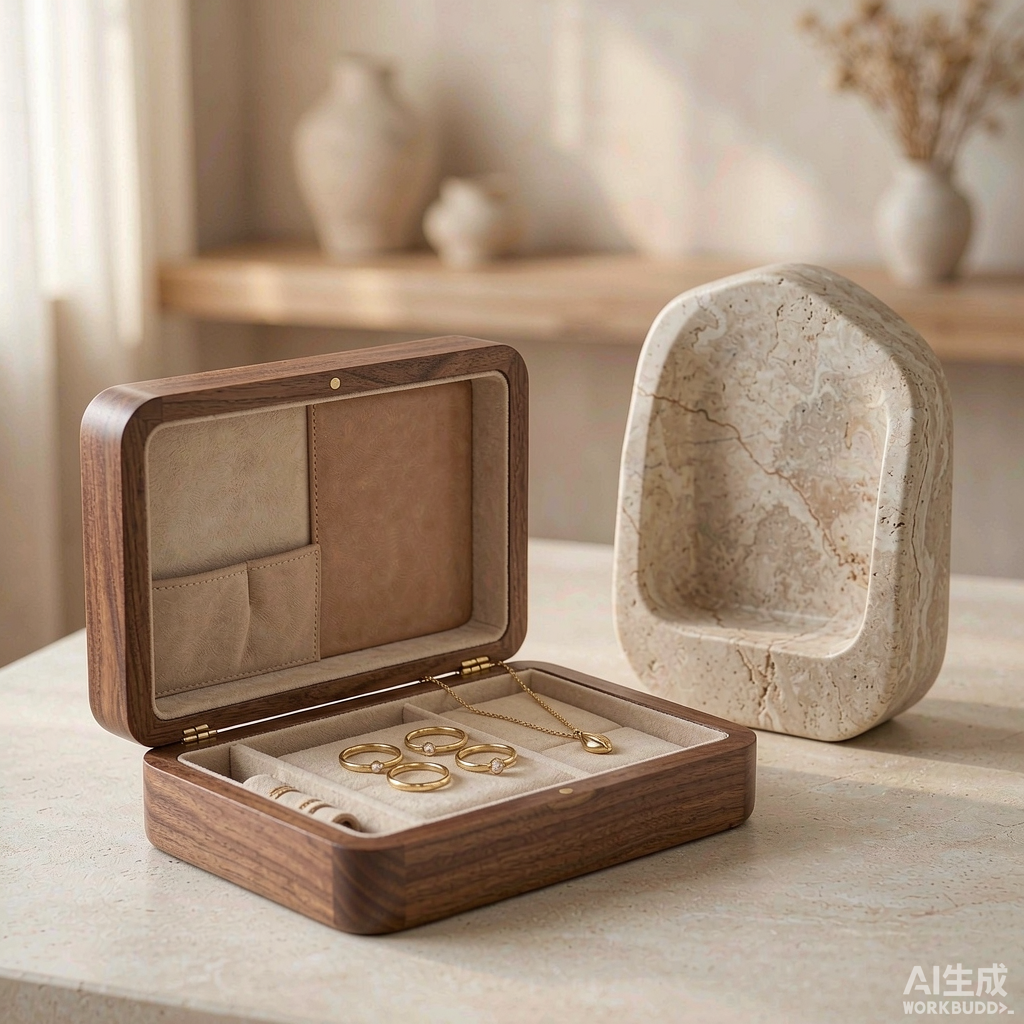
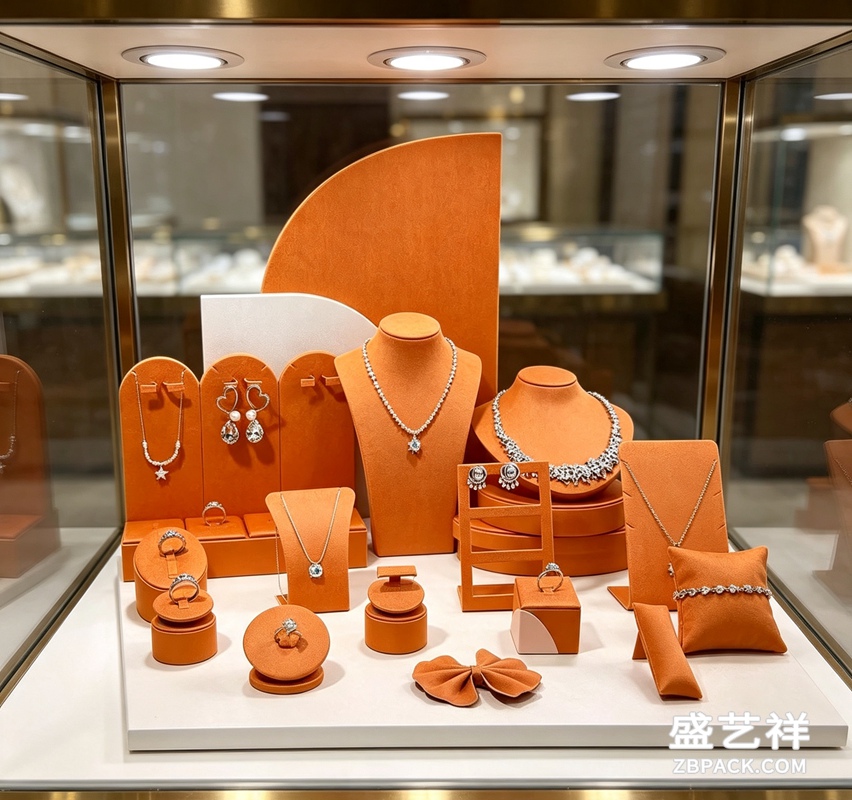
对品牌而言,天然材质珠宝本身就是一件“故事物”,它的交付动线也该延续这份叙事,而非用千篇一律的亮面礼盒把故事截断。珠宝盒定制开始采用原木纹理、未漂棉麻与哑光内衬,让盒体本身就是材质的回声;珠宝陈列道具以天然石材与哑光木座托底,把岩晶的冷光、木纹的暖意真实还原,而非被刺眼射灯抹平。珠宝包装设计则回到“少而精”的克制——留白、单一主色、局部手感,让开盒成为故事的最后一句。像盛艺祥这样的定制方,正以柔性小批量打样,承接那些“材质即表达”的独立与设计师品牌,把从石料到盒体的整条叙事收拢成一气呵成的交付。
珠宝的奢侈,正在从“我拥有什么”转向“我为何拥有”。当一块木头、一片岩晶、一截鹿角被郑重地镶上金边,它们提醒我们:高级,未必来自矿脉的深处,也来自设计师敢于让自然开口说话的那一刻。
本文为原创内容,版权归盛艺祥所有。如需转载请注明出处。
盛艺祥(Shengyixiang)——高端珠宝包装设计与定制专家,为品牌护航。
When "Impure" Materials Reach the Fine-Jewelry Window
For more than a century, fine jewelry told one story: the rarer and purer, the more precious. Gold, diamond, platinum — purity was price. Yet in 2026, the fine-jewelry vitrine is being quietly colonized by "impure" materials: wood, leather, bone, shell, rock crystal, fossil, even a lump of Himalayan salt that dissolves in water. They no longer hide in supporting roles; they share the spotlight with diamonds.
From Runway to Museum
This shift is not a fringe experiment. In 2025, Gucci's collaboration with Pomellato, the Monili collection, paired supple leather with diamonds — one of the clearest signals yet. For Spring/Summer 2026, Schiaparelli transformed Himalayan salt into jewelry lit by tiny LEDs, embracing a material too fragile for daily wear precisely because its beauty is momentary. Boucheron turned rock-crystal carving into a house signature; its "Faisceaux" brooch from the 2021 Holographique collection was acquired by London's Victoria and Albert Museum in February 2026. Cartier reintroduced rock crystal in its 2025 En Équilibre line, setting it against emeralds; Hemmerle keeps pushing boundaries by combining rock crystal with copper, aluminium and wood, shown at TEFAF New York 2026. Tory Burch's oversized shell earrings and Hermès' leather chokers all pull a more nature-adjacent tactility into the fine-jewelry conversation.
The numbers are just as candid. According to industry tracking, recycled gold already accounts for an estimated 25%–30% of the gold used in jewelry worldwide in 2026. Hardwoods such as ebony, rosewood and Hawaiian koa command premiums of 40%–60% per piece thanks to scarcity and sealing craft. As gold prices keep climbing, non-traditional materials hand brands a creative exit that is both stylish and accessible — what jewelry expert Rosie Lillis calls a new wave of "high-low" fine jewelry, led by designers like Roxanne First and Alison Lou.
The Value Coordinate Moves From Rarity to Narrative
The deeper change is in how value is defined. Where fine jewelry once anchored worth in "rarity plus brand," today creativity, story, tactility and traceability share the stage. A pendant set with a fossil carries the memory of ancient life; a slice of antler points to seasonal cycles; a raw emerald crystal keeps its geological hexagonal structure. "Material becomes story," and buyers increasingly ask not about carat and clarity but about where a stone came from and how it formed. This is why natural materials resonate so naturally with quiet luxury and slow jewelry: each piece is one-of-a-kind precisely because the material is irregular.
Markets have voted with their feet. Multiple trend analyses show searches for "sustainable luxury jewelry" rose roughly 40% year-on-year in 2026, with natural materials leading the queries. Millennials and Gen Z treat ethical sourcing, traceability and supply-chain transparency as a purchase baseline, and they will pay more for a material whose origin can be told. This suggests natural materials are not a passing fashion but a value channel taking shape.
There is a subtler psychology at work, too. In an age where everyone is fed by screens, touchable natural texture is a quiet rebellion of luxury. The grain of wood, the pores of leather, the layering of shell, the facets of rock crystal — these are "imperfections" no algorithm can generate. When a fingertip traces those real surfaces, jewelry returns from image to object. That is natural material's sharpest value: it re-anchors "luxury" in bodily experience.
But one myth must be cleared: natural is not automatically sustainable. Shell, wood and coral-adjacent materials can carry harvesting and trade concerns. What truly holds is traceability — can a brand state where a material entered the supply chain, how it was treated, how it should be cared for? Responsible design places recycled metal, lab-grown stones and natural materials on one transparent ledger, and lets the buyer choose.
When Material Tells a Story, Delivery Should Too
For a brand, a naturally-materialed jewel is itself a "story object," and its delivery line should extend that narrative rather than cut it off with a generic glossy box. Custom jewelry boxes now adopt wood-grain textures, unbleached cotton-linen and matte linings, so the case echoes the material's origin. Jewelry display props rest pieces on raw stone and matte wooden plinths, rendering rock crystal's cool light and wood's warmth truthfully instead of flattening them under harsh spotlights. Jewelry packaging design returns to restraint — whitespace, a single dominant tone, a local tactile accent — so opening the box becomes the story's final sentence. Makers like Shengyixiang are answering with flexible small-batch sampling, serving the independent and designer brands for whom "material is expression," and pulling the whole narrative — from stone to box — into one coherent delivery.
Jewelry's luxury is shifting from "what I own" to "why I own it." When a piece of wood, a sliver of rock crystal, a length of antler is solemnly framed in gold, it reminds us that the high does not have to come from the depths of a mine — it can come from the moment a designer dares to let nature speak.
This is original content. Copyright belongs to Shengyixiang.
Shengyixiang — your expert in high-end jewelry packaging design & customization.