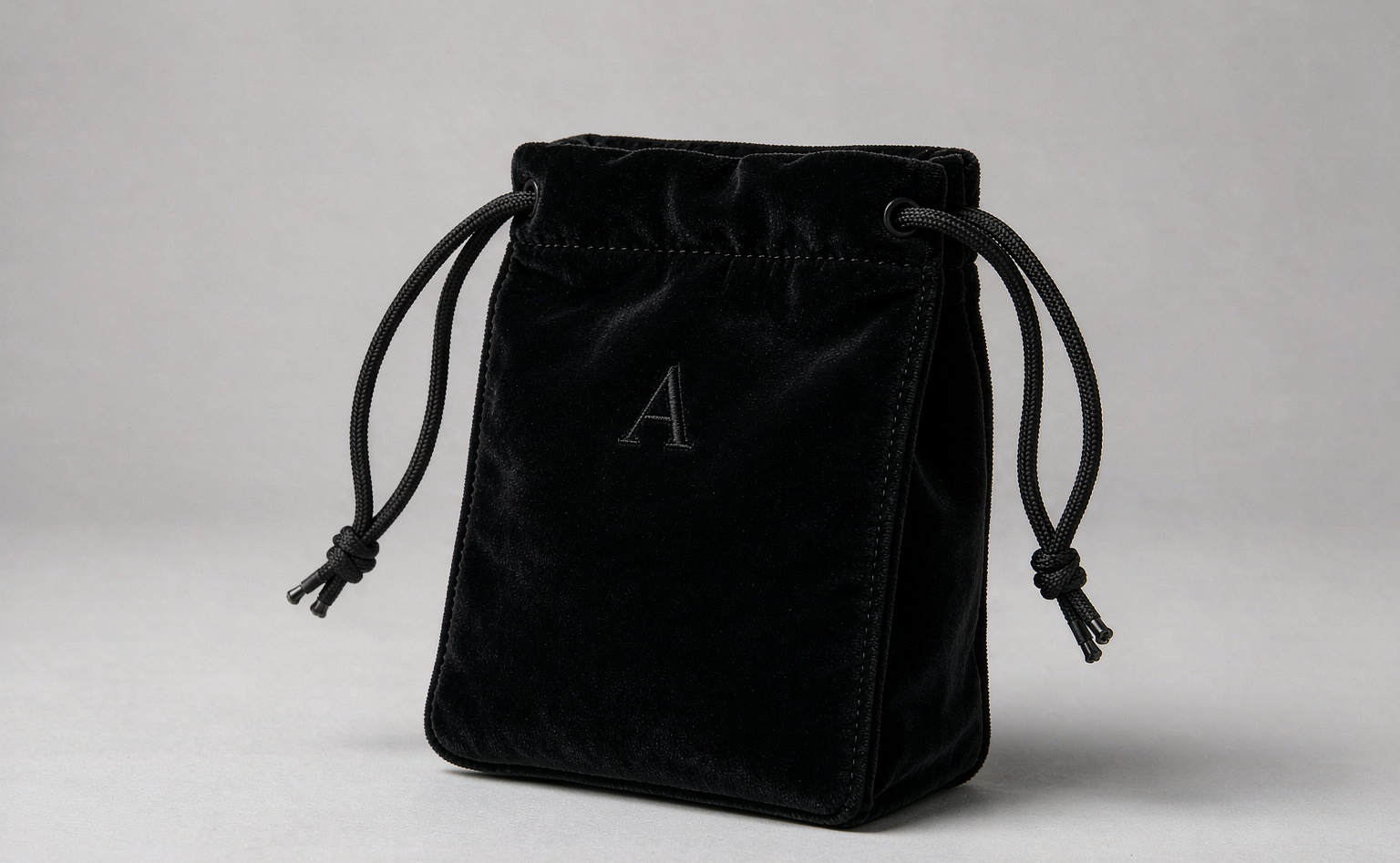
黑绒束口袋:短绒与烫印的讲究 Black Velvet Pouch: Pile Density and Foil Logo
首饰袋的面料,短绒和超纤是两码事。盛艺祥这边的珠宝袋ZB7是黑色绒布束口袋,用的是高密度短绒——手指按下去回弹快,绒面密实,不像超纤那样表面发滑。同系列的珠宝索口袋ZB9走多色路线,紫、红、绿、橙、黄、灰、白、黑都给,品牌按视觉识别挑。
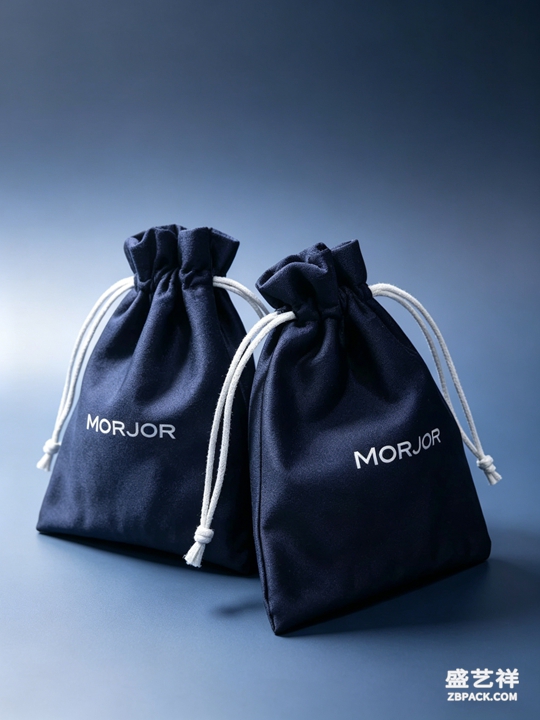 高密度短绒的好处是"裹得住"。珠宝塞进去,绒面贴着表面,运输里不刮、不磕,缓冲比薄布好。欧根纱那类半透纱面好看但薄,只适合礼赠展示;要防尘防刮,还是实心绒布实在。ZB7的黑色尤其低调,金饰银饰装进去不抢色,客人拆袋那一眼是珠宝本身。
束口是抽绳。ZB7的抽绳是双股编织,拉紧袋口收得拢,松手不回弹。我们见过便宜袋用单股细绳,拉两回就起毛、打结卡死。抽绳末端打了结加固,反复开合不散。袋口内衬也压了一道边,不会因抽拉把绒面扯出毛边。
高密度短绒的好处是"裹得住"。珠宝塞进去,绒面贴着表面,运输里不刮、不磕,缓冲比薄布好。欧根纱那类半透纱面好看但薄,只适合礼赠展示;要防尘防刮,还是实心绒布实在。ZB7的黑色尤其低调,金饰银饰装进去不抢色,客人拆袋那一眼是珠宝本身。
束口是抽绳。ZB7的抽绳是双股编织,拉紧袋口收得拢,松手不回弹。我们见过便宜袋用单股细绳,拉两回就起毛、打结卡死。抽绳末端打了结加固,反复开合不散。袋口内衬也压了一道边,不会因抽拉把绒面扯出毛边。
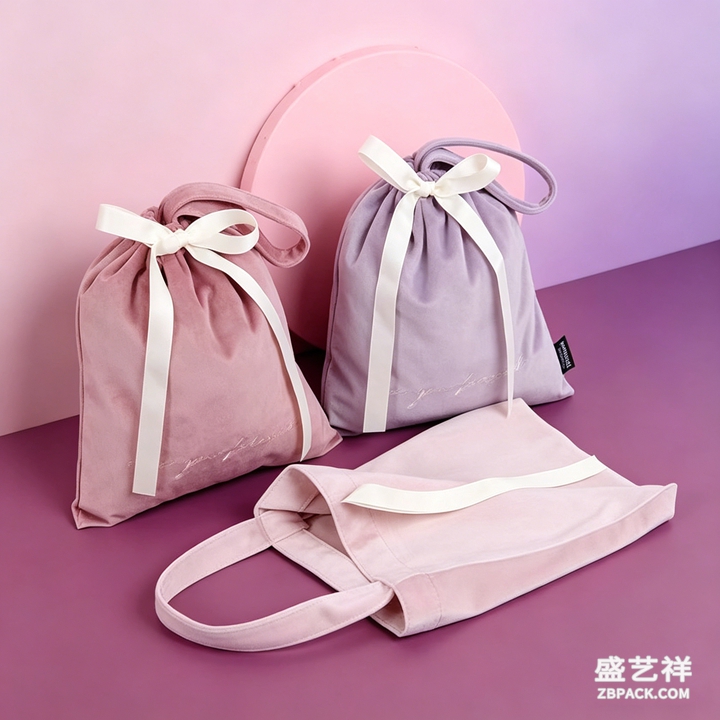 袋面的标识走烫印,不是刺绣。ZB7上那枚皇冠加"PANDORA"字样是烫印上去的。烫印掉色多半出在温度和压机上——温度低了粘不牢,高了把绒面烫焦;压力不均,字边就虚。正解是按绒布厚度调机温,保压时间给够,压完做几次揉搓测试。打样时把袋面在标准光下看一遍,字边虚不虚当场能发现。之前有超纤袋烫金掉色,根子就在没控温,绒布比超纤更怕过温,更得盯紧。
黑色是百搭底,但ZB9的多色给了品牌做识别的空间。一个品牌固定一两个色,袋面烫印同色系或对比色logo,整条产品线视觉就串起来了。别一股脑八色全上,仓库分色都累,客人也记不住你。袋身尺寸也按珠宝定,小耳钉用小平袋,手链用长袋,别一只袋装所有。
袋子的钱,花在短绒密度和烫印牢度上最值。绒密、logo压得实,客人摸到手里就知道不是地摊货。
缝制也有讲究。车缝针距要匀,袋身走线歪了正面一眼看得出;内衬压边这道工序不能省,抽拉几十回不脱线才算合格。下定制单前先打样,烫印位置、字号、色差拿实物确认,别凭屏幕色下单。量的门槛看工艺,绒布素色起订低,多色分色另算,烫印开版有最低量。想清楚主色再下单,返单最顺。
一只袋值不值,拆开那下客人心里有数。
本文为原创内容,版权归盛艺祥所有。如需转载请注明出处。
袋面的标识走烫印,不是刺绣。ZB7上那枚皇冠加"PANDORA"字样是烫印上去的。烫印掉色多半出在温度和压机上——温度低了粘不牢,高了把绒面烫焦;压力不均,字边就虚。正解是按绒布厚度调机温,保压时间给够,压完做几次揉搓测试。打样时把袋面在标准光下看一遍,字边虚不虚当场能发现。之前有超纤袋烫金掉色,根子就在没控温,绒布比超纤更怕过温,更得盯紧。
黑色是百搭底,但ZB9的多色给了品牌做识别的空间。一个品牌固定一两个色,袋面烫印同色系或对比色logo,整条产品线视觉就串起来了。别一股脑八色全上,仓库分色都累,客人也记不住你。袋身尺寸也按珠宝定,小耳钉用小平袋,手链用长袋,别一只袋装所有。
袋子的钱,花在短绒密度和烫印牢度上最值。绒密、logo压得实,客人摸到手里就知道不是地摊货。
缝制也有讲究。车缝针距要匀,袋身走线歪了正面一眼看得出;内衬压边这道工序不能省,抽拉几十回不脱线才算合格。下定制单前先打样,烫印位置、字号、色差拿实物确认,别凭屏幕色下单。量的门槛看工艺,绒布素色起订低,多色分色另算,烫印开版有最低量。想清楚主色再下单,返单最顺。
一只袋值不值,拆开那下客人心里有数。
本文为原创内容,版权归盛艺祥所有。如需转载请注明出处。
盛艺祥(Shengyixiang)——高端珠宝包装设计与定制专家。 The fabric of a jewelry pouch is one thing; short-pile velvet and microfiber are two different matters. Shengyixiang's jewelry pouch ZB7 is a black velvet drawstring pouch made from high-density short-pile fabric — press it and it springs back fast, the nap is dense, and it does not feel slippery the way microfiber does. The sibling jewelry pouch ZB9 goes multi-color: purple, red, green, orange, yellow, gray, white, black, all available, so a brand picks by its visual identity.
The virtue of high-density short pile is that it "wraps." The jewelry tucks in, the nap sits against the surface, and in transit it will not scratch or knock — the cushioning beats thin cloth. Organza and those sheer fabrics look pretty but are thin, fit only for gift display; for dust-proofing and scratch resistance, solid velvet is the real thing. ZB7's black is especially understated: gold or silver pieces go in without stealing the color, and what the customer sees on opening is the jewelry itself.
The closure is a drawstring. ZB7 uses a double braided cord — pull it tight and the mouth closes; let go and it does not rebound. We have seen cheap pouches with a single thin cord that fuzzes after two pulls and jams in a knot. The cord ends are knotted for reinforcement, so repeated opening does not come undone. The bag mouth is also hemmed with a pressed edge, so tugging will not pull out a fuzzy border.
The mark on the bag is foil-stamped, not embroidered. The crown and "PANDORA" wording on ZB7 are stamped on. Foil peeling usually comes down to temperature and pressure — too low and it will not stick, too high and it scorches the nap; uneven pressure leaves the letters feathered. The right way is to set the machine temperature to the velvet's thickness, give enough dwell time, and run a rub test afterward. Earlier a microfiber pouch lost its foil because the temperature was never controlled; velvet fears over-temperature even more than microfiber, so it needs closer watching.
Black is the versatile base, but ZB9's multiple colors give a brand room to build recognition. A brand fixes on one or two colors and foil-stamps a tonal or contrasting logo; the whole product line then reads as one. Do not throw all eight colors at once — the warehouse tires of sorting them and the customer cannot remember you. The bag size should match the jewelry too: a small flat pouch for studs, a long one for bracelets, not one bag for everything.
Spend the pouch budget on pile density and foil durability. Dense nap and a solidly pressed logo tell the customer in hand that this is not a street stall.
Sewing counts as well. The stitch pitch has to be even; a crooked seam shows on the front at a glance, and the hemmed lining is not a step to skip — it must survive dozens of tugs without coming loose. Before a custom order, get a sample: confirm the foil position, font size and color difference on a physical piece, not by screen color. The minimum run depends on the process — plain velvet starts low, multi-color sorting adds cost, and the foil plate has its own minimum. Settle the main color first, and reorders run smooth. A dense, well-pressed pouch also survives shipping better: the nap holds its shape and the logo stays put through the courier. Whether a pouch is worth it, the customer knows the moment they open it.
This is original content. Copyright belongs to Shengyixiang.
Shengyixiang — your expert in high-end jewelry packaging design & customization.
返回资讯列表
Back To News List
高密度短绒的好处是"裹得住"。珠宝塞进去,绒面贴着表面,运输里不刮、不磕,缓冲比薄布好。欧根纱那类半透纱面好看但薄,只适合礼赠展示;要防尘防刮,还是实心绒布实在。ZB7的黑色尤其低调,金饰银饰装进去不抢色,客人拆袋那一眼是珠宝本身。
束口是抽绳。ZB7的抽绳是双股编织,拉紧袋口收得拢,松手不回弹。我们见过便宜袋用单股细绳,拉两回就起毛、打结卡死。抽绳末端打了结加固,反复开合不散。袋口内衬也压了一道边,不会因抽拉把绒面扯出毛边。
袋面的标识走烫印,不是刺绣。ZB7上那枚皇冠加"PANDORA"字样是烫印上去的。烫印掉色多半出在温度和压机上——温度低了粘不牢,高了把绒面烫焦;压力不均,字边就虚。正解是按绒布厚度调机温,保压时间给够,压完做几次揉搓测试。打样时把袋面在标准光下看一遍,字边虚不虚当场能发现。之前有超纤袋烫金掉色,根子就在没控温,绒布比超纤更怕过温,更得盯紧。
黑色是百搭底,但ZB9的多色给了品牌做识别的空间。一个品牌固定一两个色,袋面烫印同色系或对比色logo,整条产品线视觉就串起来了。别一股脑八色全上,仓库分色都累,客人也记不住你。袋身尺寸也按珠宝定,小耳钉用小平袋,手链用长袋,别一只袋装所有。
袋子的钱,花在短绒密度和烫印牢度上最值。绒密、logo压得实,客人摸到手里就知道不是地摊货。
缝制也有讲究。车缝针距要匀,袋身走线歪了正面一眼看得出;内衬压边这道工序不能省,抽拉几十回不脱线才算合格。下定制单前先打样,烫印位置、字号、色差拿实物确认,别凭屏幕色下单。量的门槛看工艺,绒布素色起订低,多色分色另算,烫印开版有最低量。想清楚主色再下单,返单最顺。
一只袋值不值,拆开那下客人心里有数。
本文为原创内容,版权归盛艺祥所有。如需转载请注明出处。盛艺祥(Shengyixiang)——高端珠宝包装设计与定制专家。 The fabric of a jewelry pouch is one thing; short-pile velvet and microfiber are two different matters. Shengyixiang's jewelry pouch ZB7 is a black velvet drawstring pouch made from high-density short-pile fabric — press it and it springs back fast, the nap is dense, and it does not feel slippery the way microfiber does. The sibling jewelry pouch ZB9 goes multi-color: purple, red, green, orange, yellow, gray, white, black, all available, so a brand picks by its visual identity.
The virtue of high-density short pile is that it "wraps." The jewelry tucks in, the nap sits against the surface, and in transit it will not scratch or knock — the cushioning beats thin cloth. Organza and those sheer fabrics look pretty but are thin, fit only for gift display; for dust-proofing and scratch resistance, solid velvet is the real thing. ZB7's black is especially understated: gold or silver pieces go in without stealing the color, and what the customer sees on opening is the jewelry itself.
The closure is a drawstring. ZB7 uses a double braided cord — pull it tight and the mouth closes; let go and it does not rebound. We have seen cheap pouches with a single thin cord that fuzzes after two pulls and jams in a knot. The cord ends are knotted for reinforcement, so repeated opening does not come undone. The bag mouth is also hemmed with a pressed edge, so tugging will not pull out a fuzzy border.
The mark on the bag is foil-stamped, not embroidered. The crown and "PANDORA" wording on ZB7 are stamped on. Foil peeling usually comes down to temperature and pressure — too low and it will not stick, too high and it scorches the nap; uneven pressure leaves the letters feathered. The right way is to set the machine temperature to the velvet's thickness, give enough dwell time, and run a rub test afterward. Earlier a microfiber pouch lost its foil because the temperature was never controlled; velvet fears over-temperature even more than microfiber, so it needs closer watching.
Black is the versatile base, but ZB9's multiple colors give a brand room to build recognition. A brand fixes on one or two colors and foil-stamps a tonal or contrasting logo; the whole product line then reads as one. Do not throw all eight colors at once — the warehouse tires of sorting them and the customer cannot remember you. The bag size should match the jewelry too: a small flat pouch for studs, a long one for bracelets, not one bag for everything.
Spend the pouch budget on pile density and foil durability. Dense nap and a solidly pressed logo tell the customer in hand that this is not a street stall.
Sewing counts as well. The stitch pitch has to be even; a crooked seam shows on the front at a glance, and the hemmed lining is not a step to skip — it must survive dozens of tugs without coming loose. Before a custom order, get a sample: confirm the foil position, font size and color difference on a physical piece, not by screen color. The minimum run depends on the process — plain velvet starts low, multi-color sorting adds cost, and the foil plate has its own minimum. Settle the main color first, and reorders run smooth. A dense, well-pressed pouch also survives shipping better: the nap holds its shape and the logo stays put through the courier. Whether a pouch is worth it, the customer knows the moment they open it.
This is original content. Copyright belongs to Shengyixiang.Shengyixiang — your expert in high-end jewelry packaging design & customization.