戒指托盘怎么选:分格、斜放与绒面的讲究盛艺祥 · 行业资讯
戒指托盘怎么选:分格、斜放与绒面的讲究 Choosing a ring tray: compartments, slant, and velvet matters
戒指托盘大概是柜台里出镜率最高的道具:白天摆样品,晚上收保险柜,天天被拿进拿出,可真正选它的时候,多数店只是"看着顺眼"就下单了。托盘选得对不对,直接写在戒指的卖相上。
先说分格。格子的宽窄要跟着戒圈走。普通对戒的格宽,两厘米到两厘米半最常用,戒指放进去刚好卡住,不会晃;宽戒面的异形戒、大台面戒,格宽要留到三厘米以上,否则戒指"挤"在格子里,客人拿不出来,货还显得乱。TP54 这款做了大小格混排:戒指、耳钉分层分区,一格一物,翻找互不牵连,柜台和保险柜两用都合适。
斜放的角度是第二个讲究。托盘里立着的戒指比躺着的戒指好卖,这是柜台验证过的结论。斜放槽让戒面朝斜上方,客人一眼看到整只戒指的正面,不用上手端起来。角度以三十到四十五度为宜:太立,戒指容易滑出槽;太躺,又回到平放的死角里去了。
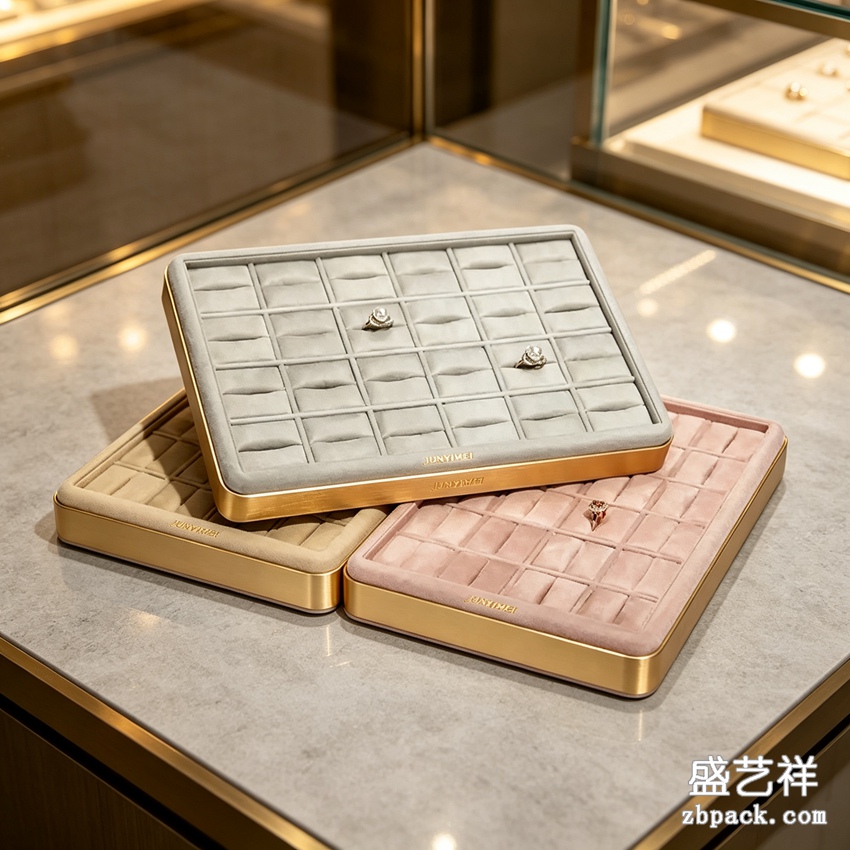 绒面颜色负责把金属色"垫"出来。深灰、黑色绒衬白金和铂金,柜台的灯光打上去,反光干净利落;米色、驼色绒衬黄金和玫瑰金,暖色货品显得温润贵气。绒面颜色跟货品颜色越接近,越容易混成一片,对角色的衬托也就没了。TP55 走的是多色绒布可选路线,一个盘、多种绒色,客户按自己柜台的灯光定色挑绒,后续想换色,整套绒布换掉就行,不用重开模具。
绒布的密度和做工决定这盘能用几个月。密度低的绒布用上一两个月就起球、压出槽印,托盘看着比货还旧。托盘的底板要平,边缘收边要齐,四角不能翘;金属金边这类装饰边条要压合牢固,天天拿进拿出、上下摞放,边条脱了角,整盘的气质就没了。TP54、TP55 都是金属金边款,边条走的是压合工艺,这一点在挑选时值得拿手摸一圈确认。
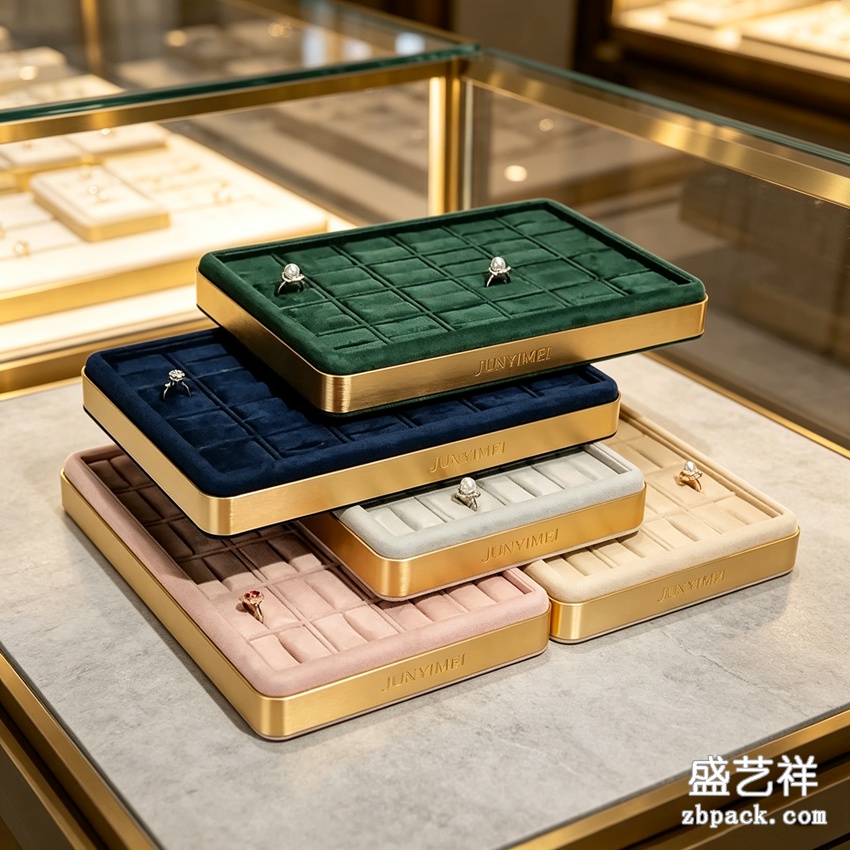 托盘的外形尺寸同样别忽略。柜台台面、抽屉深度、保险柜层高,先量好再说。市面上常见的是两折、三折的折叠款和整板款:折叠款方便收进抽屉,整板款摆在台面更显规整。托盘四周建议留出两到三厘米的“呼吸边”,货装满了也不至于紧贴盘沿;抽屉款还要注意合上时盘面不蹭隔板,取用才利索。
细节决定寿命。盘底加一圈防滑垫,放在玻璃台面上推不跑,客人拿货时托盘不会连货带盘滑动;有的款式绒布和底板的连接用魔术贴或包边压缝,绒布脏了能拆下来洗,晾干再贴回去,托盘又能多用一年多。买之前翻过来看一眼盘底:平不平、有没有垫、收边齐不齐,这三个小动作能筛掉一半省成本的货。
托盘也要分场景配。柜台样托盘和保险柜存货托盘可以分开用:柜台要视觉优先,选斜放款、颜色衬得住的;保险柜要耐磨防刮,选深槽款、绒面厚实的。一套托盘吃两个场景,损耗摊薄,柜台的卖相还更有余地。按客单件的习惯:单件主推用多格小盘,套装、对戒用混排大盘,托盘跟货品配套,客人拿起来才顺。
试戴的顺滑度,也藏在托盘的细节里。戒指进出格子,绒面太涩会卡住戒圈,太滑又抓不住,放下时"嗒"的一声轻响才是好手感。让店员拿一枚戒指反复放取十次:卡不卡、滑不滑、归位准不准,这十次就是客人上手的那十次。托盘的服务对象不是店员的审美,是客人的手感——手顺了,试戴的件数自然多,成交率也往上走。
订货也有门道。托盘的损耗不在货品,在“使用”:天天拿进拿出,边条、绒面迟早要磨。按柜台上实际使用的数量下单,尽量多订一套备着,哪一盘磨旧了直接换,柜台永远整整齐齐。颜色、绒色、格数都可以按自家柜台定,批量几百件起,色板先打样确认,跟货品在灯光下的效果对上了再批量生产。
托盘的账,要记在柜台的账本里。一组托盘滚动用下来,哪盘绒先磨旧、哪一格最常被翻,半年一复盘就成了补货的依据;损耗快的柜位多备一轮,损耗慢的少备,钱花在刀刃上。金边托盘还有个隐形开支——边条翻新。天天拿进拿出、上下摞放,金边迟早磨损,选择能单独换边条的款式,比整个托盘报废划算得多。托盘是损耗品,不是固定资产,按季度小批量补给,柜台的卖相才跟得上当季主推的节奏。
说到底,选戒指托盘是在选戒指的"展示姿势":分格刚好、斜放够立、绒面衬得住。这三样到位,托盘就是柜台前的半个销售。
本文为原创内容,版权归盛艺祥所有。如需转载请注明出处。
盛艺祥(Shengyixiang)——高端珠宝包装设计与定制专家。 The ring tray is probably the most-seen prop on a jewelry counter: it holds samples by day, goes into the safe at night, and is picked up and set down every single day. Yet when actually buying one, most stores simply order what "looks nice." Whether a tray was chosen right is written directly on the ring's sales appeal. Compartments come first. Grid width should follow the shank. For a regular pair of bands, a width of two to two-and-a-half centimeters is the common call — the ring drops in and canters in place without rattling. For wide fancy cuts and large-tablet rings, the width needs three centimeters or more; otherwise the ring is squeezed into its cell, the customer cannot get it out, and the goods look messy. The TP54 mixes large and small cells: rings and studs live on separate tiers, one item per cell, nothing tangles during a search, and it works equally well on the counter and in the safe. The slant is the second concern. A ring standing upright in its tray outsells a ring lying flat — counters have verified this. A slanted slot points the face up and forward, so the customer sees the whole front of the ring at a glance without picking it up. Keep the angle at thirty to forty-five degrees: too steep and the ring slides out of the slot; too flat and you are back in the flat-lay blind spot.
The velvet color is what "cushions" the metal tone. Charcoal and black velvet flatter white gold and platinum — under counter lights the reflection is crisp. Cream and camel flatter yellow and rose gold — warm goods look gentler and more premium. The closer the velvet color is to the goods, the more the two blur into one another, and the less the velvet does its job. The TP55 follows a multi-color velvet path: one tray, several velvet choices, with the client picking the hue to match their counter lighting. Want to change later? Swap the whole velvet set — no new tooling needed.
Velvet density and workmanship decide how many months the tray stays presentable. Low-density nap balls up and dents within a month or two, and the tray starts looking older than the goods. The base must be flat, the edges finished, none of the four corners lifted; decorative edge trims like the metal-gold band must be pressed on firmly — these trays are lifted, stacked, and jarred daily, and a loosened corner kills the whole tray's poise. Both the TP54 and TP55 are metal-gold-edge models with a pressed-on trim; run a finger around the edge when shopping to confirm.
Do not skip the tray's outer size. Measure the countertop, drawer depth, and safe-shelf height first. Two-fold and three-fold folding trays suit drawers; full-board trays read neater on top. Leave a two-to-three-centimeter breathing edge so a full tray never presses the rim, and drawer models must clear the partition when closed.
Details decide life span. A pad around the base keeps the tray from sliding on glass when a customer reaches in; some models join nap to base with hook-and-loop or a wrapped seam, so the velvet can be lifted, washed, dried, and replaced — a year more of service. Turn the tray over before buying: base flat? padding present? edges finished? Three checks filter half the cost-cutters.
Trays should also be split by scenario. The display set and the safe-stock set can differ: the counter prioritizes looks — slant models, colors that hold the goods up; the safe prioritizes wear — deep slots, thicker nap. One system covering two scenes spreads out wear and leaves more room for counter appeal. Match the tray to the typical order: single-piece pushes use small multi-cell trays; sets and pairs use mixed big trays. When the tray matches the goods, the customer's reach feels natural.
Smooth try-ons hide in tray details too. A ring sliding into a cell needs nap that is neither too grippy nor too slick — a quiet, settled "tock" as it seats is the true feel. Have a clerk seat and lift one ring ten times: does it catch, does it slide, does it seat true? Those ten reps are the customer's ten reps. The tray serves a shopper's hand, not a clerk's taste — when hands are happy, more pieces get tried, and closes climb.
Ordering has its own rules. Wear is not in the goods but in usage — edge trim and nap will grind down eventually. Order for the number of trays actually in use, plus one spare set, and swap what is worn so the counter stays neat. Grids, velvet colors, and cell layouts follow your own counter; from a few hundred pieces up, confirm a color swatch under showroom light before mass production.
Keep a tray ledger in the counter's books. Run trays in rotation; when you review every six months, which nap wore first and which cell was touched most tells you where to restock — heavy-use spots get an extra set, light ones fewer, and money lands where it matters. Gilded trays carry a hidden line item: edge refresh. Daily in-and-out and stacking inevitably wear the trim; a model whose trim can be renewed separately beats scrapping the whole tray. Trays are consumables, not fixtures. Restock in small quarterly batches so the counter keeps pace with the season's heroes.
When it comes down to it, choosing a ring tray is choosing the ring's display posture: compartments that fit, slant that stands, velvet that holds. Get those three right, and the tray becomes half a salesperson in front of the counter.
This is original content. Copyright belongs to Shengyixiang.
Shengyixiang — your expert in high-end jewelry packaging design & customization.
返回资讯列表
Back To News List
绒面颜色负责把金属色"垫"出来。深灰、黑色绒衬白金和铂金,柜台的灯光打上去,反光干净利落;米色、驼色绒衬黄金和玫瑰金,暖色货品显得温润贵气。绒面颜色跟货品颜色越接近,越容易混成一片,对角色的衬托也就没了。TP55 走的是多色绒布可选路线,一个盘、多种绒色,客户按自己柜台的灯光定色挑绒,后续想换色,整套绒布换掉就行,不用重开模具。
绒布的密度和做工决定这盘能用几个月。密度低的绒布用上一两个月就起球、压出槽印,托盘看着比货还旧。托盘的底板要平,边缘收边要齐,四角不能翘;金属金边这类装饰边条要压合牢固,天天拿进拿出、上下摞放,边条脱了角,整盘的气质就没了。TP54、TP55 都是金属金边款,边条走的是压合工艺,这一点在挑选时值得拿手摸一圈确认。
托盘的外形尺寸同样别忽略。柜台台面、抽屉深度、保险柜层高,先量好再说。市面上常见的是两折、三折的折叠款和整板款:折叠款方便收进抽屉,整板款摆在台面更显规整。托盘四周建议留出两到三厘米的“呼吸边”,货装满了也不至于紧贴盘沿;抽屉款还要注意合上时盘面不蹭隔板,取用才利索。
细节决定寿命。盘底加一圈防滑垫,放在玻璃台面上推不跑,客人拿货时托盘不会连货带盘滑动;有的款式绒布和底板的连接用魔术贴或包边压缝,绒布脏了能拆下来洗,晾干再贴回去,托盘又能多用一年多。买之前翻过来看一眼盘底:平不平、有没有垫、收边齐不齐,这三个小动作能筛掉一半省成本的货。
托盘也要分场景配。柜台样托盘和保险柜存货托盘可以分开用:柜台要视觉优先,选斜放款、颜色衬得住的;保险柜要耐磨防刮,选深槽款、绒面厚实的。一套托盘吃两个场景,损耗摊薄,柜台的卖相还更有余地。按客单件的习惯:单件主推用多格小盘,套装、对戒用混排大盘,托盘跟货品配套,客人拿起来才顺。
试戴的顺滑度,也藏在托盘的细节里。戒指进出格子,绒面太涩会卡住戒圈,太滑又抓不住,放下时"嗒"的一声轻响才是好手感。让店员拿一枚戒指反复放取十次:卡不卡、滑不滑、归位准不准,这十次就是客人上手的那十次。托盘的服务对象不是店员的审美,是客人的手感——手顺了,试戴的件数自然多,成交率也往上走。
订货也有门道。托盘的损耗不在货品,在“使用”:天天拿进拿出,边条、绒面迟早要磨。按柜台上实际使用的数量下单,尽量多订一套备着,哪一盘磨旧了直接换,柜台永远整整齐齐。颜色、绒色、格数都可以按自家柜台定,批量几百件起,色板先打样确认,跟货品在灯光下的效果对上了再批量生产。
托盘的账,要记在柜台的账本里。一组托盘滚动用下来,哪盘绒先磨旧、哪一格最常被翻,半年一复盘就成了补货的依据;损耗快的柜位多备一轮,损耗慢的少备,钱花在刀刃上。金边托盘还有个隐形开支——边条翻新。天天拿进拿出、上下摞放,金边迟早磨损,选择能单独换边条的款式,比整个托盘报废划算得多。托盘是损耗品,不是固定资产,按季度小批量补给,柜台的卖相才跟得上当季主推的节奏。
说到底,选戒指托盘是在选戒指的"展示姿势":分格刚好、斜放够立、绒面衬得住。这三样到位,托盘就是柜台前的半个销售。
本文为原创内容,版权归盛艺祥所有。如需转载请注明出处。盛艺祥(Shengyixiang)——高端珠宝包装设计与定制专家。 The ring tray is probably the most-seen prop on a jewelry counter: it holds samples by day, goes into the safe at night, and is picked up and set down every single day. Yet when actually buying one, most stores simply order what "looks nice." Whether a tray was chosen right is written directly on the ring's sales appeal. Compartments come first. Grid width should follow the shank. For a regular pair of bands, a width of two to two-and-a-half centimeters is the common call — the ring drops in and canters in place without rattling. For wide fancy cuts and large-tablet rings, the width needs three centimeters or more; otherwise the ring is squeezed into its cell, the customer cannot get it out, and the goods look messy. The TP54 mixes large and small cells: rings and studs live on separate tiers, one item per cell, nothing tangles during a search, and it works equally well on the counter and in the safe. The slant is the second concern. A ring standing upright in its tray outsells a ring lying flat — counters have verified this. A slanted slot points the face up and forward, so the customer sees the whole front of the ring at a glance without picking it up. Keep the angle at thirty to forty-five degrees: too steep and the ring slides out of the slot; too flat and you are back in the flat-lay blind spot.
The velvet color is what "cushions" the metal tone. Charcoal and black velvet flatter white gold and platinum — under counter lights the reflection is crisp. Cream and camel flatter yellow and rose gold — warm goods look gentler and more premium. The closer the velvet color is to the goods, the more the two blur into one another, and the less the velvet does its job. The TP55 follows a multi-color velvet path: one tray, several velvet choices, with the client picking the hue to match their counter lighting. Want to change later? Swap the whole velvet set — no new tooling needed.
Velvet density and workmanship decide how many months the tray stays presentable. Low-density nap balls up and dents within a month or two, and the tray starts looking older than the goods. The base must be flat, the edges finished, none of the four corners lifted; decorative edge trims like the metal-gold band must be pressed on firmly — these trays are lifted, stacked, and jarred daily, and a loosened corner kills the whole tray's poise. Both the TP54 and TP55 are metal-gold-edge models with a pressed-on trim; run a finger around the edge when shopping to confirm.
Do not skip the tray's outer size. Measure the countertop, drawer depth, and safe-shelf height first. Two-fold and three-fold folding trays suit drawers; full-board trays read neater on top. Leave a two-to-three-centimeter breathing edge so a full tray never presses the rim, and drawer models must clear the partition when closed.
Details decide life span. A pad around the base keeps the tray from sliding on glass when a customer reaches in; some models join nap to base with hook-and-loop or a wrapped seam, so the velvet can be lifted, washed, dried, and replaced — a year more of service. Turn the tray over before buying: base flat? padding present? edges finished? Three checks filter half the cost-cutters.
Trays should also be split by scenario. The display set and the safe-stock set can differ: the counter prioritizes looks — slant models, colors that hold the goods up; the safe prioritizes wear — deep slots, thicker nap. One system covering two scenes spreads out wear and leaves more room for counter appeal. Match the tray to the typical order: single-piece pushes use small multi-cell trays; sets and pairs use mixed big trays. When the tray matches the goods, the customer's reach feels natural.
Smooth try-ons hide in tray details too. A ring sliding into a cell needs nap that is neither too grippy nor too slick — a quiet, settled "tock" as it seats is the true feel. Have a clerk seat and lift one ring ten times: does it catch, does it slide, does it seat true? Those ten reps are the customer's ten reps. The tray serves a shopper's hand, not a clerk's taste — when hands are happy, more pieces get tried, and closes climb.
Ordering has its own rules. Wear is not in the goods but in usage — edge trim and nap will grind down eventually. Order for the number of trays actually in use, plus one spare set, and swap what is worn so the counter stays neat. Grids, velvet colors, and cell layouts follow your own counter; from a few hundred pieces up, confirm a color swatch under showroom light before mass production.
Keep a tray ledger in the counter's books. Run trays in rotation; when you review every six months, which nap wore first and which cell was touched most tells you where to restock — heavy-use spots get an extra set, light ones fewer, and money lands where it matters. Gilded trays carry a hidden line item: edge refresh. Daily in-and-out and stacking inevitably wear the trim; a model whose trim can be renewed separately beats scrapping the whole tray. Trays are consumables, not fixtures. Restock in small quarterly batches so the counter keeps pace with the season's heroes.
When it comes down to it, choosing a ring tray is choosing the ring's display posture: compartments that fit, slant that stands, velvet that holds. Get those three right, and the tray becomes half a salesperson in front of the counter.
This is original content. Copyright belongs to Shengyixiang.Shengyixiang — your expert in high-end jewelry packaging design & customization.