看货盘:柜台里那块让人“上手”的托盘盛艺祥 · 行业资讯
看货盘:柜台里那块让人“上手”的托盘 The showing tray: the one that invites the customer to touch
看货盘是柜台递货的那只"手"。客人试戴、店员拿货、维修交接,都发生在这一块小小的托盘上。它不像橱窗道具那么显眼,却是客人离货品最近的一件东西,手感好不好,直接影响"要不要买"。
为什么不能直接把货放在玻璃台面上?玻璃又凉又滑,戒指一放上去就"打滑",客人试戴要小心翼翼;货品和玻璃直接接触,蹭来蹭去也容易划伤。托盘把货"托"起来,温度、触感、视线全都对了:客人看到的是货,而不是台面上的一块冷玻璃。
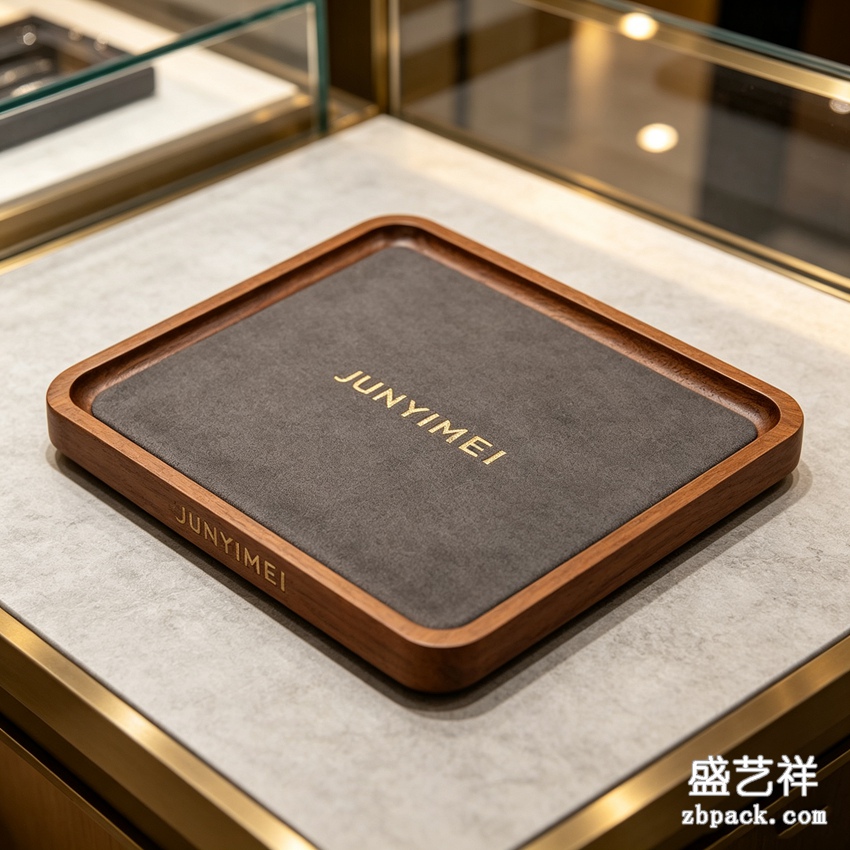
材质上,实木托盘是稳重派的代表。实木重、实木稳,端起来有分量,客人接货的一瞬间,心里就把这分量和"货很贵重"画了等号。TP52 是实木灰绒的大号款,台面够大,一条项链加一对耳环能同时摆开,适合成套试戴、成套讲解的场景。木头纹理在灯光下自然耐看,跟金饰、彩宝都不抢。
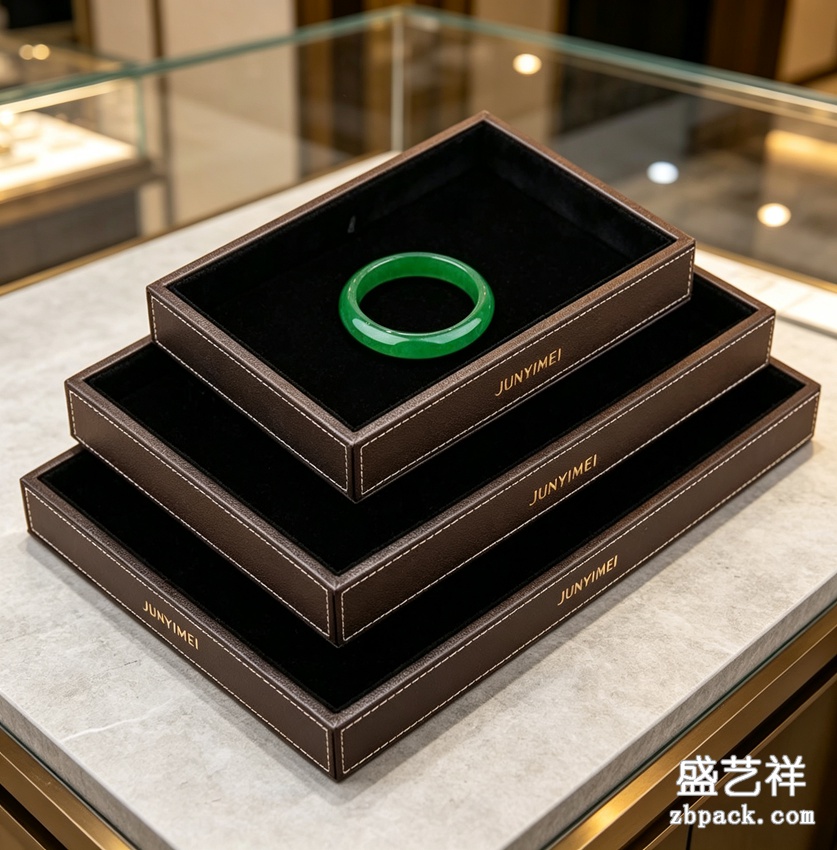
 皮革托盘走的是细腻路线。皮面手感温润,客人拿起放下都舒服,黑绒衬在里面,金属色从深色绒里"浮"出来,深色珠宝(黑钻、深色翡翠)也显得更有层次。TP53 是棕皮黑绒的组合款:棕皮在外,耐磨、耐脏、好擦拭;黑绒在内,保护货品不被划。边缘做了包边处理,拿放不划手,细节处见功夫。
皮面还有一个隐藏优点——冬暖夏不冰。玻璃台面手指一碰就是一阵凉,皮托隔着,客人指尖落上去是温的,货品的"亲和力"先到一步。绒面再软,也还是织物;皮面是"贴身"的材质,试戴的过程里,客人记住的不只是货,还有那份触感。选皮的时候,真皮和仿皮的手感差别很大,预算允许就上真皮,耐用度和触感都更对得起"门面"两个字。
尺寸按客单配。大号盘对应套链、套装这类多件货,小号盘对应戒指、耳钉这类单件货。柜台的背柜和保险柜空间都有限,看货盘一定要能叠放收存:TP53 的可叠放设计,收柜时一台摞一台,不占地方,取用也顺手。叠放款还有一个隐藏好处——货品在盘上时盘子稳,不会因为下面摞得太高而晃。
 盘底的细节先看。看货盘直接放在玻璃台面上,盘底不带防滑,客人一碰,整盘连货滑动,场面就尴尬了。合格的看货盘,底面要么贴防滑垫,要么做糙面处理;盘沿要圆润,端起来不硌手。这些小地方,平时不显眼,客人伸手的那一下全体验得到。
看货盘的收纳要跟柜子对尺寸。保险柜的层板间高一般是二十到三十厘米,盘高加上绒面和边条,要留出塞进去的余量;抽拉层更讲究,盘宽比抽拉层内宽少两三厘米,拉进拉出不卡。叠放款的好处在这里又显出来:同尺寸的盘一摞,层板利用率高,拿下面那盘时上面几盘一起端,一步到位。
维护也要算进选品账。看货盘天天经手,绒面上容易沾指纹、粉底和化妆品,深色绒抗脏,皮面一擦就干净。选盘的时候把"好不好打理"当成一条硬指标:表面的绒能拆洗最好,不能拆的,至少选绒面密、皮面易擦的款。一个托盘如果两三个月就显脏,柜台的整洁感就跟着掉分。
还有一个常被忽略的配件——盘布。看货盘端进端出,盘底直接压柜台,久了柜台玻璃会划出细痕,绒面也会蹭脏。垫一块比盘略大的深色盘布,一垫一收,材料和柜台都多一层保护;盘布还能吸收客人口红、粉底的"余味",减少了绒面的清洁频率。盘布选深色是为了耐脏,选略大一圈是防止盘边磕碰时擦到柜台,这两个小细节,成本加起来不到一顿饭钱。
大号盘管套链,小号盘管戒指耳钉,还有一类容易被忽略——交接盘。维修、改圈、清洗这类业务,货品要在柜台和工位之间来回,用一块专门的小盘装着走,比用手捏着稳妥,也不容易弄混。一家店备两块交接盘,一块柜台用、一块工位用,交接时一目了然。
看货盘的管理,说到底是一套"盘位制":每块盘有固定盘位,营业时立在台面伸手可及处,闭店和货品一起进保险柜,谁用谁还、用后归位。盘上贴小标签写清归属区域,找盘不用翻整个柜台,损耗也能追溯到责任位。新店员上岗,先认盘位再认货——盘有定位,货有去向,错账和丢账就都少了发生的机会。
说到底,看货盘是客人接触货品前的"第一层包装"。材质衬得起货、尺寸装得下货、叠放收得进柜,这块托盘就真正成了柜台递货的手。
本文为原创内容,版权归盛艺祥所有。如需转载请注明出处。
盛艺祥(Shengyixiang)——高端珠宝包装设计与定制专家。 The showing tray is the counter's "hand" for handing over goods. Try-ons, merchandise moves, and repair handoffs all happen on this small tray. It is not as eye-catching as a window prop, yet it is the object closest to the customer — how it feels directly influences "should I buy it." Why not set goods directly on the glass counter? Glass is cold and slick; a ring skids the moment it is set down, and the customer handles it gingerly. Goods also rub against the glass and pick up scratches. The tray lifts the goods clear: temperature, touch, and sight all align. What the customer sees is the piece — not a cold sheet of glass. In materials, solid wood is the steady-school favorite. Wood is heavy and stable; it has presence when carried, and in the instant the customer receives it, some of that weight transfers to "this is valuable." The TP52 is the large solid-wood charcoal-velvet model: a big surface that lays out a necklace and a pair of earrings side by side, made for set try-ons and set explanations. Grain reads naturally under light and never fights with gold or colored stones.
Leather trays take the finer line. The skin is warm to the touch and comfortable for repeated pick-up and put-down; black velvet lined inside makes metal float up from the dark nap, and deep-toned goods — black diamonds, deep jade — gain another layer of depth. The TP53 pairs brown leather with black velvet: leather outside for wear-resistance, dirt-resistance, and easy wiping; velvet inside to protect the goods. Edges are wrapped, so nothing scrapes the hand on the way out. That kind of detail shows the craft.
Leather hides another quiet win — warm in winter, never icy in summer. Bare glass chills a fingertip; through a leather tray the touch lands warm, and likability arrives before the product does. Velvet, however soft, is still cloth; leather feels "personal." Across a try-on, a customer keeps not just the piece but the texture. Real hide and PU differ hugely under the hand; if the budget allows, go real — durability and feel both earn their keep as storefront.
Size follows the typical sale. Large trays take chains and sets — multi-piece orders; small trays take rings and studs. Back counters and safes have limited space, so a showing tray must stack: the TP53's stackable design means trays stack one on another when the counter closes, taking no extra room and staying easy to pull out. Stacked models carry a hidden bonus — goods sit stable on the tray even when the pile below shifts.
Look at the underside first. A showing tray sits on bare glass; without base padding, one touch sends the whole tray sliding. A proper tray either pads the base or roughs the surface, and the rim is rounded so it never bites the hand when carried. Small things, invisible all day, fully felt the moment a customer reaches in.
Storage must match the cabinet. Safe shelves usually sit 20-30 cm apart — leave clearance for the piled height of nap plus trim; drawer tiers are pickier: inner width minus 2-3 cm so it slides freely. Stackable models shine here again: same-size trays pile, shelf utilization rises, and taking the bottom one comes with the stack above in one move.
Maintenance belongs in the buying decision too. A showing tray passes through hands daily; velvet picks up fingerprints, foundation, and makeup. Dark velvet hides stains; leather wipes clean in a moment. Treat "easy to care for" as a hard criterion: removable and washable velvet tops are ideal; short of that, at least pick dense nap and wipe-clean skin. A tray that looks dirty within two or three months drags the whole counter's cleanliness down.
One overlooked accessory: the tray cloth. A showing tray lands edge-to-edge on the counter all day; over time the glass picks up fine scratches and the nap rubs dirty. Cushion with a matte cloth slightly larger than the tray — one lay-down, one fold-away, two layers of protection for materials and counter alike. The cloth also sops up lipstick and foundation "lingering," cutting nap-cleaning frequency. Choose dark for endurance and a touch oversized so taps and nudges never meet the glass — both details together cost less than a meal.
Big trays take chains, small trays take rings and studs, and one type is easy to overlook — the handoff tray. Repairs, resizing, and cleaning move goods between counter and workbench; a dedicated small tray carries them safely and never mixes them up. Stock two, one counter-side and one bench-side, and handoffs are obvious at a glance.
Managing showing trays all comes down to a "slot system": every tray owns a fixed slot, stood within reach at open, locked away with the goods at close, used and returned by whoever took it. A small label on each tray names its zone — no more rummaging the whole counter to find one, and wear traces back to the responsible spot. New hires learn slots before stock; when trays have homes, goods have trails, and missing- and misplaced-item incidents shrink.
When it comes down to it, the showing tray is the first layer of "packaging" the customer touches. A material that holds up the goods, a size that fits the order, a stack that tucks into the cabinet — then the tray truly becomes the counter's hand.
This is original content. Copyright belongs to Shengyixiang.
Shengyixiang — your expert in high-end jewelry packaging design & customization.
返回资讯列表
Back To News List
皮革托盘走的是细腻路线。皮面手感温润,客人拿起放下都舒服,黑绒衬在里面,金属色从深色绒里"浮"出来,深色珠宝(黑钻、深色翡翠)也显得更有层次。TP53 是棕皮黑绒的组合款:棕皮在外,耐磨、耐脏、好擦拭;黑绒在内,保护货品不被划。边缘做了包边处理,拿放不划手,细节处见功夫。
皮面还有一个隐藏优点——冬暖夏不冰。玻璃台面手指一碰就是一阵凉,皮托隔着,客人指尖落上去是温的,货品的"亲和力"先到一步。绒面再软,也还是织物;皮面是"贴身"的材质,试戴的过程里,客人记住的不只是货,还有那份触感。选皮的时候,真皮和仿皮的手感差别很大,预算允许就上真皮,耐用度和触感都更对得起"门面"两个字。
尺寸按客单配。大号盘对应套链、套装这类多件货,小号盘对应戒指、耳钉这类单件货。柜台的背柜和保险柜空间都有限,看货盘一定要能叠放收存:TP53 的可叠放设计,收柜时一台摞一台,不占地方,取用也顺手。叠放款还有一个隐藏好处——货品在盘上时盘子稳,不会因为下面摞得太高而晃。
盘底的细节先看。看货盘直接放在玻璃台面上,盘底不带防滑,客人一碰,整盘连货滑动,场面就尴尬了。合格的看货盘,底面要么贴防滑垫,要么做糙面处理;盘沿要圆润,端起来不硌手。这些小地方,平时不显眼,客人伸手的那一下全体验得到。
看货盘的收纳要跟柜子对尺寸。保险柜的层板间高一般是二十到三十厘米,盘高加上绒面和边条,要留出塞进去的余量;抽拉层更讲究,盘宽比抽拉层内宽少两三厘米,拉进拉出不卡。叠放款的好处在这里又显出来:同尺寸的盘一摞,层板利用率高,拿下面那盘时上面几盘一起端,一步到位。
维护也要算进选品账。看货盘天天经手,绒面上容易沾指纹、粉底和化妆品,深色绒抗脏,皮面一擦就干净。选盘的时候把"好不好打理"当成一条硬指标:表面的绒能拆洗最好,不能拆的,至少选绒面密、皮面易擦的款。一个托盘如果两三个月就显脏,柜台的整洁感就跟着掉分。
还有一个常被忽略的配件——盘布。看货盘端进端出,盘底直接压柜台,久了柜台玻璃会划出细痕,绒面也会蹭脏。垫一块比盘略大的深色盘布,一垫一收,材料和柜台都多一层保护;盘布还能吸收客人口红、粉底的"余味",减少了绒面的清洁频率。盘布选深色是为了耐脏,选略大一圈是防止盘边磕碰时擦到柜台,这两个小细节,成本加起来不到一顿饭钱。
大号盘管套链,小号盘管戒指耳钉,还有一类容易被忽略——交接盘。维修、改圈、清洗这类业务,货品要在柜台和工位之间来回,用一块专门的小盘装着走,比用手捏着稳妥,也不容易弄混。一家店备两块交接盘,一块柜台用、一块工位用,交接时一目了然。
看货盘的管理,说到底是一套"盘位制":每块盘有固定盘位,营业时立在台面伸手可及处,闭店和货品一起进保险柜,谁用谁还、用后归位。盘上贴小标签写清归属区域,找盘不用翻整个柜台,损耗也能追溯到责任位。新店员上岗,先认盘位再认货——盘有定位,货有去向,错账和丢账就都少了发生的机会。
说到底,看货盘是客人接触货品前的"第一层包装"。材质衬得起货、尺寸装得下货、叠放收得进柜,这块托盘就真正成了柜台递货的手。
本文为原创内容,版权归盛艺祥所有。如需转载请注明出处。盛艺祥(Shengyixiang)——高端珠宝包装设计与定制专家。 The showing tray is the counter's "hand" for handing over goods. Try-ons, merchandise moves, and repair handoffs all happen on this small tray. It is not as eye-catching as a window prop, yet it is the object closest to the customer — how it feels directly influences "should I buy it." Why not set goods directly on the glass counter? Glass is cold and slick; a ring skids the moment it is set down, and the customer handles it gingerly. Goods also rub against the glass and pick up scratches. The tray lifts the goods clear: temperature, touch, and sight all align. What the customer sees is the piece — not a cold sheet of glass. In materials, solid wood is the steady-school favorite. Wood is heavy and stable; it has presence when carried, and in the instant the customer receives it, some of that weight transfers to "this is valuable." The TP52 is the large solid-wood charcoal-velvet model: a big surface that lays out a necklace and a pair of earrings side by side, made for set try-ons and set explanations. Grain reads naturally under light and never fights with gold or colored stones.
Leather trays take the finer line. The skin is warm to the touch and comfortable for repeated pick-up and put-down; black velvet lined inside makes metal float up from the dark nap, and deep-toned goods — black diamonds, deep jade — gain another layer of depth. The TP53 pairs brown leather with black velvet: leather outside for wear-resistance, dirt-resistance, and easy wiping; velvet inside to protect the goods. Edges are wrapped, so nothing scrapes the hand on the way out. That kind of detail shows the craft.
Leather hides another quiet win — warm in winter, never icy in summer. Bare glass chills a fingertip; through a leather tray the touch lands warm, and likability arrives before the product does. Velvet, however soft, is still cloth; leather feels "personal." Across a try-on, a customer keeps not just the piece but the texture. Real hide and PU differ hugely under the hand; if the budget allows, go real — durability and feel both earn their keep as storefront.
Size follows the typical sale. Large trays take chains and sets — multi-piece orders; small trays take rings and studs. Back counters and safes have limited space, so a showing tray must stack: the TP53's stackable design means trays stack one on another when the counter closes, taking no extra room and staying easy to pull out. Stacked models carry a hidden bonus — goods sit stable on the tray even when the pile below shifts.
Look at the underside first. A showing tray sits on bare glass; without base padding, one touch sends the whole tray sliding. A proper tray either pads the base or roughs the surface, and the rim is rounded so it never bites the hand when carried. Small things, invisible all day, fully felt the moment a customer reaches in.
Storage must match the cabinet. Safe shelves usually sit 20-30 cm apart — leave clearance for the piled height of nap plus trim; drawer tiers are pickier: inner width minus 2-3 cm so it slides freely. Stackable models shine here again: same-size trays pile, shelf utilization rises, and taking the bottom one comes with the stack above in one move.
Maintenance belongs in the buying decision too. A showing tray passes through hands daily; velvet picks up fingerprints, foundation, and makeup. Dark velvet hides stains; leather wipes clean in a moment. Treat "easy to care for" as a hard criterion: removable and washable velvet tops are ideal; short of that, at least pick dense nap and wipe-clean skin. A tray that looks dirty within two or three months drags the whole counter's cleanliness down.
One overlooked accessory: the tray cloth. A showing tray lands edge-to-edge on the counter all day; over time the glass picks up fine scratches and the nap rubs dirty. Cushion with a matte cloth slightly larger than the tray — one lay-down, one fold-away, two layers of protection for materials and counter alike. The cloth also sops up lipstick and foundation "lingering," cutting nap-cleaning frequency. Choose dark for endurance and a touch oversized so taps and nudges never meet the glass — both details together cost less than a meal.
Big trays take chains, small trays take rings and studs, and one type is easy to overlook — the handoff tray. Repairs, resizing, and cleaning move goods between counter and workbench; a dedicated small tray carries them safely and never mixes them up. Stock two, one counter-side and one bench-side, and handoffs are obvious at a glance.
Managing showing trays all comes down to a "slot system": every tray owns a fixed slot, stood within reach at open, locked away with the goods at close, used and returned by whoever took it. A small label on each tray names its zone — no more rummaging the whole counter to find one, and wear traces back to the responsible spot. New hires learn slots before stock; when trays have homes, goods have trails, and missing- and misplaced-item incidents shrink.
When it comes down to it, the showing tray is the first layer of "packaging" the customer touches. A material that holds up the goods, a size that fits the order, a stack that tucks into the cabinet — then the tray truly becomes the counter's hand.
This is original content. Copyright belongs to Shengyixiang.Shengyixiang — your expert in high-end jewelry packaging design & customization.