戒指托盘的设计方案:格位、深度与斜度怎么定 Designing a Ring Tray: Sizing the Slots, Depth and Angle
客户来定戒指托盘,十个里有八个只问一句:能做多少个位。其实格位数量是最不重要的那部分,真正决定托盘好不好用的是三个数:格位尺寸、槽深、斜度。今天拿我们TP16戒指托盘的生产经验,把这三点讲透。
先说格位尺寸。戒指不是千篇一律的,普通对戒、宽面戒指、异形戒、镶大石的款,宽度差着两三倍。格位按多数货的戒圈直径来定,黄金对戒一般在十八到二十毫米之间,格宽做到二十到二十二毫米,戒指放进去卡得住、不晃动;宽面款和异形款要另开加宽格,或者做成可调隔片。这里最忌讳一刀切,整盘一个尺寸,客人放不下宽戒,只能斜着塞,槽口越磨越松。TP16 的做法是主格区固定尺寸、两端配备用宽格,一盘点货试放一遍,哪种款占多大格位,现场就能调。
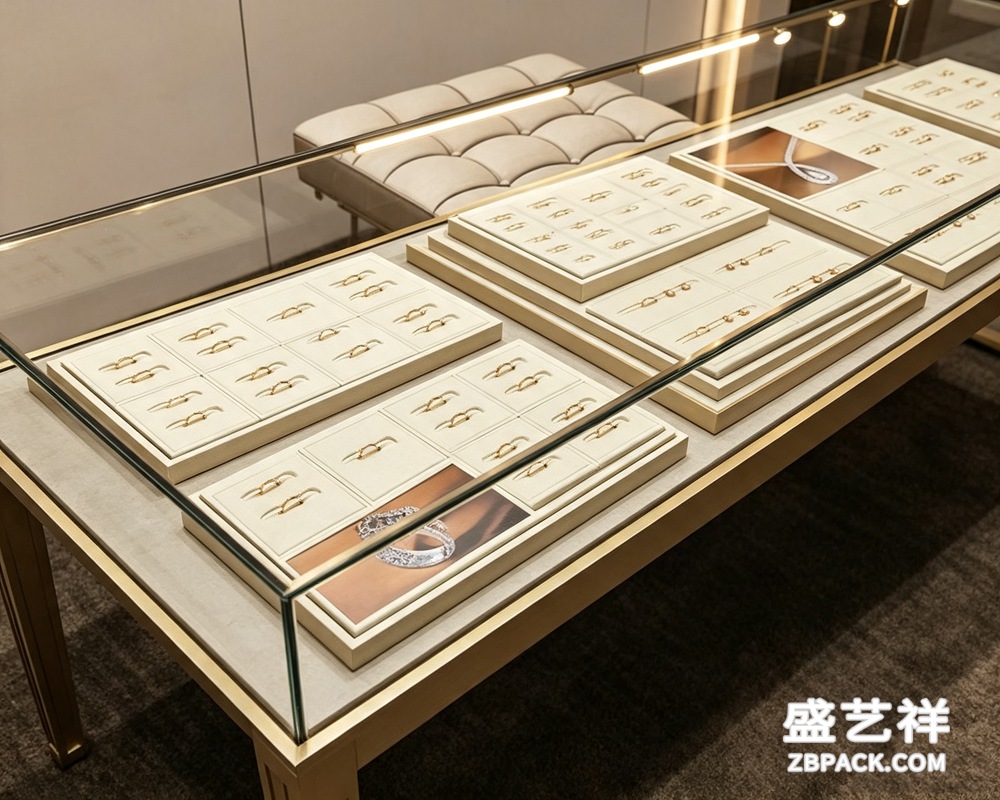
再说槽深。槽深决定戒指立得住、拿得出。太浅,货放上去重心高,一碰就倒,客人拿起来也费劲;太深,戒圈陷进去,露出来的只有一枚戒的侧面,看不到正面,试戴时两指也不好夹。常规比例的槽深做到戒圈直径的一半到三分之二,戒指放进去大概露出三分之一的戒面,正面朝向顾客,一眼看到戒面全貌。异形款、镶大石的,重心靠上,槽深要适当加深,防止倾覆。这一条没有统一公式,靠的是按自家主力货型反复试,试到放在托盘上、端起托盘走两步,戒指纹丝不动为止。
最后说斜度,这是最见功夫的地方。平放戒指,顾客看到的是戒圈的圆环,戒面朝上,反光点打在正中间,看不出火彩;斜放三十到四十五度,戒面迎着主光源,客人不用弯腰就能看到整枚戒的正面——火彩、镶口、刻字,一眼全收。斜度的方向也要讲究:朝向柜台主光源的来向,别让反光打到客人脸上。TP16 的槽口斜度就定在三十八度左右,配合柜台灯带实测过反光效果,这也是它上柜之后客人停留时间明显变长的原因之一。
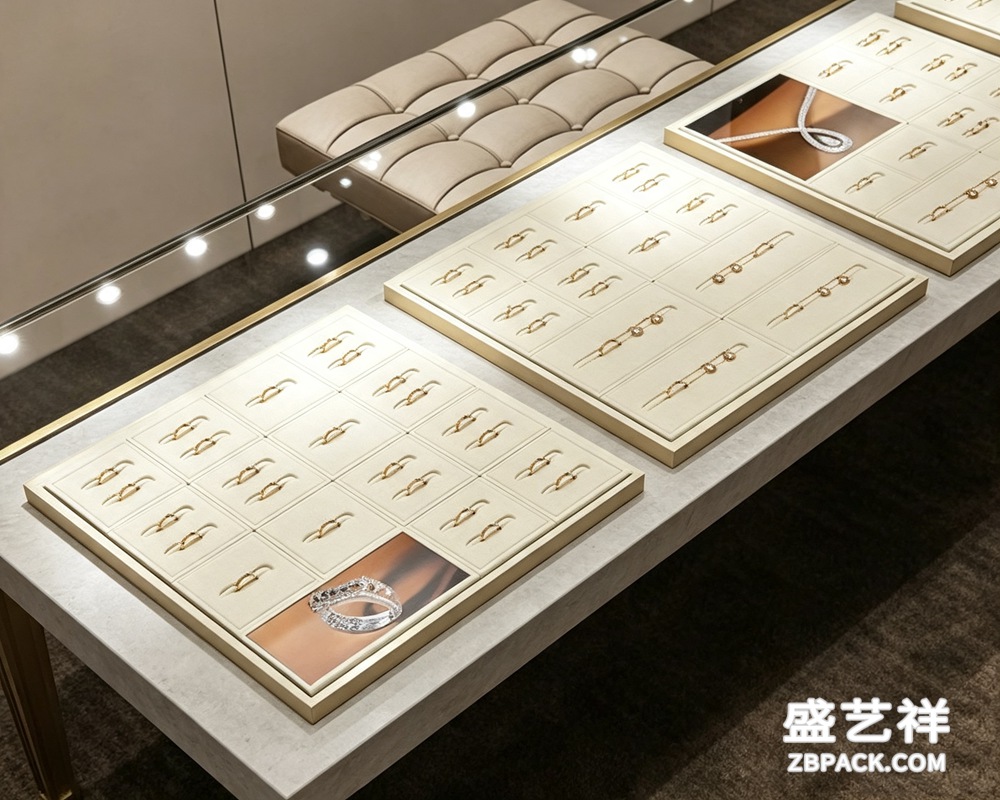
除此之外,还有三个小细节别漏:一是格位之间要留分隔,防两枚戒指互相剐蹭;二是槽底绒面要厚,戒圈压下去有缓冲,取放不伤货;三是托盘边框略高于槽面,端起来的时候戒指不往外滑。再好的尺寸方案,这三处偷工了,托盘也白做。
格位、深度、斜度,加上这三个细节,才是一张合格的戒指托盘图纸。定托盘别只看位数,把主力货型带去,现场放一遍、试一遍、端一遍,货立得稳、拿得出、看得到,这托盘才是给生意做加法的那一款。这套思路,我们TP16从开模到定版走了整整四轮,每一轮都是拿真货试出来的。
格位、深度、斜度都定了,接下来是分盘的问题。主力店的戒指从来不是一种货型,对戒、女戒、男戒、异形戒混在一盘里,客人在一堆环里挑,视线反而乱。我的建议是按货型分组做托盘:对戒盘、女戒盘各一盘,男戒和异形戒单独成盘,每盘按自家该组主力款的尺寸来开格。盘多不见得多花钱,一套三盘比一盘通用盘用起来顺手得多,柜台分区也清楚。
托盘进柜之后用在什么位置,也会反过来影响格位设计。平摆在台面上的,槽深斜度按客人站着看的角度来定;放进抽屉里的,斜度可以缓一点,主要考虑取放顺手;斜插在展示位上的,格口要略朝上收,防戒指滑出。下单前把托盘用在哪几个位子说清楚,厂家才能把盘子的细节做到位——这一点好多客户签合同时没提,拿到货才发现角度不对。
还有打样这一关,几乎每张托盘图纸都要走一遍才安心。我们TP16从开模到定版走了四轮,每轮步骤都一样:先用普通板材做白模,摆真货看立不稳、露不露正面;再上绒样,试绒面和戒圈的顺滑度;然后放进真柜真灯下试反光和观感;最后才定版开产。客户时间赶时总想跳步,但四轮试下来改掉的问题,恰恰是上柜后被客人嫌弃最多的问题。
When a client orders a ring tray, eight out of ten only ask one question: how many slots. But the slot count is the least important part — three numbers decide whether a tray really works: slot size, groove depth, and angle. Let me break down these three points using the production experience of our TP16 ring tray.
Slot size first. Rings are not all the same: plain pairs, wide bands, fancy shapes, and big-stone settings differ two to three times in width. Size the slot to the ring diameter of the majority of your stock. Gold pairs usually run 18–20 mm across; make the slot 20–22 mm so the ring sits snug without wobbling. Wide bands and fancy shapes need wider slots, or use adjustable dividers. The worst move is one-size-fits-all: when the whole tray is a single size, customers wedge wide bands in sideways and the slots wear looser and looser. On the TP16, the main slot zone is fixed-size with spare wide slots at both ends; we lay out the actual stock once and tune the slot usage on the spot.
Depth second. Depth decides whether a ring stands and comes out. Too shallow: the ring's center of gravity sits high, a touch knocks it over, and customers struggle to pick it up. Too deep: the band sinks in, all you see is the side of a ring, and two fingers cannot grip it for trying on. A conventional ratio is half to two-thirds of the band diameter: the ring shows about one third of its face, facing the customer. Fancy shapes and big-stone pieces carry their weight up top, so deepen the groove to prevent tipping. There is no universal formula — it means repeated trials with your own best-selling shapes, until a tray loaded with rings can be lifted and walked two steps with nothing moving.
Angle last — the real craft. Laid flat, a customer sees the ring as a circle; the face points up, the highlight hits dead center, and the fire is invisible. Tilted 30–45 degrees, the face meets the main light, and customers see the whole front without bending — fire, setting, engraving, all at once. Direction matters too: tilt toward the main light source of the counter, never bounce glare into customers' faces. The TP16 slots sit at about 38 degrees, measured under strip lighting in real counters; it is one reason customers linger noticeably longer at TP16 displays.
Three small details are easy to miss: dividers between slots so rings do not scratch each other; thick velvet at the groove bottom so bands press in with cushioning; and a tray rim slightly higher than the slot surface so rings stay put when the tray is carried. A good size plan is wasted if these three corners are cut.
Slot size, depth, angle — plus those three details — make a qualified ring tray drawing. When ordering trays, do not just count slots. Bring your main stock, lay it in, try it, carry it: goods that stand, come out easily, and show themselves fully — that tray adds to your business. This is the exact route our TP16 took from mold to final version in four full rounds, every round tested with real goods.