成套陈列道具的设计方案:从单品到系统的搭配逻辑 Designing a Full Set of Display Props: From Single Pieces to a System
单件道具做得好是基本功,成套道具才是做生意的门道。很多店分开买,托盘是这家、展架是那家、模特又是另一家,摆在一起风格打架,高度参差,灯光一打各亮各的——钱没少花,柜台还是乱。成套设计讲的是系统:颜色、高度、节奏,一套方案里全部定死。以我们 CC53 阶梯展示台的成套思路为例,说说从单品到系统的搭配逻辑。
第一层逻辑是颜色系统。成套道具不是每件各选各的色,而是一个主色配一个辅助色,最多加一个点缀色。主色跟着品牌调性走,深色柜配深色系道具,浅色柜配浅色系,绒面的颜色要跟货品的金属色呼应——白金货配深灰绒、黄金货配米驼绒,这是雷打不动的底子。整套道具里,绒面、边框、底座三处颜色必须能互相呼应,摆在一起才成体系。
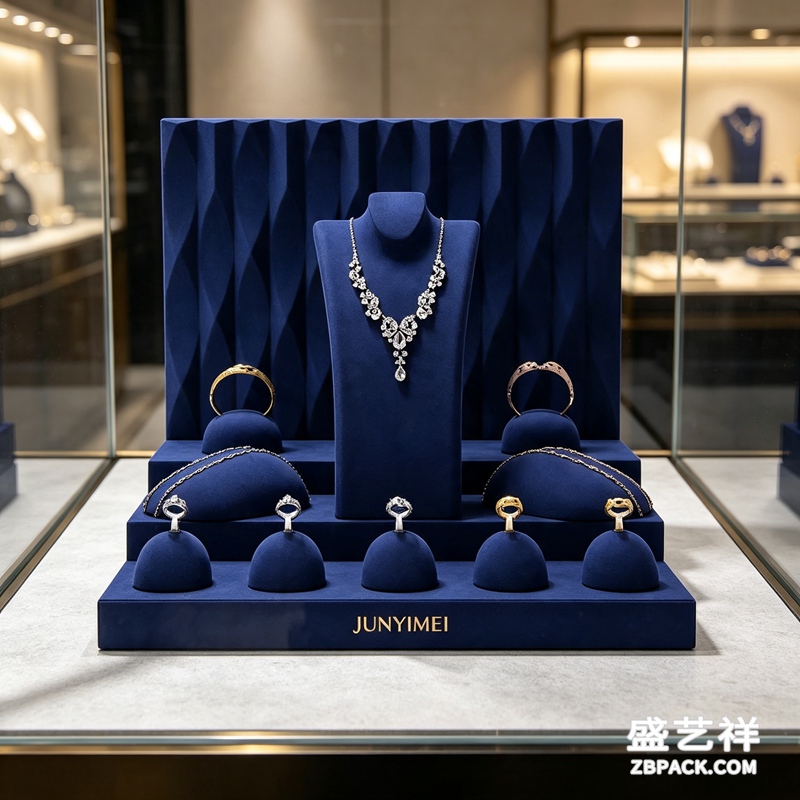
第二层逻辑是高度系统。柜台陈列讲究层级感,全靠高度差撑起来。一套方案里,道具的高度通常分三档:低层托盘负责跑量款,中层展台负责主推款,高层展架负责形象款和限量款。三档高度要形成阶梯,货的视觉重心一层层往上走,客人视线从低到高扫一遍,该看的全看到了。CC53 阶梯展示台就是干这个的:三级台阶,低台放常规款、中台放主推、顶台放形象款,一台就撑起柜台里的纵深感,不用再东拼西凑。
第三层逻辑是节奏系统。成套道具要留出呼吸感,不是塞满就好。同一块台面上,道具之间要留出视线停留的空隙,主推位的四周尤其要空出来,让目光有地方落。节奏还包括取放的动线:托盘、展架、试戴位的摆放顺序,要顺着客人看货的路径走,看得顺手、拿得顺手、放回也顺手,整套道具才算是接上了柜台的地气。

第四层逻辑是比例系统。成套道具的比例不是等分,而是有主有次:主推区占四到五成,跑量区三成,形象区两成。比例对了,客人第一眼落在主推位上;比例乱,到处是焦点就等于没有焦点。道具数量同样控制,一套台面八到十二件道具足够,多了反倒廉价,少了撑不起场面。
从单品到系统,说到底就是把颜色、高度、节奏、比例四件事在图纸阶段统一起来。东拼西凑的柜台,换个柜门就得重摆一遍;成体系的成套道具,换季换货只需在系统里微调。做生意的柜台,要的是秩序感——自成系统的那一刻,柜台自己就会说话。
成套道具的图纸,至少要有三样才对得起"成套"两个字:一张柜台布局图——每件道具在哪个位置、朝向哪个方向,画清楚;一套单体效果图——颜色、材质、高度逐件标注;一张物料清单——每件道具的名称、数量、材质、色号、单价逐项列明。三张图对得上,方案才算闭环。很多所谓成套方案只有一张效果图,买回来拼不齐、对不上,就是这个原因。
成套系统最大的红利,在于换季换货的时候。常规款换主推,只需要在系统里做微调:主推区和中转区对调两件道具,高度档位按新货的重心重排一档,色系跟新货的金属色做一次小呼应。改的是位置和搭配,不是推翻重做——这就是当初把颜色、高度、节奏、比例定死在图纸上的回报。没有系统的柜台,换个季等于重新装修一遍。
最后说预算怎么分。成套道具的钱,别平均摊到每件道具头上。主推区承担了全店最高频的视线接触,值得投入最大的预算;跑量区道具数量可以多,单价不必高;形象区一两件点睛的贵价道具撑场面就够了。点位优先级排清楚,同样的总预算,成套感和质感能差出一大截。系统不只是摆得齐,还包括钱花得准。
成套不是把道具买齐,是把柜台当成一个整体来设计。颜色、高度、节奏、比例四件事在图纸上统一了,柜台就有了自己的性格,客人进来一眼就能记住。单品再精致,拼不成系统也只是孤品;系统立住了,每一件道具都在为整柜的生意出力。
Good single-piece props are the basics; a full coordinated set is where the business lives. Many shops buy piecemeal — trays from one maker, stands from another, models from a third. The styles clash, the heights vary, the lights each do their own thing: no less money spent, and the counter still looks messy. Set design is about systems: colors, heights, rhythm — all locked down in one plan. Let me use the set logic of our CC53 stepped display stand to explain how to go from single pieces to a system.
Layer one: the color system. A set is not each piece choosing its own color — it is one main color, one supporting color, and at most one accent. The main color follows the brand: dark counters take dark props, light counters take light ones; velvet must echo the metal tones of the goods — charcoal velvet for platinum goods, beige-camel velvet for gold. Across the whole set, the velvet, the frame and the base must echo each other so the pieces read as one family when placed together.
Layer two: the height system. Counter display lives on layering, which is built entirely by differences in height. In one plan, prop heights usually fall into three tiers: low trays carry the volume sellers, mid-level platforms carry the hero pieces, tall stands carry the image pieces and limited editions. The three tiers form a staircase; the visual center of gravity climbs layer by layer, and the customer's eye sweeps from low to high, seeing everything that matters. That is exactly what the CC53 stepped stand does: three steps — regular pieces on the low tier, heroes in the middle, image pieces on top. One stand brings depth to the counter, no more patching pieces together.
Layer three: the rhythm system. A set needs breathing room; packing it full is not the point. On the same tabletop, leave gaps between props for the eye to rest — empty space around the hero position above all, so the gaze has somewhere to land. Rhythm also covers the take-out flow: the order of trays, stands and the try-on position should follow how customers actually look at goods. Easy to see, easy to take, easy to put back — only then does the set feel native to the counter.
Layer four: the proportion system. Set proportions are not equal shares; they have a hierarchy — hero zone at 40–50%, volume zone 30%, image zone 20%. When the proportions are right, the first glance lands on the hero position; when they are scrambled, every spot is a focus and none is. Count the pieces too: eight to twelve props per tabletop is enough — more looks cheap, fewer cannot fill the stage.
From single pieces to a system, it all comes down to unifying color, height, rhythm and proportion at the drawing stage. A patchwork counter needs a full rearrangement every time the doors change; a coordinated set adjusts in small ways through the system when stock changes with the season. A business counter wants order — the moment it forms a system, the counter starts speaking for itself.