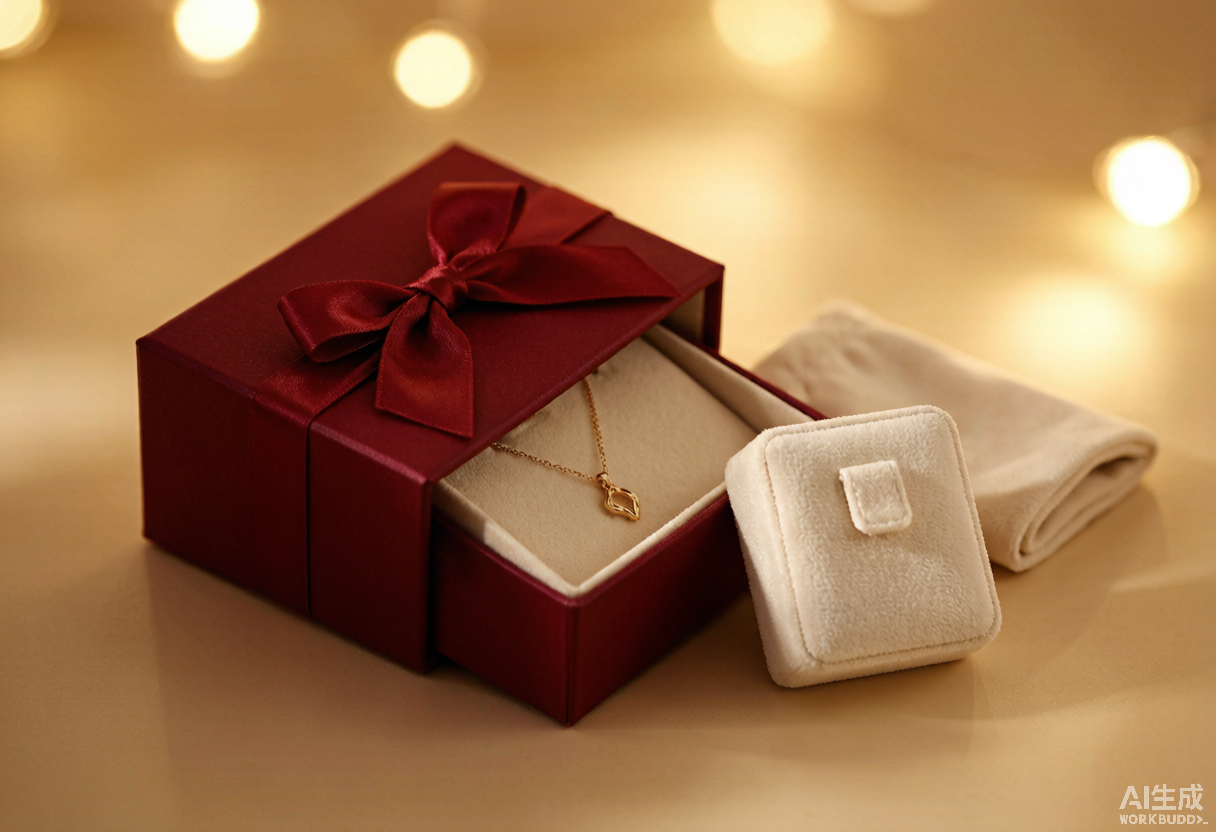
节日礼盒该怎么选 How to Get Holiday Jewelry Gift Packaging Right
一年里珠宝生意的大半,压在几个节点上。情人节、母亲节、七夕、中秋、圣诞——顾客在这些日子买的不只是首饰,还有把东西体面地递出去这件事。以下六个问题,是最近品牌方和门店老板在备货季问得最集中的。
问一:礼赠场景的包装,和平时卖货的包装差在哪?
差在人。平时是一个人买给自己,礼赠是三方关系:送礼的人付钱、收礼的人开盒、品牌在两个人之间被评价一次。送礼人买的是体面,收礼人体验的是开启的那三秒。
这个市场值得认真对待。美国零售联合会数据显示,2026 年情人节珠宝支出创下 70 亿美元纪录,居所有品类第一,节日总支出 291 亿美元;母亲节总规模 380 亿美元,珠宝以 75 亿美元同样居首。国内更集中:七夕珠宝销售额约 78.6 亿元、同比增长 12.3%;美团七夕当日非餐饮即时零售订单 2700 万单创新高,黄金饰品销量同比增长超六倍、珍珠饰品增四倍。
所以礼赠节点带来的不是多卖一点,是集中爆发。包装要按峰值备,不能按日常均值备。
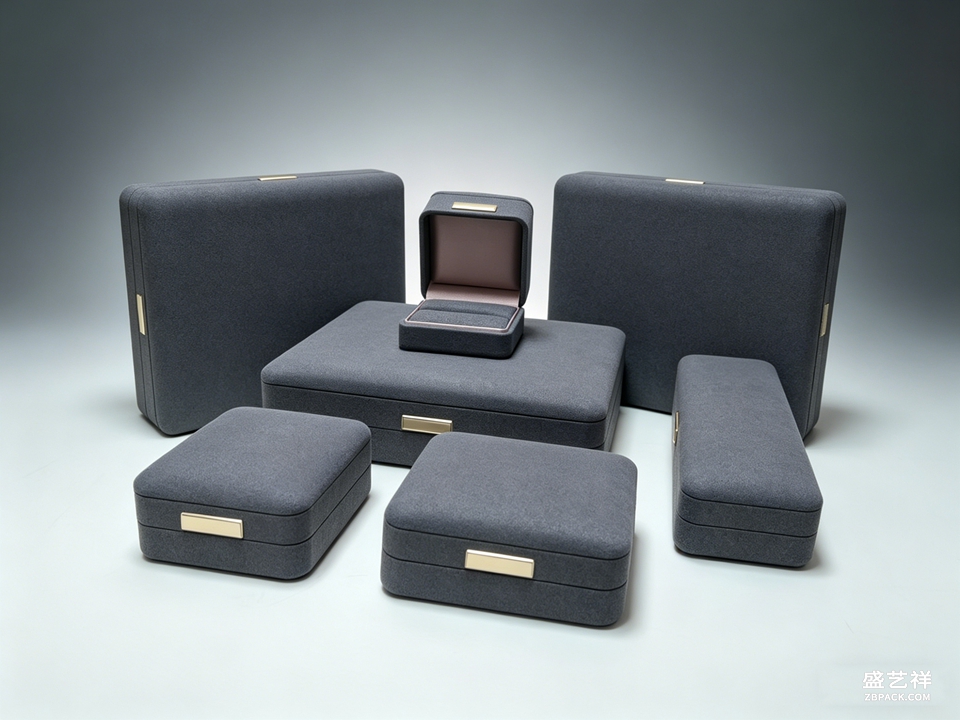
问二:为什么高端简约的珠宝包装,在礼赠场景里反而更受青睐?
因为送礼最怕的不是不够华丽,是审美冒犯。送礼人往往摸不准收礼人的偏好,简约就是风险最低的最大公约数——它不替收礼人做审美决定。
付费意愿的数据说得很清楚。Pitney Bowes 联合 Morning Consult 对 2094 名美国消费者的 BOXpoll 调研显示,82% 的人愿意为礼赠类包装额外付费,Z 世代高达 92%、婴儿潮一代 72%;包装纸或礼袋平均愿付超过 11 美元,Z 世代接近 15 美元。最被低估的一项其实是内层:棉纸在千禧一代心里值 12.45 美元,成本却是所有选项里最低的。另一边,Pro Carton 委托的 5000 余名欧洲消费者调研中,87.1% 在可选时偏好纸板而非塑料,41% 在过去一年因为包装选择了某个产品。
结论很朴素:顾客愿意为质感付钱,不愿意为花哨付钱。简约不是省钱,是把预算从外层堆砌挪到指尖能摸到的地方。
问三:旺季的首饰盒备货节奏该怎么排?
倒推排,别按感觉排。硬质礼盒从设计定稿到交货通常 15–35 天,刀模制版另占时间;柔性供应链现在能做到 50–100 件极限小单 7 天打样、15 天交货,但那属于补单救急,不能当主力方案。
一份稳妥的排期是:T-90 定方案与预算,T-60 打样定稿,T-45 下大货,T-20 到仓分装,T-7 门店铺陈到位。国内还要卡直播窗口——深圳水贝电商直播季从 2023 年 1.3 亿元销售额涨到 2024 年 4 亿元、2025 年超 8 亿元,2026 年七夕专场从 7 月 28 日持续到 8 月 28 日。包装到仓必须早于开播,而不是早于节日。
还有个省钱的结构性做法:主盒常年通用,节日感只做在可替换件上——腰封、卡片、贴纸、丝带。节后压的不是整盒库存,只是几张纸。
问四:礼赠要不要做多层?手提袋、礼盒、内袋怎么配?
按三层理解,各司其职。手提袋负责递出去那个动作的体面,礼盒负责开启仪式,内衬和小袋负责保护与收礼人之后的二次收纳。
可复用性是这里最划算的一笔投资。调研显示 78% 的美国消费者会重复使用节日礼袋,约 41% 的消费者会二次使用包装——一只被留下来反复用的手提袋,等于一个长期免费广告位。Pitney Bowes 同样显示,43% 的付费者优先选外层包装纸或礼袋(Z 世代 52%、千禧一代 54%),约三分之一的 Z 世代明确偏好可复用、环保的礼品包装。
工艺上两个常被忽略的细节:缎带宽度建议 15–25 毫米搭配中小型饰品包装盒,蝴蝶结高度不超过盒体厚度,否则装袋与运输必被压塌;提绳承重按盒重三倍验收,旺季顾客一手拎两三袋是常态。
问五:礼物送错要退换,包装怎么设计才不添乱?
这是礼赠场景独有的一道题。节后退货率普遍高于全年均值 25%–40%,珠宝配饰品类本身退货率就在 10%–15% 区间。包装能做的事比想象中多。
一是价签独立,不打孔、不粘盒面,收礼人拆开看不到金额;二是盒内预留卡位放礼品小票,让退换不必惊动送礼人;三是封条选可复原型,一次性易撕封条会把看一眼变成已拆封的争议;四是外箱低调,不写品名与金额,既护隐私也降低丢件风险。
还有一条关于库存:礼盒不要印死某某节快乐。把节日信息放在可替换腰封与卡片上,同一批盒子能从七夕滚到中秋,再滚到圣诞。
问六:礼赠包装的预算怎么分,多花的钱从哪儿赚回来?
先看大盘。全球礼品包装市场 2026 年约 244.9 亿美元,年复合增长率 7.4%,2030 年预计 322 亿美元,亚太占比约 36.4% 为最大区域;珠宝袋细分赛道更快,预计 2033 年达 63.3 亿美元。礼赠包装不是可选项,是在扩张的必选项。
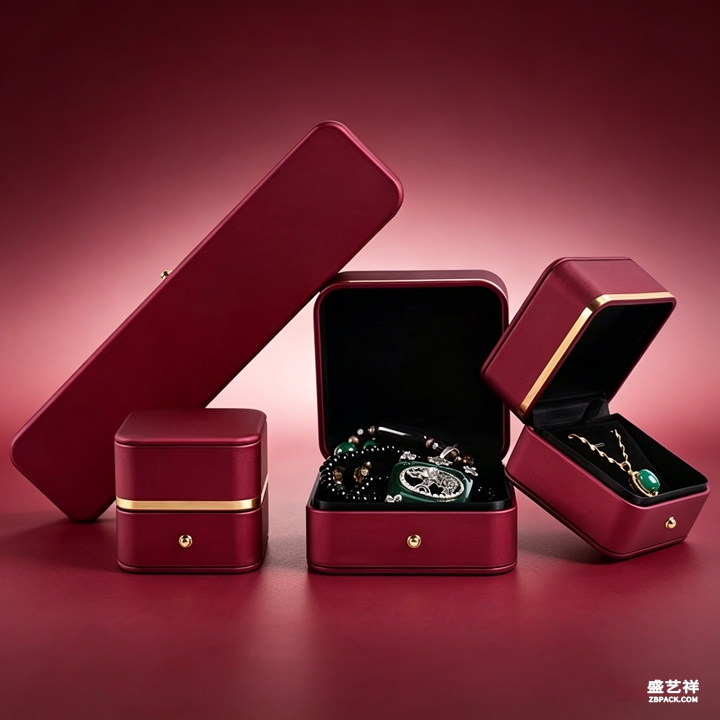
预算建议七三开:七成放触点上——盒体挺度、内衬平整度、开合阻尼、丝带手感;三成放季节性外挂件。回报有三条:其一,80% 的消费者会再次向使用高质量包装且不额外收费的零售商下单;其二,礼赠客本质是获客通道,收礼人往往是第一次接触你的品牌;其三,配套齐整能减少门店临时加袋、临时打包的损耗。旺季门店的珠宝摆台建议留出成套展示位,把盒、袋、丝带作为一组陈列,而不只展首饰。
最后提醒风险:过度包装现在是合规问题,不只是口碑问题。国内对商品过度包装的监管已延伸到包装减量考核,欧盟 PPWR 同样要求减量;而中国包装联合会 2026 年调研显示,超过 68% 的受访者愿意为真正环保的包装支付溢价。把钱花在克制而精致的地方,两头都占得住。
盛艺祥常跟客户说一句话:礼赠季拼的从来不是谁的盒子更花,而是谁让送礼那一刻更体面。
本文为原创内容,版权归盛艺祥所有。如需转载请注明出处。
盛艺祥(Shengyixiang)——高端珠宝包装设计与定制专家,为品牌护航。
Most of a jewelry business's year rests on a handful of dates. Valentine's Day, Mother's Day, Qixi, Mid-Autumn, Christmas — on those days customers are not only buying jewelry, they are buying the act of handing something over gracefully. Below are the six questions brands and store owners ask most often once gifting season planning begins.
Q1. How is gifting packaging different from everyday retail packaging?
The difference is people. Everyday retail is one person buying for themselves. Gifting is a three-way relationship: one person pays, another opens the box, and the brand gets judged in between. The giver is buying poise; the recipient experiences three seconds of opening.
The market deserves serious attention. National Retail Federation figures show jewelry spending hit a record USD 7 billion for Valentine's Day 2026, the top category of the holiday, within USD 29.1 billion in total spending and an average per-shopper budget of USD 199.78. Mother's Day reached USD 38 billion overall, with jewelry again leading at USD 7.5 billion. In China the concentration is sharper: industry association figures put Qixi jewelry sales near RMB 7.86 billion, up 12.3% year on year, while Meituan recorded a record 27 million non-catering instant-retail orders on Qixi day, with gold jewelry volume up more than sixfold and pearl jewelry up fourfold.
So a gifting date does not mean selling slightly more. It means a concentrated spike. Packaging has to be planned against the peak, not the daily average.
Q2. Why does minimalist high-end packaging win in gifting scenarios?
Because the real risk in gift-giving is not looking insufficiently lavish — it is offending someone's taste. A giver rarely knows the recipient's exact preferences, and restraint is the lowest-risk common denominator. It refuses to make an aesthetic decision on the recipient's behalf.
Willingness-to-pay data makes this concrete. In the BOXpoll survey run by Pitney Bowes with Morning Consult across 2,094 US consumers, 82% said they would pay extra for gifting packaging features, rising to 92% among Gen Z and 72% among Boomers. Wrapping paper or a gift bag drew an average premium above USD 11, and close to USD 15 among Gen Z. The most underrated element was the inner layer: tissue paper was valued at USD 12.45 by Millennials, while costing retailers the least of any option. Separately, a Pro Carton study of more than 5,000 European consumers found 87.1% prefer cardboard to plastic when given the choice, and 41% chose a product specifically because of its packaging in the past year.
The conclusion is plain. Customers pay for tactile quality, not for decoration. Minimalism is not a cost cut — it moves budget away from outer bulk and toward what fingertips actually touch.
Q3. How should peak-season packaging be scheduled?
Work backwards from the date rather than by instinct. Rigid gift boxes typically need 15 to 35 days from final artwork to delivery, with die-cutting and plate-making on top. Flexible suppliers can now handle runs as small as 50 to 100 pieces with seven-day prototyping and 15-day delivery, but that is an emergency top-up channel, not a primary plan.
A reliable timeline looks like this: lock concept and budget at T-90, approve samples at T-60, release the main order at T-45, receive and sort at T-20, and have stores fully set at T-7. In China there is a livestream window to hit as well. Shenzhen's Shuibei e-commerce livestream season grew from RMB 130 million in 2023 to RMB 400 million in 2024 and beyond RMB 800 million in 2025, with the 2026 Qixi program running from 28 July to 28 August. Packaging must land in the warehouse before broadcasts begin, not merely before the holiday.
One structural saving is worth adopting: keep the core box in service all year and put the seasonality only into replaceable parts — belly bands, cards, stickers, ribbon. What you are left holding after the season is a few sheets of paper, not full boxes.
Q4. Should gifting use multiple layers, and how do bag, box and pouch fit together?
Think in three layers with distinct jobs. The carrier bag handles the dignity of the handover, the box handles the opening ritual, and the interior plus pouch handle protection and the recipient's later storage.
Reusability is the smartest money here. Surveys report that 78% of American consumers reuse holiday gift bags, and roughly 41% of consumers reuse packaging generally — a bag that stays in circulation is a long-running free advertisement. Pitney Bowes data likewise shows 43% of consumers who pay for packaging pick outer wrap or a gift bag first, rising to 52% of Gen Z and 54% of Millennials, while about a third of Gen Z specifically want reusable or eco-friendly gift packaging.
Two production details get overlooked. Ribbon width of 15 to 25 mm suits small and mid-size boxes, and the bow should not exceed the box's own thickness or it will be crushed in bagging and transit. Handle cords should be tested to roughly three times the box weight, because peak-season shoppers routinely carry two or three bags in one hand.
Q5. Gifts get exchanged. How should packaging avoid making that worse?
This problem belongs to gifting alone. Post-holiday return rates typically run 25% to 40% above the annual average, and jewelry and accessories already sit in a 10% to 15% return band. Packaging can do more than you would expect.
First, keep the price tag separate — not punched through, not stuck to the lid — so the recipient never sees the amount. Second, build a slot inside for a gift receipt so an exchange does not require involving the giver. Third, choose seals that can be restored; a one-time tear strip turns a quick look into an argument about whether the item was opened. Fourth, keep the outer carton discreet, with no product name or value printed, which protects privacy and lowers theft risk in transit.
One inventory note: do not print a specific holiday greeting onto the box itself. Put the occasion on a swappable band or card, and the same production run carries from Qixi through Mid-Autumn to Christmas.
Q6. How should the budget be split, and where does the extra spend come back?
Start with the market. Global gift wrapping and packaging was around USD 22.8 billion in 2025, growing to USD 24.49 billion in 2026 at a 7.4% CAGR and a projected USD 32.2 billion by 2030, with Asia Pacific the largest region at roughly 36.4%. The jewelry pouch segment is moving faster, forecast to reach USD 6.33 billion by 2033. Gifting packaging is not optional spend; it is an expanding requirement.
Split the budget roughly seventy-thirty. Seventy percent goes into contact points — board stiffness, interior flatness, closure damping, ribbon hand-feel. Thirty percent goes into seasonal add-ons. The return shows up three ways. First, 80% of consumers say they would order again from a retailer that ships in high-quality materials at no extra cost. Second, gift recipients are an acquisition channel, often meeting your brand for the first time. Third, a complete set reduces the improvised bagging and rewrapping that quietly drains store margin. During peak weeks, leave a display position for the full set — box, bag and ribbon shown together rather than jewelry alone.
A closing caution: over-packaging is now a compliance issue, not just a reputation issue. Chinese regulators have extended oversight to packaging reduction targets, and the EU's PPWR demands the same, while a 2026 China Packaging Federation survey found over 68% of respondents willing to pay a premium for genuinely sustainable packaging. Spend on restraint executed well and you are covered on both fronts.
This is original content. Copyright belongs to Shengyixiang.
Shengyixiang — your expert in high-end jewelry packaging design & customization.