橱窗决定谁会进店 Why Jewelry Window Displays Decide Who Walks In
顾客决定进不进一家珠宝店,往往只用了走过橱窗的那几步。店里的灯光、导购和货品再好,都得等他先推门。橱窗是唯一在顾客还没打算买的时候就开始工作的销售员,可它在很多门店的预算表上仍排在最后一行。下面六个问题,来自店主与陈列师最常问的疑惑。
问一:橱窗真的能带来客流吗,有数据支撑吗?
有,而且比多数人估计的高。零售客流基准显示,奢侈品与珠宝的店内成交转化率大约在 15%—20%,部分口径下高端品类只有 5%—12%。要注意这个数字的分母是"已经进店的人"——橱窗的全部工作,发生在分母形成之前。芝加哥一家精品店的圣诞橱窗用磨砂玻璃、雪花道具和冷调灯光只衬一条主推项链,当月客流上升 28%、销售增长 22%;另一家全国连锁把工匠的真实工具搬进橱窗讲工艺故事,到店量提升 15%,客单价同步走高。国内数据接近:某品牌做季节性主题陈列后淡季销售额提升 22%,情人节专题橱窗带动当月销售突破 1200 万元。这些数字指向同一件事——店外这块界面的投入产出比,通常高于在店内再加一组柜子。
问二:为什么高端简约的橱窗与包装反而更受顾客青睐?
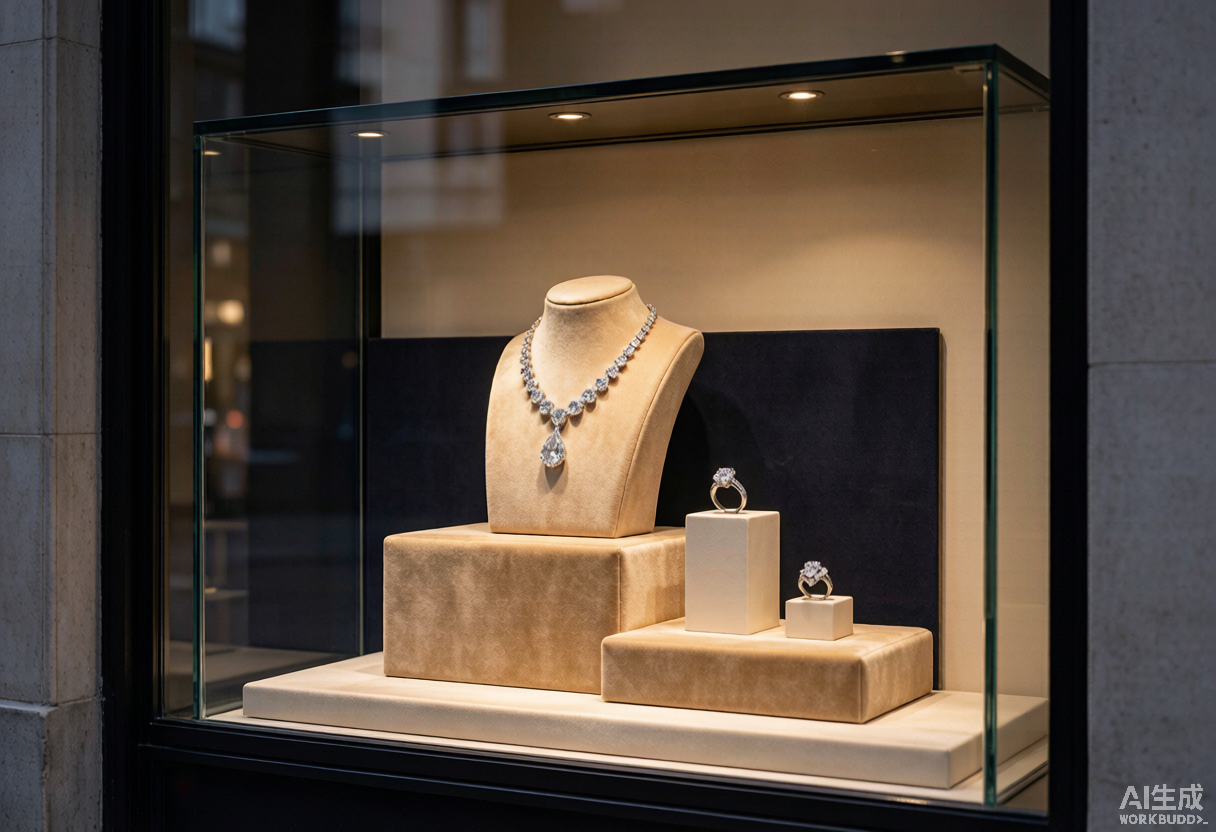
因为橱窗的敌人是时间,不是空间。行人以正常步速经过,留给你的只有几步路的注意力,摆得越满,被真正看清的越少。做得好的橱窗有一个共同点:只把一到两件主推放在视线高度,其余全部退为陪衬。人站立时的自然视线约落在 1500 至 1600 毫米,处在这个高度带的展品视觉权重最高,高于或低于都要顾客改变姿态来补偿,而路过的人不会为你改变姿态。
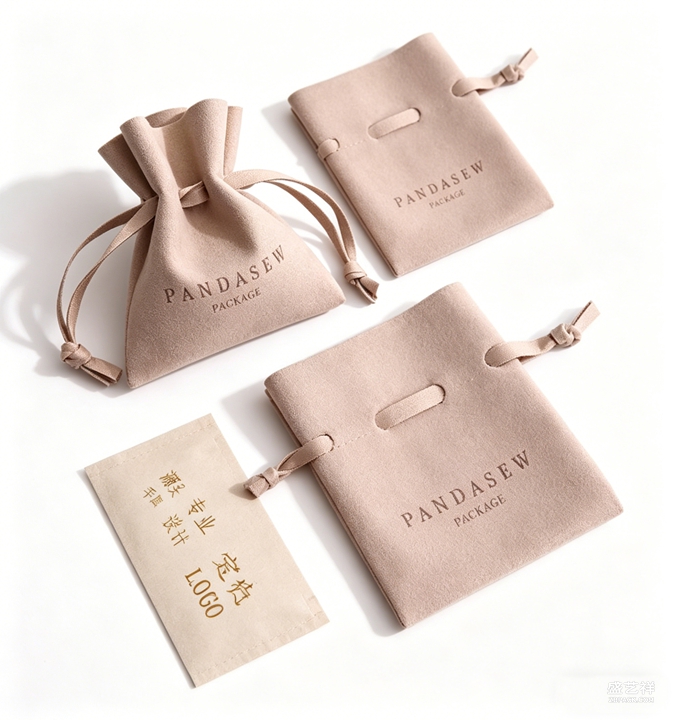
高端简约更容易被青睐,还有一层常被忽略的原因:它让橱窗和包装说同一种话。顾客在玻璃外记住的是哑光米白配暖金,进店成交后拿到手的饰品包装盒如果是高反光印花,那份高级感会在最后一刻破功。把橱窗背板、摆台、托盘内衬和盒子控制在同一套色彩与材质语言里,成本并没有增加,识别度却是叠加的。简约不是少花钱,是把钱集中花在少数几个能被看清的点上。
问三:橱窗道具怎么搭,才不会喧宾夺主?
一条判断标准就够用:每一件道具都必须服务于一件商品。如果顾客指着它问"那是干嘛的",你答得上来,它就该留;答不上来,它就是杂物。
具体到珠宝橱窗,有三件事值得较真。第一是高度差。平铺的橱窗几乎没有视觉焦点,实际做法是人为分出主看台、次层与底层三个层级,用珠宝摆台和抬升块把主推件顶到视线带上——盛艺祥在给门店做方案时反复强调,摆台的高度差往往比它的造型更值钱。第二是尺度。高端珠宝的台面高度通常控制在 900 至 1100 毫米,深度 350 至 450 毫米;超过 800 毫米深顾客会觉得够不着而失去兴趣,低于 400 毫米又显局促。第三是材质配比。镜面能放大光线让珠宝显得更丰盛,大理石与原木能与宝石形成质感对比,但高反光道具用多了,会把杂乱的街景一起反进画面。
问四:橱窗里的珠宝会被晒坏吗?
会,而且大多不可逆。紫外线会破坏某些宝石的致色结构,褪掉的颜色回不来。最怕晒的包括紫水晶、孔赛石、萤石、粉晶、辐照处理的蓝色托帕石以及染色玛瑙与珍珠;欧泊含水 6% 至 10%,遇热易龟裂或脱水发雾;琥珀会变深甚至开裂。相对稳定的是刚玉族的红蓝宝石,以及钻石、尖晶石、石榴石和锆石。
金属同样受影响。925 银在紫外照射下硫化发黑更快,被迫频繁抛光反而磨损了细节;玫瑰金里的铜会氧化出暗斑;白金表面的铑层加速耗损,露出偏黄底色;镀金件在高温下镀层与基材结合变松而剥落。窗台温度经常超过 40 摄氏度,这是被严重低估的风险。
可行的做法有四条:给玻璃贴紫外阻隔膜;把敏感石种放在非直射位并定期轮换,别让同一件长期占据朝阳位;把发热高、紫外强的卤素与白炽灯换成 LED;夜间收回时用深色软内衬的首饰盒避光存放。
问五:橱窗多久换一次,怎么排期?
行业通行的整体换陈周期是四到六周。快时尚一到两周一换,高客流旗舰店压到两到三周,奢侈品牌可拉到六到八周。超过这个区间,老顾客的大脑会把这面橱窗归档,看见等于没看见。
珠宝的特殊之处在于它是重决策业态。这类门店的健康停留时长在 30 到 60 分钟,平均低于 12 分钟基本谈不上成交。所以橱窗的任务不是把货全摆出来,而是把"路过"变成"愿意进来坐下慢慢看"。相应地,橱窗应该放推荐款,也就是顾客本来没打算买的新款、季节款和限时款。
排期上有两个建议。一是提前六到十二个月排出全年橱窗日历,把节庆、新品与促销预先卡进去,节前两周才动手一定仓促。二是把结构和季节感拆开:主看台、灯具与主色调常年不动,季节感只落在可替换的背板、珠宝陈列道具和丝带上,换陈成本能降一大截。还有一点容易漏掉——橱窗主推款必须在入口内侧成组可见,否则被吸引进来的人会找不到东西。
问六:怎么判断橱窗有没有效,预算又该怎么分?
先解决测量问题。有统计显示,91% 的服饰零售商根本不知道自己门店的转化率,约 47% 的营销支出在缺少客流数据时无法被证明有效。橱窗要看四个递进指标:路过量、驻足量、进店率,以及主推款销量与同价位对照款的差值。有品牌用热力感应发现橱窗右侧约 40% 的区域无人停留,调整展示重点后该区域销售提升 89%,这类问题靠眼睛看不出来。月度对比目标可设为停留时长 90 秒以上、互动率 15% 以上、试戴转化 8% 以上。
预算建议七三开:七成给能被看清的部分——灯光、主看台、主推件、玻璃清洁与防眩,三成给季节性装饰。灯具、调光系统与紫外膜属一次性投入,可摊到两三年看。有连锁上了智能调光系统后,不同时段方案切换效率提升 80%、能耗下降 35%,两年内就能算平。
最后提醒一句:橱窗长期不换是一种看不见的亏损,它不会体现在任何一张报表上,只会体现在越来越少的推门声里。
本文为原创内容,版权归盛艺祥所有。如需转载请注明出处。
盛艺祥(Shengyixiang)——高端珠宝包装设计与定制专家,为品牌护航。
Most customers decide whether to enter a jewelry store within the few steps it takes to walk past the window. However good the lighting, the staff and the merchandise inside may be, none of it matters until someone opens the door. The window is the only salesperson working on people who have not yet decided to buy anything — and in most stores it still sits at the bottom of the budget sheet. Here are six questions store owners, buyers and visual merchandisers ask most often.
Q1: Do window displays actually bring in traffic, and is there data?
Yes, and the effect is larger than most people assume. Retail footfall benchmarks put in-store conversion for luxury and jewelry at roughly 15%–20%, while some datasets place high-end categories at 5%–12%, with strong performers above 15%. Note that the denominator in that figure is people who already walked in — everything a window does happens before that denominator exists. A Chicago boutique built a winter-themed window using frosted glass, snowflake props and cool-toned lighting around one statement necklace, and tracked a 28% rise in foot traffic and 22% sales growth for the month. A national chain that put real artisan tools in its windows to tell a craftsmanship story saw store visits climb 15% along with a higher average transaction value. Domestic numbers are similar: one brand reported a 22% lift in off-season revenue after adopting seasonal themed displays, and a Valentine's window campaign that helped push monthly sales past 12 million yuan. Another store upgraded its storefront signage and recorded 42% more evening traffic and a 19% higher walk-in conversion. All of it points the same way — the exterior interface usually returns more per yuan than adding one more case inside.
Q2: Why do restrained, minimal windows and packaging appeal more to customers?
Because a window competes against time, not space. A pedestrian passes at walking speed, giving you the attention span of a few footsteps. The more you cram in, the less is actually seen. Effective windows share one habit: one or two hero pieces at eye level, everything else demoted to support. A standing adult's natural sightline falls around 1,500 to 1,600 millimetres, and merchandise inside that band carries the highest visual weight. Anything above or below asks the shopper to change posture, and someone walking past will not change posture for you.
There is a second, often ignored reason minimalism wins: it lets the window and the packaging speak the same language. If a customer remembers matte cream and warm gold through the glass, then receives a glossy printed box at checkout, the premium impression collapses at the last moment. Keeping the backdrop, the risers, the tray lining and the box within one palette and one material vocabulary costs nothing extra, yet the recognition compounds. Minimal does not mean cheap — it means concentrating the budget on the few things that can actually be seen.
Q3: How do you choose props so they don't overpower the jewelry?
One test is enough: every prop must serve a specific product. If a customer points at it and asks "what's that for?" and you have an answer, keep it. If you don't, it is clutter. A vintage suitcase next to a travel collection is a story; anywhere else it is just occupying space.
For jewelry windows, three things deserve real attention. First, height variation. A flat layout has no focal point; the working method is to build three deliberate tiers — hero platform, secondary level and base — and lift the featured piece into the sightline band with risers. The difference in height is usually worth more than the shape of the riser itself. Second, scale. High-end jewelry counters typically run 900 to 1,100 millimetres tall with a depth of 350 to 450 millimetres. Beyond about 800 millimetres of depth, shoppers feel the goods are out of reach and disengage; under 400 millimetres the space feels cramped. The comfortable reach zone sits roughly between 700 and 1,400 millimetres. Third, material balance. Mirrored surfaces multiply light and make a display look more abundant, and natural marble or timber creates useful contrast against gemstones — but overuse high-gloss props and you will reflect the whole messy street back into the picture.
Q4: Can jewelry actually be damaged sitting in a sunny window?
Yes, and usually irreversibly. Ultraviolet radiation breaks down the colour centres and molecular bonds that give certain stones their hue, and the lost colour does not come back. The most vulnerable list includes amethyst, kunzite, fluorite, rose quartz, irradiated blue topaz, and any dyed agate, quartz or pearl. Opals hold 6% to 10% water and are heat-sensitive, prone to crazing or dehydration hazing. Amber darkens and can crack. Comparatively stable choices are the corundum family — ruby and sapphire — plus diamond, spinel, garnet and zircon.
Metals suffer too. Sterling silver tarnishes faster under UV, forcing more frequent polishing that erodes fine detail. Copper in rose gold oxidises into dark spots. The rhodium plating on white gold wears through more quickly, exposing a yellowish base. On gold-plated pieces, heat loosens the bond between plating and base metal until it peels. Windowsills and parked cars regularly exceed 40°C, a risk that is badly underestimated.
Four practical countermeasures: apply UV-filtering film to the glass; keep light-sensitive stones out of direct beams and rotate them so no single piece occupies the sun-facing position for long; replace hot, UV-heavy halogen and incandescent lamps with LED; and store pieces overnight in dark, soft-lined boxes. One more detail — spherical crystal ornaments focus sunlight like a lens, so keep paper props away from them.
Q5: How often should a window change, and how do you schedule it?
The industry standard for a full refresh is four to six weeks. Fast fashion turns windows every one to two weeks, high-traffic flagships compress to two or three, and luxury houses can stretch to six or eight weeks — but with bespoke props and far more sophisticated lighting. Past that window, regular passers-by file the display away mentally and stop registering it at all.
Jewelry is a considered-purchase category, which changes the brief. Healthy dwell time in this format runs 30 to 60 minutes, and stores averaging under 12 minutes rarely convert at all. So the window's job is not to show everything in stock; it is to turn a walk-past into a willingness to come in and sit down. That argues for featuring push products — new, seasonal or limited pieces the shopper had no plan to buy.
Two scheduling habits pay off. Plan a full-year window calendar six to twelve months ahead, slotting in holidays, launches and promotions; starting two weeks before a holiday guarantees a rushed result. And separate structure from season: keep the hero platform, lighting, glass and base palette fixed all year, and put the seasonal signal only into replaceable backdrops, props and ribbon. One thing that often gets missed — whatever the window features must be findable as a group just inside the entrance, or the traffic you attracted will wander and leave.
Q6: How do you know if a window works, and how should the budget split?
Start with measurement. Surveys suggest 91% of clothing retailers do not know their own store conversion rate, and roughly 47% of marketing spend cannot be justified without traffic data. A window should be judged on four sequential metrics: passing traffic, stopping traffic, entry rate, and the sales gap between the featured piece and a comparable control item at the same price. One brand used heat-mapping to discover that about 40% of the right-hand side of its window drew no dwell at all; after reweighting the display, sales from that zone rose 89%. You cannot see that with the naked eye. Reasonable monthly A/B targets are dwell time above 90 seconds, interaction rate above 15%, and try-on conversion above 8%.
For budget, a 70/30 split works well: 70% on what can actually be seen — lighting, the hero platform, the featured piece, glass cleaning and glare control — and 30% on seasonal decoration. Fixtures, dimming systems and UV film are capital items and should be amortised over two or three years. One chain that installed an intelligent dimming system reported an 80% gain in switching efficiency between time-of-day scenes and a 35% cut in energy use, which pays for itself well inside two years.
A closing warning: a window left unchanged is an invisible loss. It will never show up on any report — only in the steadily quieter sound of the door.
This is original content. Copyright belongs to Shengyixiang.
Shengyixiang — your expert in high-end jewelry packaging design & customization.