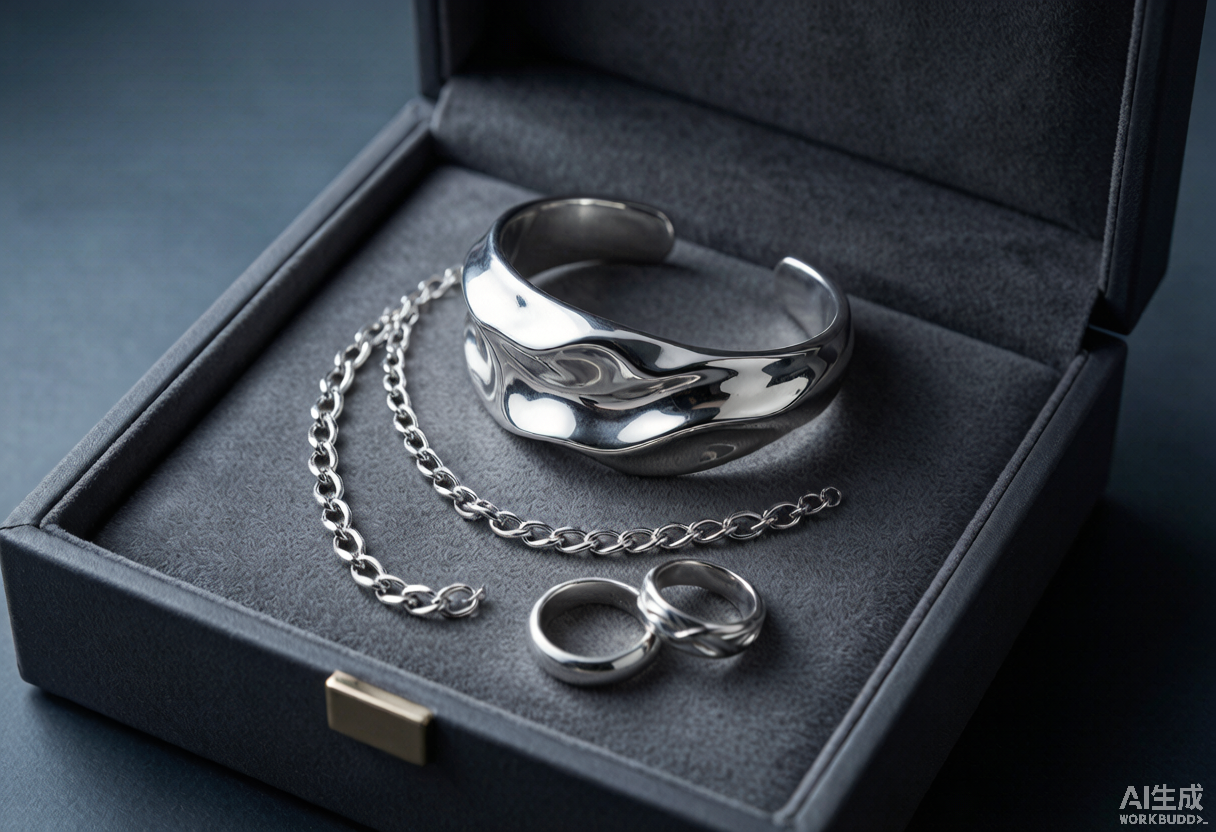
银饰告别论克时代 Silver's Wild Year Is Rewriting How Jewelry Sells
过去十二个月,白银把黄金用二十年走完的剧情,压缩着演了一遍——暴涨、封神、退潮、复盘。区别在于,黄金的每一次涨跌都有成熟的叙事去消化,而银饰行业几乎是被生生推上台的。
先看这条曲线。2025 年全年,白银上涨超过 147%,创下 1979 年以来的最佳年度表现。2025 年 12 月 22 日之后的 24 个交易日里,现货白银接连击穿 70、80、90、100、110 美元/盎司五道关口;2026 年 1 月中旬,伦敦现货一度冲到 91.551 美元/盎司刷新历史高位,沪银主力合约同日最高触及 22995 元/千克。开年不足一个月,涨幅超过 60%。
然后是退潮。2026 年 7 月 8 日,伦敦银现报 60.89 美元/盎司;7 月 20 日回落至 56.08 美元附近;7 月 28 日收在 57.35 美元,上期所沪银主力 14062 元/千克。国内原料端更直观:上金所 Ag9999 基准价回到 13.6 元/克一线,几家银饰基准报价(天乙、中钞国鼎、斯尔沃)落在 12.4 至 12.6 元/克,菜百 13 元/克。而在年初最热的时候,国内足银饰品的克价(不含工费)曾普遍报到 33 至 37 元。
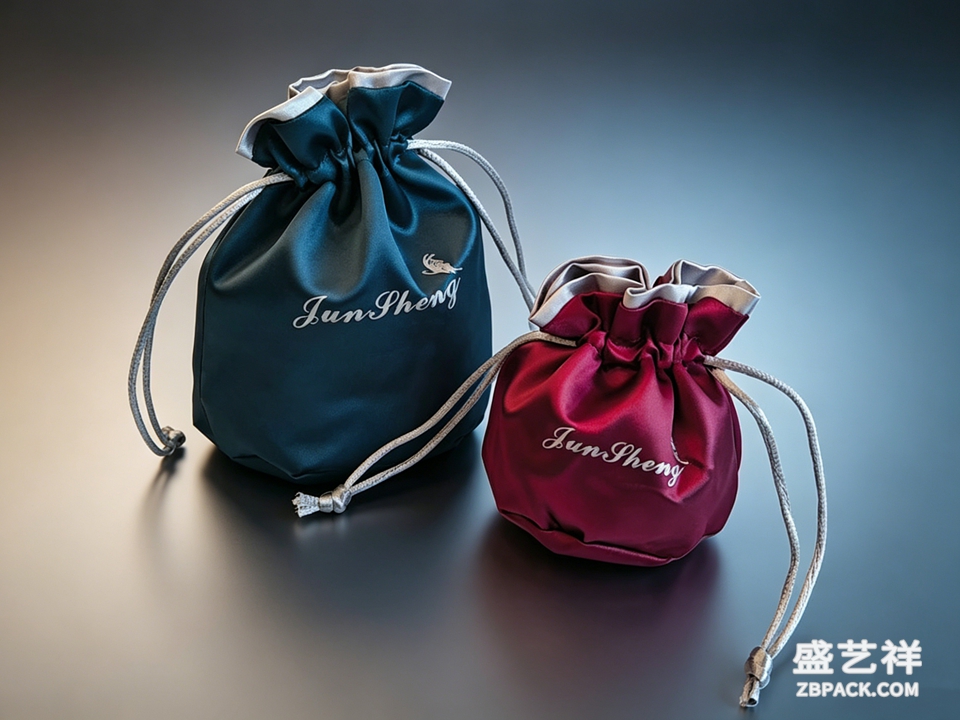
涨的时候,银饰被当成了投资品
行情最烈的那几个月,深圳水贝的银饰柜台前排起了队,银条、银元宝这类"低工费、偏投资"的品类最先卖空。太原一家银饰店的销售顾问回忆,2025 年 10 月前原料大盘还在每克 12 元左右,10 月涨到 15 元,11 月中下旬直接冲到 25 元,"回收价都有人出到 23 到 25 元"。杭州一位 90 后消费者以 20.8 元/克买入 20 千克白银,后来以 29.2 元/克全部卖出,一进一出赚了近 17 万元。
问题是,这些故事里没有一个跟"首饰"有关。它们是金融交易,只不过借用了珠宝店的柜台。而银饰行业在那几个月里做的事,是把自己的定价方式改造得越来越像金店:跟着实时银价走、一天一个价、按克结算。一位店长说得很直白:"按每天的实时计银价来定,就跟黄金一样。"
跌回来之后,那道裂口露出来了
价格腰斩之后,被掩盖的东西全部摆到了台面上。以 7 月末的行情看,足银回收价 12.11 元/克,925 银回收仅 11.34 元/克,925 银条 10.48 元/克;而品牌银楼的成品,S999 素圈手镯、简约配饰在 21 至 29 元/克,古法浮雕、精工雕花款报到 30 至 45 元/克。同一天,水贝足银 999 首饰 14 至 17 元/克,商场专柜同纯度 19 至 25 元/克。
零售价与回收价之间那道两三倍的裂口,就是设计费、工艺费和品牌费的价格标签。涨价期,它被"反正金属还会涨"的叙事糊住了;回落期,它被赤裸裸地摆在顾客眼前。这时才发现一个残酷的事实:愿意为这道裂口买单的人,买的从来不是银。
更值得注意的是波动本身的常态化。白银一半以上的消耗量在工业端,仅光伏用银就占了全球工业白银需求近七成,新能源汽车、5G 基站、AI 数据中心还在持续抽取库存。而供给端极其僵硬——全球超过 70% 的白银是铜、铅、锌、金的伴生副产品,产量跟着主矿走,几乎无法响应银价。库存也在薄下去:上金所与上期所白银库存已降至 1100 吨以下,COMEX 库存自 2025 年 10 月以来减少约 3620 吨,月均降幅超 900 吨。
换句话说,银饰行业接下来要长期面对的,不是"银价高了还是低了",而是"银价说不准"。珠宝行业第一次要为一个自己完全无法影响、也无法预测的变量定价,而这个变量的方向盘握在制造业手里。
真正的分层已经开始
聪明的玩家在下半场做的都是同一件事:把生意从"论克"搬到"论件"。太原宏艺金店主推按件销售的文化 IP 系列,灵感取自山西本地文化;老庙黄金一款名为"马上有钱"的 999 足银盘缠手串定价高于同类,靠寓意与工艺留客;独立品牌七度银饰干脆放弃克重叙事,主打现代设计,其店员的说法很关键——年轻客户"对材质价格波动的关注度低于对作品文化内涵和独特性的追求"。
这不是话术调整,而是两门不同的生意。论克卖,考验的是供应链和资金效率;论件卖,考验的是设计、叙事与呈现。最危险的恰恰是中间态:既想蹭投资热度,又想收设计溢价,结果涨价时被嫌贵,跌价时被质疑虚高。全球银饰市场 2024 年约 409.1 亿美元,预计 2030 年增至约 537.7 亿美元,年复合增速 4.66%——这个盘子在长大,但它奖励的对象已经换了。
柜台和交付物,也得跟着换一套语言
定价逻辑变了,呈现方式不可能不变。论克卖的柜台本质上像个交易所:电子价签、克重牌、当日报价、称重复核,顾客盯着数字。论件卖的柜台是时装店:一柜别塞满,单件留白,价格标签换成故事卡。银是冷色金属,在 2700K 暖光下会发闷发黄,柜内应换到 3500 至 4000K、显色指数 90 以上;珠宝陈列道具则要控制高光亮面,镜面反射会把银饰的层次吃掉。摆台的高度差,往往比造型更值钱。
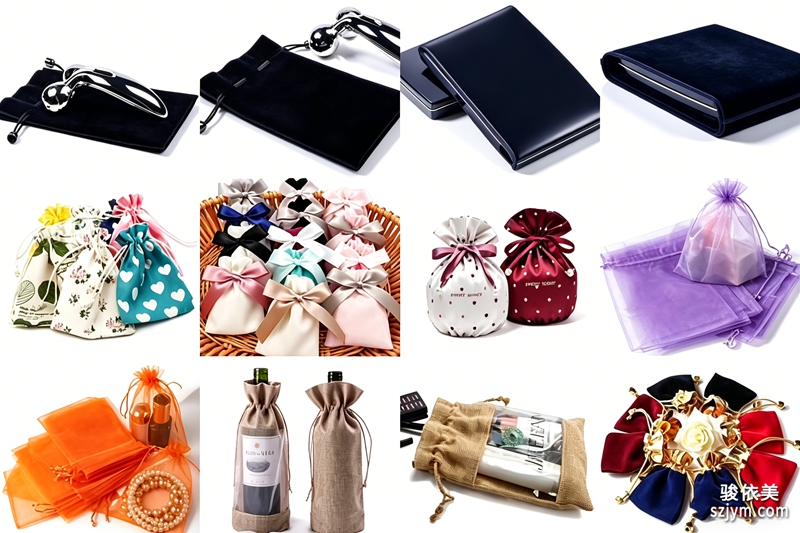
交付物的角色变化更彻底。按克卖,包装是成本,因为顾客买的是金属;按件卖,盒子是"这是作品,不是原料"这句话唯一的物理载体——它承担的是价值证明功能。这也让首饰盒设计的目标变了:不是把盒子做贵,而是让顾客在打开的那三秒里,确认自己刚才付的溢价是有去处的。
银饰品牌普遍 SKU 多、单价低、上新快,采购逻辑与高单价金饰完全不同。可行的做法是主盒常年通用、把季节感和系列感放在可替换的腰封与卡片上,这样既压住了首饰盒批发的综合成本,又留出了差异化空间。像盛艺祥这类做高端珠宝包装设计与定制的服务方,近来接到的银饰类需求,重点也从"看起来贵"转向"结构通用、单件成本可控、开盒有确定的仪式感"。
白银这一年给行业上的课其实很朴素:金属价格会回来,也会再走;而你用什么理由说服顾客付钱,才是那个不该随行情漂移的东西。论克的生意归金融,论件的生意归设计——这一轮之后,站错队的成本会越来越高。
本文为原创内容,版权归盛艺祥所有。如需转载请注明出处。
盛艺祥(Shengyixiang)——高端珠宝包装设计与定制专家,为品牌护航。
In the past twelve months, silver compressed into a single year the kind of storyline gold usually takes two decades to tell: a violent rally, a moment of glory, a sharp retreat, and now the reckoning. The difference is that gold has mature narratives to absorb its swings. The silver jewelry trade had no such cushion. It was pushed onto the stage without a script.
Start with the curve. Silver rose more than 147% across 2025, its strongest annual performance since 1979. In the 24 trading sessions after 22 December 2025, spot silver broke through $70, $80, $90, $100 and $110 an ounce in succession. By mid-January 2026, London spot touched $91.551 an ounce for a record high, while the most-active Shanghai silver futures contract hit 22,995 yuan per kilogram on the same day. Less than a month into the year, silver was up over 60%.
Then the tide went out. On 8 July 2026, London spot silver was quoted at $60.89 an ounce. By 20 July it had eased to around $56.08, and on 28 July it settled at $57.35, with Shanghai futures at 14,062 yuan per kilogram. In China's raw material market the reversal is even starker: the Shanghai Gold Exchange Ag9999 benchmark has returned to roughly 13.6 yuan per gram, and the major silver jewelry benchmarks now sit between 12.4 and 12.6 yuan per gram. At the peak in January, retail silver jewelry was quoted at 33 to 37 yuan per gram before labor charges.
On the way up, silver jewelry was treated as an investment
During the hottest months, queues formed at silver counters in Shenzhen's Shuibei district, and the first products to sell out were bars and ingots — the low-markup, investment-adjacent categories. A sales consultant in Taiyuan recalls raw silver trading near 12 yuan per gram before October 2025, climbing to 15 yuan in October, then jumping to roughly 25 yuan by late November, with buy-back offers reaching 23 to 25 yuan. One consumer in Hangzhou bought 20 kilograms at 20.8 yuan per gram and later sold the lot at 29.2 yuan, clearing close to 170,000 yuan.
None of those stories are about jewelry. They are financial trades that happened to use a jewelry counter. Meanwhile, what much of the trade actually did during those months was reshape its own pricing to look more like a bullion dealer: real-time quotes, a new price every morning, everything settled by weight. As one store manager put it, "we price against the live silver rate now, same as gold."
On the way down, the gap became visible
Once prices halved, everything the rally had concealed was laid bare. At late-July levels, scrap buy-back sat at 12.11 yuan per gram for fine silver, 11.34 for 925 silver and 10.48 for 925 bars. Finished goods told a very different story: plain S999 bangles and simple pieces at branded stores ranged from 21 to 29 yuan per gram, while heritage-craft and hand-carved designs reached 30 to 45. On the same day, fine silver jewelry in Shuibei went for 14 to 17 yuan per gram, versus 19 to 25 at mall counters.
That two-to-threefold gap between retail and buy-back is, quite literally, the price tag on design, craft and brand. While metal was rising, the gap was papered over by the assumption that silver would keep climbing. Once prices fell, it stood exposed. And that exposure carries an uncomfortable truth: anyone still willing to pay for that gap was never buying silver in the first place.
What matters more is that volatility itself is now structural. More than half of all silver consumption is industrial; photovoltaics alone account for close to 70% of global industrial silver demand, with EVs, 5G infrastructure and AI data centers drawing steadily on inventories. Supply, meanwhile, is almost immovable: over 70% of the world's silver is produced as a by-product of copper, lead, zinc and gold mining, so output tracks the host mine rather than the silver price. Stocks are thinning too — combined Shanghai exchange inventories have fallen below 1,100 tonnes, and COMEX holdings have shed roughly 3,620 tonnes since October 2025, an average monthly drawdown above 900 tonnes.
The takeaway for jewelers is not that silver is expensive or cheap. It is that silver is unpredictable, and will stay that way. For the first time, a jewelry category has to price around a variable it cannot influence or forecast, and whose steering wheel is held by manufacturing.
The real split has already begun
The smarter operators all made the same move in the second half: shift the business from selling by weight to selling by piece. One Taiyuan retailer built a culture-led IP series priced per item, drawing on regional heritage motifs. Another chain leaned on a fine-silver bracelet whose auspicious naming and workmanship justified a premium over comparable weights. An independent label abandoned gram-based storytelling altogether in favor of contemporary design, and its staff offered the sharpest observation of the cycle: younger customers care less about raw material fluctuations than about a piece's cultural content and singularity.
This is not a change of sales script. These are two different businesses. Selling by weight is a test of supply chain and capital efficiency. Selling by piece is a test of design, narrative and presentation. The genuinely dangerous position is the middle — wanting the traffic that speculation brings while also charging a design premium, only to be called expensive when metal rises and inflated when it falls. The global silver jewelry market was worth roughly $40.91 billion in 2024 and is projected to reach about $53.77 billion by 2030, a 4.66% CAGR. The category is growing. What it rewards has changed.
Counters and packaging need a new vocabulary too
When the pricing logic shifts, presentation cannot stay still. A weight-driven counter behaves like a trading floor: digital price boards, gram labels, daily quotes, scales in plain view. A piece-driven counter behaves like a fashion boutique: fewer items, deliberate negative space, story cards where the gram label used to be. Silver is a cool-toned metal and turns dull and yellowish under 2700K lighting, so display cases should move to 3500–4000K with a color rendering index above 90. Jewelry display props should keep glossy, mirrored surfaces in check, because stray reflections flatten silver's depth. Variation in display height is usually worth more than sculptural props.
The role of the box changes even more fundamentally. Sold by weight, packaging is pure cost, because the customer is buying metal. Sold by piece, the box becomes the only physical carrier of the sentence "this is a work, not a raw material." It functions as proof of value. That reframes the goal of jewelry box design: not to make the box expensive, but to make sure that in the three seconds it takes to open, the customer sees where the premium went.
Silver brands typically run wide assortments, low unit prices and fast product cycles, so their sourcing logic differs completely from high-ticket gold. A workable approach is to keep the core box constant year-round and place seasonal or collection identity on replaceable belly bands and cards — controlling the total cost of jewelry box wholesale while preserving room for differentiation. At Shengyixiang, which specializes in high-end jewelry packaging design and customization, recent briefs from silver labels have shifted accordingly: less "make it look expensive," more "structurally reusable, predictable unit cost, and a reliable moment when it opens."
The lesson silver taught the trade this year is a plain one. Metal prices will come back, and they will leave again. The reason you give a customer to pay is the part that should not drift with the market. Weight belongs to finance; craft belongs to design. After this cycle, standing in the wrong queue will only get more expensive.
This is original content. Copyright belongs to Shengyixiang.
Shengyixiang — your expert in high-end jewelry packaging design & customization.